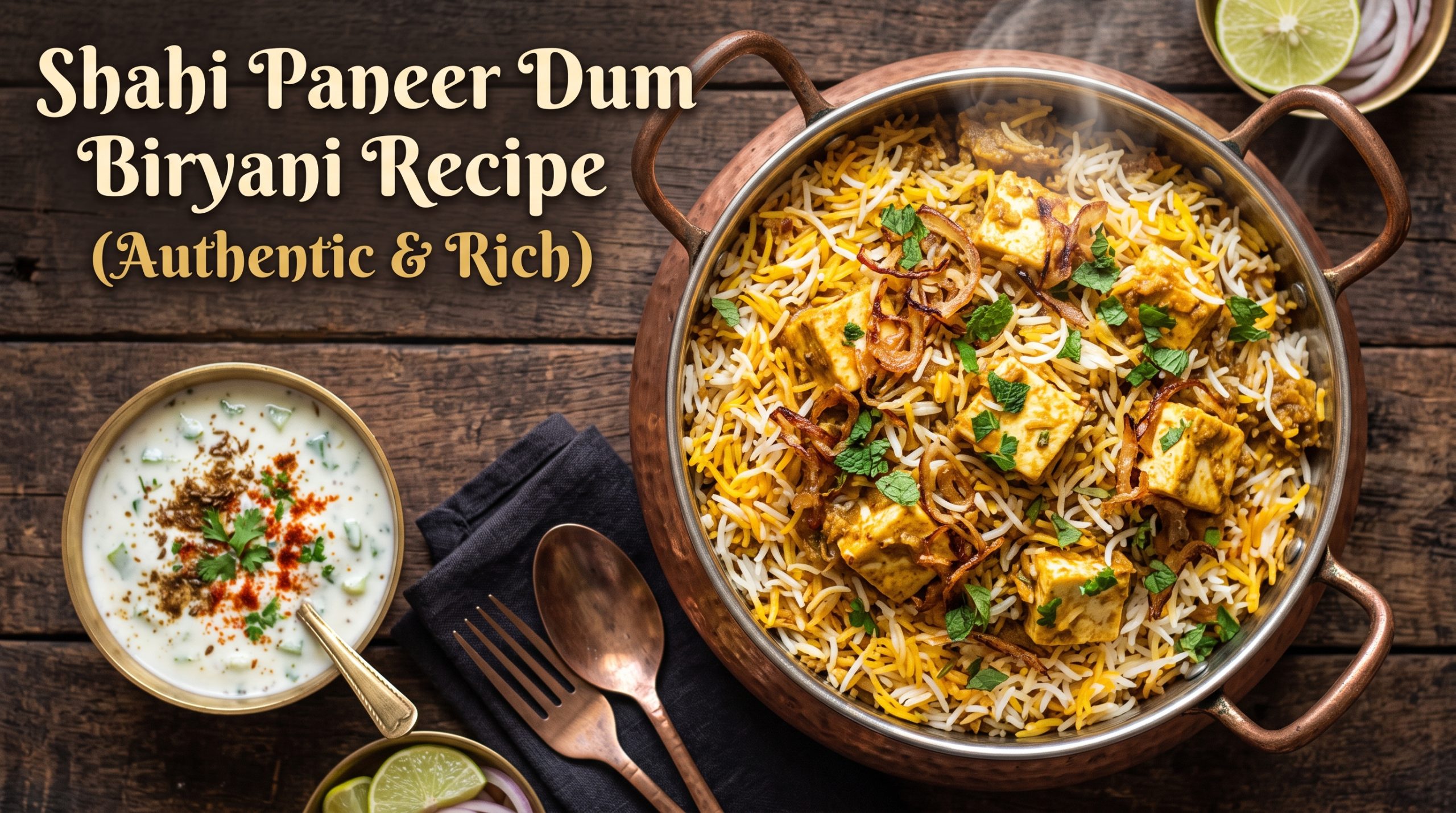
Shahi Paneer Dum Biryani Recipe
Fragrant saffron basmati rice layered with a rich, royal cashew-cream paneer masala, sealed and slow-cooked on dum until every grain is infused with flavor — this is vegetarian biryani at its most indulgent.
Shahi paneer dum biryani takes two beloved dishes — the rich, cashew-cream shahi paneer of Mughlai cuisine, and the layered, slow-cooked technique of classic dum biryani — and combines them into something genuinely special. This isn’t a quick weeknight throw-together; it’s a dish built for when you want to impress, whether that’s a festive gathering, a Sunday family lunch, or just a weekend when you’re craving something worth the extra effort.
The dum method is what sets real biryani apart from simple spiced rice. Sealing the pot and letting everything steam together on very low heat allows the rice to slowly absorb the aroma of the masala below it, rather than just sitting on top of it. The result is a dish where every single grain carries flavor, not just the ones closest to the paneer.
What Makes This Shahi Paneer Biryani Royal
This Indian recipe earns the word “shahi,” meaning royal, through its cashew-cream base. Blended soaked cashews create a silky, luxurious texture in the paneer masala that’s far richer than a typical tomato-based curry, and it’s a technique that traces directly back to Mughlai royal kitchens, where nuts and cream were staples of celebratory cooking.
Frying the onions until deeply golden and crisp before layering them into the biryani adds both texture and a subtly sweet, caramelized depth that ties the rice and masala together. This step, called birista in Indian cooking, is non-negotiable if you want an authentic result — pre-fried or under-cooked onions simply won’t deliver the same flavor.
Saffron-soaked milk drizzled over the top layer before sealing the pot is the finishing touch that gives dum biryani its signature golden streaks and delicate floral aroma. A little goes a long way, so don’t be tempted to skip this step even though the quantity looks small.
If you love slow-cooked, deeply spiced dishes like this, you’ll also enjoy our special Bihari mutton curry or the full Indian curry recipes collection for more regional classics.
Ingredients You’ll Need
This recipe has a few components — fried onions, cashew cream, the paneer masala, and the rice — but each one is straightforward on its own.
- 2 cups basmati rice, soaked 30 minutes
- 400g paneer, cut into cubes
- 2 large onions, thinly sliced, divided
- ½ cup cashews, soaked in warm water
- ½ cup plain yogurt, whisked
- 2 tbsp ginger-garlic paste
- 3 tbsp ghee, plus more for frying onions
- 2 tbsp oil
- 2 bay leaves
- 1 inch cinnamon stick
- 4 green cardamom pods
- 4 cloves
- 1 tsp shahi jeera (caraway seeds)
- 2 tsp red chili powder
- 1 tsp turmeric powder
- 1 tsp garam masala
- 2 tbsp tomato puree
- ¼ cup fresh cream
- A pinch of saffron strands, soaked in 3 tbsp warm milk
- ½ cup chopped fresh mint
- ½ cup chopped fresh coriander
- Salt, to taste
- Whole spices for rice (2 bay leaves, 4 cloves, 1 inch cinnamon)
- Water, for boiling rice
Use aged basmati rice if you can find it — it has a lower moisture content and holds its shape far better through the parboiling and dum steps than fresher rice, which can turn mushy.
How to Make Shahi Paneer Dum Biryani
This recipe has several stages, but each one is simple on its own — the key is prepping components ahead so the final layering and dum steps go smoothly.
- Step 1 — Fry the Onions Heat ghee in a pan and fry half the sliced onions over medium heat, stirring often, until deep golden brown and crisp, about 12–15 minutes. Remove and set aside on a paper towel; these will be used for layering and garnish.
- Step 2 — Make the Cashew Cream Blend the soaked cashews with a little water into a smooth, thick paste. Set aside; this forms the rich, silky base of the shahi paneer masala.
- Step 3 — Build the Shahi Paneer Masala In the same pan, heat oil and add the remaining onions, bay leaves, cinnamon, cardamom, cloves, and shahi jeera. Cook until the onions soften and turn light golden. Add ginger-garlic paste and cook for 1 minute, then stir in turmeric, red chili powder, and tomato puree, cooking until the oil visibly separates.
- Step 4 — Finish the Paneer Masala Stir in the whisked yogurt, cashew paste, and fresh cream, mixing continuously to prevent curdling. Simmer gently for 5 minutes, then add the paneer cubes and garam masala, and cook for another 3–4 minutes until the paneer is well coated in the rich, creamy gravy. Season with salt.
- Step 5 — Parboil the Rice Bring a large pot of water to a boil with the whole spices and salt. Add the soaked, drained rice and cook until it is about 70% done, still firm at the core. Drain immediately and set aside.
- Step 6 — Layer the Biryani In a heavy-bottomed pot, spread half the shahi paneer masala evenly. Top with half the parboiled rice, then scatter with half the fried onions, mint, and coriander. Repeat with the remaining masala, rice, onions, and herbs. Drizzle the saffron milk evenly over the top layer.
- Step 7 — Cook on Dum Cover the pot tightly with a lid, sealing the edges with dough or foil if needed to trap the steam. Cook on very low heat for 25–30 minutes, undisturbed, allowing the flavors and steam to fully infuse the rice.
- Step 8 — Rest and Serve Turn off the heat and let the biryani rest, still covered, for 10 minutes before opening. Gently fluff and mix from bottom to top just before serving, taking care not to break the paneer pieces.
What to Serve With Shahi Paneer Biryani
This biryani is rich enough to be the centerpiece of the meal. Serve it with a cooling raita, sliced onions with lemon, and a simple salad to balance the richness. A side of papad adds a nice crunch if you want to round out the spread further.
Storage & Reheating
Store leftovers in an airtight container in the fridge for up to 3 days. Reheat gently on the stovetop with a splash of water, covered, over low heat, or in the microwave with a damp paper towel over the container to help retain moisture.
This biryani also freezes reasonably well for up to a month, though the texture of the paneer may soften slightly. Thaw overnight in the fridge before reheating slowly.
Nutrition Information
Approximate values per serving, based on 5 servings total:
| Calories | 520 kcal |
| Protein | 16 g |
| Fat | 26 g |
| Carbohydrates | 58 g |
| Fiber | 3 g |
| Sodium | 560 mg |
Nutrition values are estimates and may vary based on the exact quantities and brands used. For dietary guidance, consult a reliable source such as the USDA FoodData Central.
Frequently Asked Questions
What does “dum” mean in dum biryani?
Dum refers to a slow-cooking technique where the pot is tightly sealed and the biryani cooks in its own trapped steam over very low heat, allowing the rice, spices, and masala to fully infuse each other without any liquid escaping.
Why is the rice only parboiled and not fully cooked before layering?
Parboiling the rice to about 70% doneness leaves room for it to finish cooking gently during the dum stage, absorbing flavor from the masala and steam without turning mushy or overcooked.
Can I make this biryani less rich?
Yes, you can reduce the cashew paste and cream by half, or substitute the cream with additional yogurt for a lighter, tangier version that’s still flavorful but less indulgent.
How do I seal the pot if I don’t have dough for the lid?
A layer of aluminum foil pressed tightly around the rim before placing the lid on top works just as well as a dough seal, as long as it creates an airtight barrier to trap the steam inside.