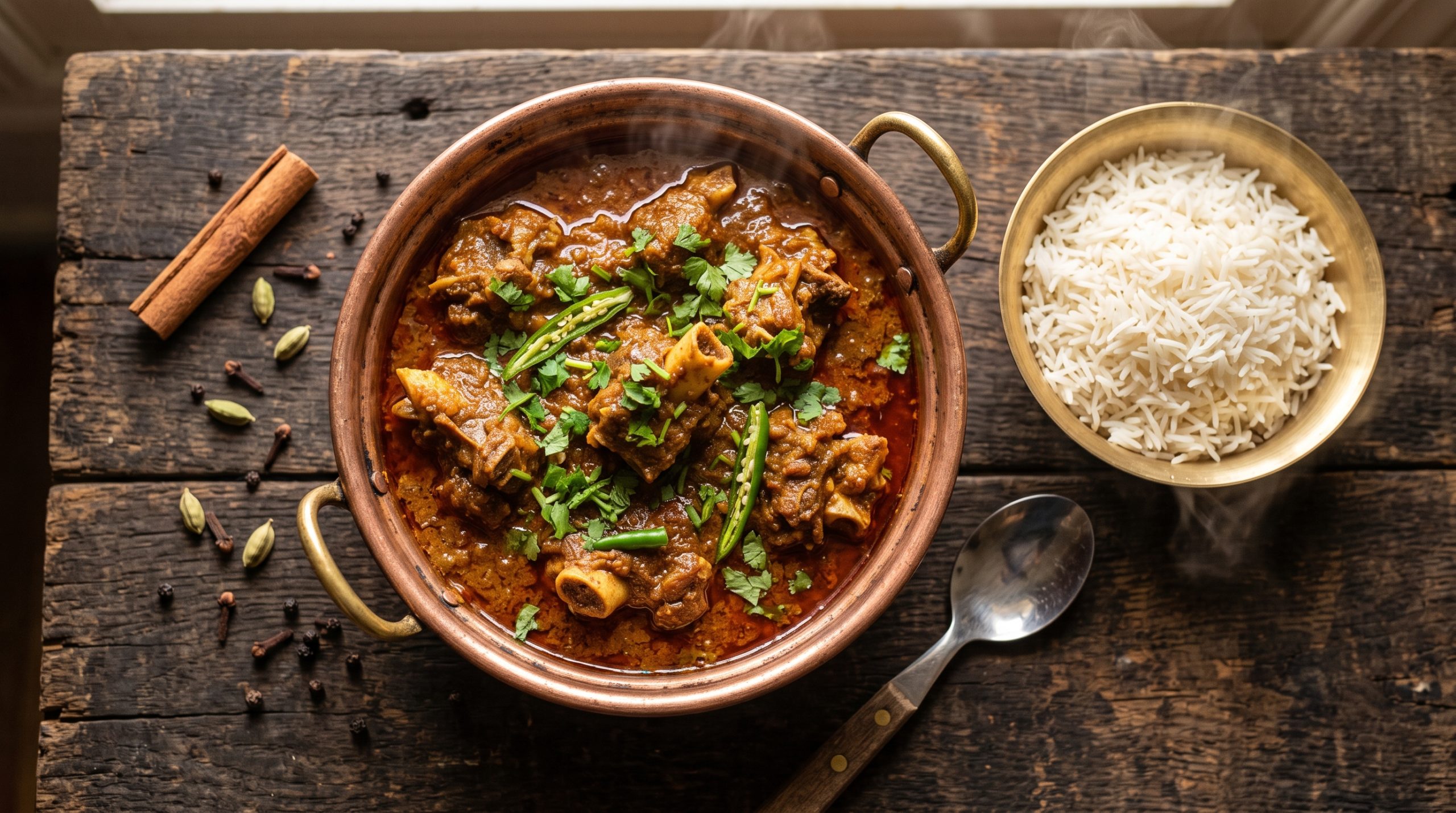
Special Bihari Mutton Curry
Slow-cooked goat meat in a deeply spiced mustard oil masala, built on browned onions and a proper bhuna — this is the authentic, home-style curry Bihar is known for.
Special Bihari mutton curry is built on technique as much as ingredients. What separates it from a generic mutton curry is the deeply browned onions, the sharp bite of mustard oil, and the long bhuna step where the meat is cooked directly in the masala before any water goes in. Skip any one of those and you get a decent curry — do all three properly and you get something that tastes like it’s been simmering in someone’s family kitchen for generations.
This recipe doesn’t cut corners on those steps, but it also doesn’t demand hours of hands-on effort. Most of the cook time is hands-off simmering, which means you can start this on a weekend afternoon and have a deeply flavorful curry on the table well before dinner.
What Makes This Bihari Mutton Curry Special
This Indian curry recipe leans on mustard oil as its foundation, which is the single biggest difference between Bihari-style mutton curry and the mutton curries you’ll find in most other regions of India. Mustard oil has a sharp, pungent flavor when raw, but once it’s heated to a gentle smoke point and mellowed, it lends a distinct depth that neutral oils simply can’t replicate.
The second defining element is the onions. They’re not just softened — they’re cooked low and slow until genuinely deep brown, almost caramelized, which builds a natural sweetness that balances the heat of the chilies and the earthiness of the whole spices. Rushing this step is the most common reason home versions of this curry taste flat.
Finally, there’s the bhuna: cooking the marinated mutton directly in the browned masala, uncovered, until it’s well coated and lightly browned itself, before any water is added. This step concentrates flavor into the meat itself rather than relying only on a long simmer to season it from the outside in.
If you enjoy deeply spiced, slow-cooked dishes like this, you’ll also love our rogan josh recipe or our full collection of Indian curry recipes for more regional classics.
Ingredients You’ll Need
Bone-in mutton is important here — the bone adds richness and body to the gravy that boneless cuts can’t match.
- 1 kg mutton (goat meat), bone-in, cut into curry pieces
- ½ cup mustard oil
- 4 medium onions, thinly sliced
- 2 tbsp ginger-garlic paste, divided
- ½ cup plain yogurt, whisked
- 2 bay leaves
- 1 inch cinnamon stick
- 4 green cardamom pods
- 4 cloves
- 1 tsp cumin seeds
- ½ tsp nigella seeds (kalonji)
- 2 tsp red chili powder
- 1 tsp turmeric powder
- 2 tsp coriander powder
- 1 tsp cumin powder
- 1 tsp garam masala
- 3 medium tomatoes, pureed
- 3-4 green chilies, slit
- Salt, to taste
- ¼ cup chopped fresh coriander leaves
- 2 cups hot water, as needed
Nigella seeds, also called kalonji, are a signature touch in Bihari cooking and show up in everything from curries to parathas. They add a subtle, slightly bitter, oniony note that’s worth seeking out rather than skipping.
How to Make Special Bihari Mutton Curry
Each stage here builds directly on the one before it, so resist the urge to rush the onions or skip straight to adding water.
- Step 1 — Marinate the Mutton In a large bowl, combine the mutton with whisked yogurt, half the ginger-garlic paste, and a pinch of salt. Cover and marinate for at least 30 minutes, or up to overnight in the fridge for deeper, more tenderized flavor.
- Step 2 — Brown the Onions Heat the mustard oil in a heavy-bottomed pot until it starts to smoke lightly, then let it cool for a minute to mellow its sharpness. Add the bay leaves, cinnamon, cardamom, cloves, and cumin seeds, and fry for 30 seconds until fragrant. Add the sliced onions and cook over medium heat, stirring often, until deep golden brown, about 12–15 minutes.
- Step 3 — Build the Masala Add the remaining ginger-garlic paste and nigella seeds, and cook for 1 minute. Stir in the turmeric, red chili powder, coriander powder, and cumin powder, and cook for another minute until the raw spice smell fades. Add the tomato puree and cook until the oil visibly separates from the masala, about 8–10 minutes.
- Step 4 — Bhuna the Mutton Add the marinated mutton to the pot and cook on medium-high heat, stirring frequently, for 12–15 minutes until the meat is well browned and fully coated in the masala. This slow browning step is what builds the deep, layered flavor this curry is known for — don’t rush it.
- Step 5 — Simmer Until Tender Add the green chilies, salt, and enough hot water to just cover the meat. Cover and simmer on low heat for 45–60 minutes, stirring occasionally, until the mutton is fork-tender and the gravy has thickened to your liking.
- Step 6 — Finish and Serve Stir in the garam masala and cook for another 2 minutes. Turn off the heat, garnish generously with fresh coriander leaves, and let the curry rest for 5 minutes before serving hot with steamed rice or roti.
What to Serve With Bihari Mutton Curry
This curry is rich enough to be the centerpiece of the meal. Serve it with steamed basmati rice to soak up the gravy, or with warm litti for a truly traditional Bihari spread. A side of thinly sliced raw onions, lemon wedges, and a cooling cucumber salad balances the heat nicely.
Storage & Reheating
Store leftovers in an airtight container in the fridge for up to 4 days — like most slow-cooked curries, the flavor actually improves after a day as the spices continue to meld. Reheat gently on the stovetop over low heat, adding a splash of water if the gravy has thickened too much.
This curry also freezes well for up to 3 months. Thaw overnight in the refrigerator and reheat slowly on the stove, stirring occasionally, until heated through.
Nutrition Information
Approximate values per serving, based on 5 servings total:
| Calories | 410 kcal |
| Protein | 32 g |
| Fat | 26 g |
| Carbohydrates | 10 g |
| Fiber | 2 g |
| Sodium | 540 mg |
Nutrition values are estimates calculated using standard ingredient databases and may vary based on the cut of meat and exact quantities used. For dietary guidance, consult a reliable source such as the USDA FoodData Central.
Frequently Asked Questions
What makes Bihari mutton curry different from other mutton curries?
Bihari mutton curry relies on mustard oil for its sharp, pungent base flavor, deeply browned onions, and a slow bhuna step where the meat is cooked directly in the masala before any water is added, which builds a much richer, layered gravy than quicker versions.
Can I use a pressure cooker to save time?
Yes — after the bhuna step, transfer everything to a pressure cooker with the hot water and cook for 4–5 whistles on medium heat, then let the pressure release naturally before opening and finishing with garam masala.
Can I substitute mustard oil with another oil?
Mustard oil is what gives this curry its distinct Bihari flavor, but if it’s unavailable you can use a neutral oil like sunflower oil. The flavor will be milder and less traditional, but still delicious.
What should I serve with Bihari mutton curry?
This curry is traditionally served with steamed basmati rice, litti, or roti. A side of sliced onions, lemon wedges, and a simple cucumber salad rounds out the meal nicely.