
 By Camila
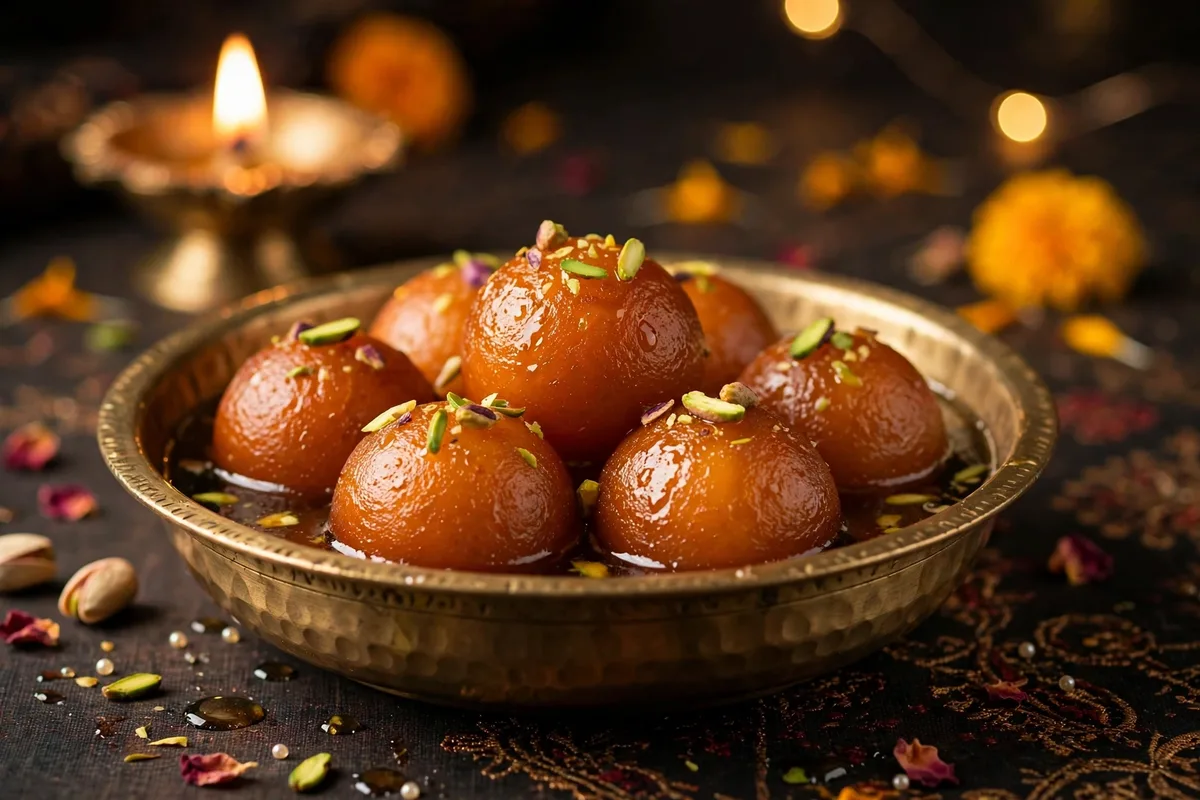
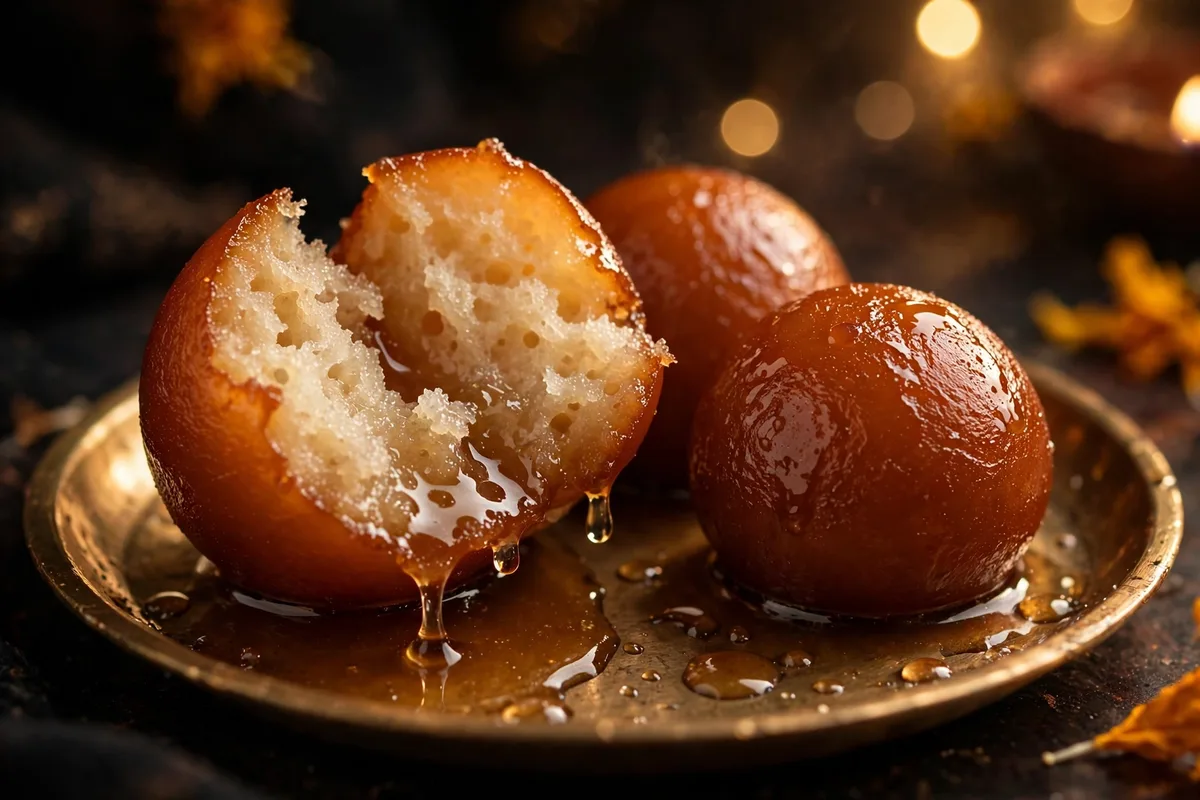
Gulab jamun is the Diwali sweet that disappears first — deep-golden, spongy balls of milk solids that soak up fragrant rose-and-cardamom syrup until every bite bursts juicy. Get the dough right and the frying slow, and you get the halwai’s result at home: a jamun that springs back when pressed and drips syrup when broken.
This recipe uses the milk-powder method — the most forgiving path to a soft centre, because every batch of khoya behaves differently and milk powder gives you the same perfect jamun every single time. It covers the no-cracks kneading rule (the single difference between smooth jamuns and split ones), the slow-fry cues, and the syrup consistency that decides whether jamuns drink or drown.
Prep time: 15 mins · Cook time: 40 mins (syrup + frying) · Soaking: 1 hour minimum · Total: ~2 hours · Yield: ~18 jamuns · Course: Dessert / Mithai
Why This Recipe Works
- Milk powder, not khoya: consistent fat and moisture batch to batch — no guesswork about whether your khoya is too dry or too oily.
- Barely-any soda: just ¼ teaspoon per cup of milk powder. Soda is what makes jamuns puff, but excess is the #1 cause of cracked, hard jamuns.
- Sticky — not thread — syrup: jamuns soak best in a syrup that coats the spoon (around 217–219°F). One-thread syrup is too thick to penetrate, and the jamuns stay dry inside.
- Warm syrup, hot jamuns: hot jamuns dropped into warm syrup drink it up; hot syrup or cold jamuns give you a hard shell with a dry core.
Ingredients
For the jamuns:
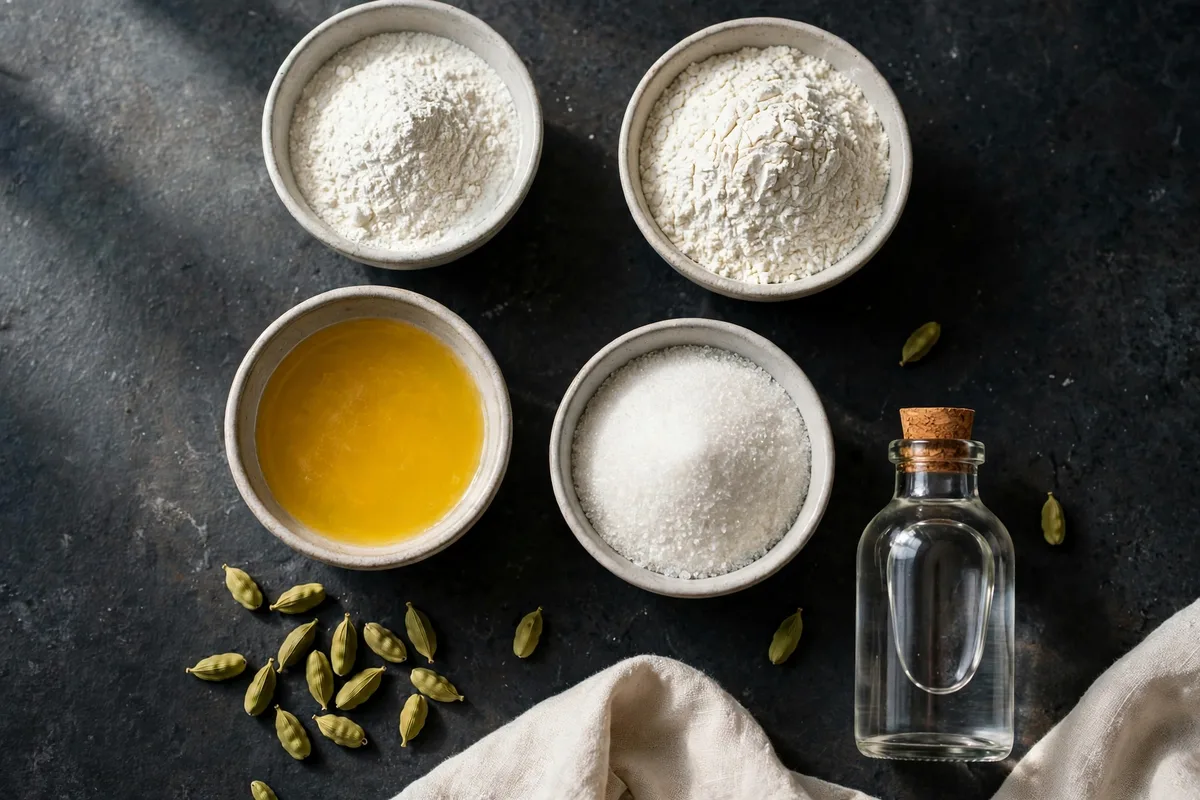
- 1 cup full-cream milk powder — 120 g
- ¼ cup maida (all-purpose flour) — 30 g
- ¼ tsp baking soda (levelled — measure carefully)
- 2 tbsp ghee — 28 g, melted
- ¼ cup warm milk — 60 ml, plus 1 tbsp extra if needed
- Ghee or neutral oil for deep frying — enough for a 3-inch depth
For the syrup:
- 1½ cups sugar — 300 g
- 1½ cups water — 360 ml
- 4 green cardamom pods, lightly crushed
- 1 tsp rose water
- ½ tsp lemon juice (keeps the syrup from crystallising)
- A few saffron strands (optional)
Ingredient notes: Full-cream milk powder only — skim or low-fat powder gives flat, dense jamuns. Level the baking soda precisely; heaping soda is the classic cause of cracked, biscuit-hard jamuns. Rose water goes in off the heat (boiling kills its perfume). Lemon juice is a quiet insurance policy — without it, syrup left overnight can turn grainy.
Equipment
Wide heavy-bottomed kadhai (for slow, even frying) · saucepan (for syrup) · slotted spoon · large mixing bowl · damp kitchen towel · airtight container
How to Make Gulab Jamun (Step by Step)
Step 1: Make the syrup
Combine sugar, water and crushed cardamom in a saucepan. Bring to a boil, stirring until the sugar dissolves, then simmer 8–10 minutes until the syrup is sticky, not thread-thick — it should coat the back of a spoon and feel tacky between your fingertips. Stir in the lemon juice, take it off the heat, and add the rose water and saffron. Keep the syrup warm (not hot) while you fry.
Step 2: Mix the dough — gently
Whisk the milk powder, maida and baking soda together, then rub in the melted ghee until the mixture looks like breadcrumbs. Add the warm milk a spoonful at a time and bring it together into a soft, smooth, slightly tacky dough — stop the moment it holds together. Over-kneading develops gluten and makes dense jamuns; under-mixing leaves cracks. Cover with a damp towel and rest 10 minutes.
Step 3: Shape — the no-cracks test
Pinch off a lemon-sized piece and roll it between your palms into a smooth, crack-free ball — no cracks, no seams. If you see cracks, the dough has dried out: knead in a few drops of warm milk and roll again. Keep the shaped balls covered with the damp towel while you finish; exposed balls dry and crack in minutes.
Step 4: Fry low and slow — this is the whole game
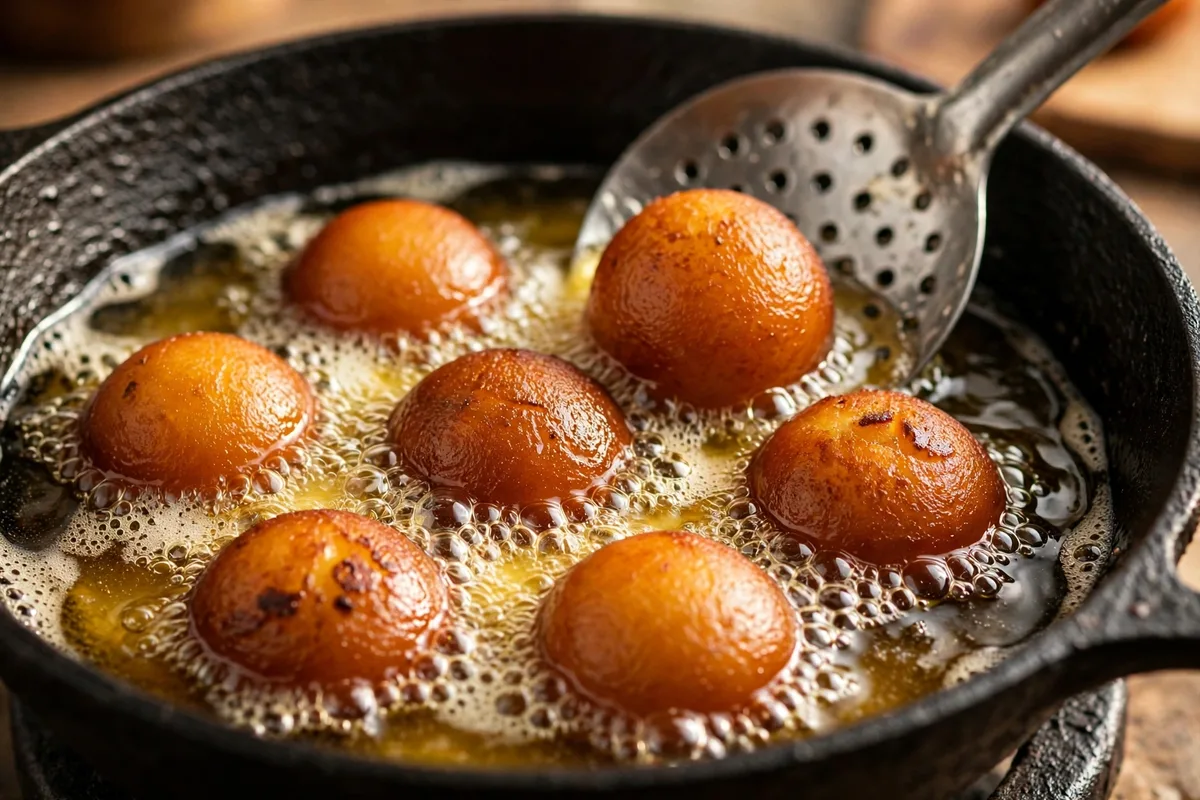
Heat the ghee/oil to low-medium — around 300–320°F (150–160°C). Test with a tiny dough ball: it should sink, then rise slowly to the surface over 15–20 seconds without changing colour. Fry 5–6 jamuns at a time, stirring constantly and gently with the slotted spoon for even colour — about 6–8 minutes per batch until deep golden. Never fry on high heat: the outside darkens in 2 minutes while the inside stays raw and hard.
Step 5: Soak in warm syrup
Lift the jamuns out with the slotted spoon, let the oil drip off for 30 seconds, and drop them straight into the warm syrup. Rest at least 1 hour — 2 hours is better — turning once. The jamuns swell and drink the syrup; they should feel heavy and spongy when you lift one out.
Pro Tips for Perfect Jamuns
- Dough consistency is everything. It should feel like soft play-dough — pliable, smooth, just barely tacky. Too dry = cracks. Too wet = jamuns dissolve in the oil.
- Start one jamun as a scout. Fry a single ball first. If it holds together, your dough is right. If it breaks apart, knead in 1 tsp maida and try again.
- Oil temperature beats timing. 300–320°F is the whole recipe. A thermometer removes the guesswork; the dough-ball test is the field version.
- Serve warm, always. Jamuns at room temperature or gently reheated in their syrup taste dramatically better than fridge-cold ones.
Troubleshooting
- Cracks on the balls before frying: dough too dry. Work in drops of warm milk until smooth — and keep the rest covered.
- Jamuns break apart in the oil: too little binding. Knead in 1–2 tsp maida per cup of milk powder and re-test with a scout ball.
- Hard, dense jamuns: too much baking soda, over-kneaded dough, or fried too hot too fast. Measure soda level, knead minimally, fry low.
- Dry inside despite soaking: syrup too thick (cooked to thread stage) or syrup was hot / jamuns were cold at soaking. Warm syrup, hot jamuns.
- Jamuns got dark too fast but taste raw: oil far too hot. Cool it down, wait, and fry the next batch low and slow.
- Syrup crystallised overnight: you skipped the lemon juice. Reheat gently with a spoonful of water to melt the crystals.
Variations
- Kala jamun: fry 2 minutes longer for a near-black exterior and add a pinch of black salt to the syrup — the bittersweet original.
- Stuffed gulab jamun: flatten each ball, press in a tiny mix of chopped pistachios and khoya, reseal and roll smooth.
- Khoya method: replace the milk powder with 1 cup soft, fresh khoya + 3 tbsp maida + ¼ tsp soda + 1 tbsp ghee. Tastier, but far less forgiving — fresh khoya moisture varies.
- Baked/light version: bake balls at 350°F for 18–20 minutes (they’ll be firmer and paler), then soak. Not halwai-authentic, but a lighter shortcut.
Storage & Gifting
Store soaked jamuns in their syrup in the fridge for up to 7 days — reheat gently in the syrup before serving. Unsoaked fried jamuns keep 2 days in an airtight container at room temperature; soak only before serving. For Diwali gifting, pack 6–8 jamuns with a little syrup in small glass jars with tight lids — they look spectacular and travel safely for a day.
Nutrition (per jamun, estimated)
Calories: ~140 kcal · Carbs: 22 g · Protein: 3 g · Fat: 5 g · Sugar: 16 g (estimates — will vary with jamun size and syrup retention)
FAQs
Why do my gulab jamuns crack?
Almost always dry dough or too much baking soda. Keep the dough soft and smooth, level the soda, and keep shaped balls under a damp towel.
Can I use khoya instead of milk powder?
Yes — see the variation above. Milk powder is more reliable for home kitchens because khoya’s moisture varies batch to batch.
What is the right syrup consistency?
Sticky, not thread. It should coat a spoon and feel tacky — about 217–219°F. One-thread syrup is too thick for jamuns to soak.
Can I make them ahead for Diwali?
Absolutely — fry a day ahead, store airtight, and soak in warm syrup 2 hours before guests arrive. Soaked jamuns also refrigerate for a week.
Why did my jamuns turn hard?
Fried too hot, too much soda, or over-kneaded dough. Low oil (300–320°F), ¼ tsp soda, minimal kneading — all three, every time.
Related Diwali sweets: Besan Ladoo · Kaju Katli