 By Camila
Poha Chivda Recipe — Crisp, Spiced Tea-Time Mixture
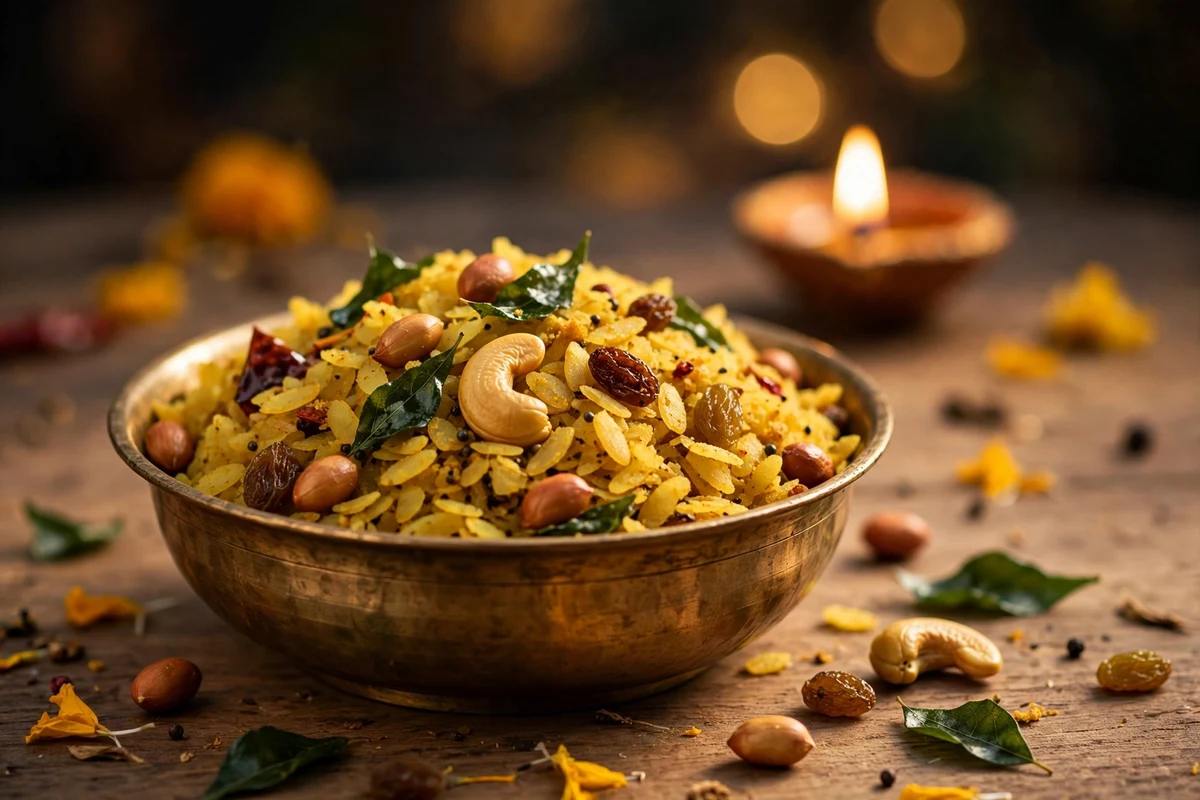
Poha chivda is the snack that lives in a big tin on the counter all through Diwali: thin flattened rice roasted until it shatters, tossed warm with fried peanuts, roasted chana dal, cashews, raisins, curry leaves and a turmeric-gold tempering. It is light in the hand and anything but light in flavour — salty, faintly sweet, gently hot, with something crunchy or chewy in every mouthful. A batch takes thirty minutes, keeps for weeks, and disappears handful by handful every time someone walks past the tin.
Prep time: 10 minutes • Cook time: 20 minutes • Total time: 30 minutes • Makes: about 5 cups • Level: Easy
The Chivda Secret: Crisp Poha, Warm Toss
Everything rests on two moments. First, the poha itself must be roasted until genuinely crisp — thin poha that goes in soft comes out of the tempering soft, and no amount of frying the nuts will save it. Roasted low and slow, it turns papery and brittle, which is exactly what you want. Second, the tempering and nuts go onto the poha while everything is still warm, so the turmeric oil coats every flake evenly instead of pooling at the bottom of the bowl. Cool it completely before the tin lid goes on — trapped warmth is the one reliable way to turn a crisp batch chewy overnight.
Ingredients
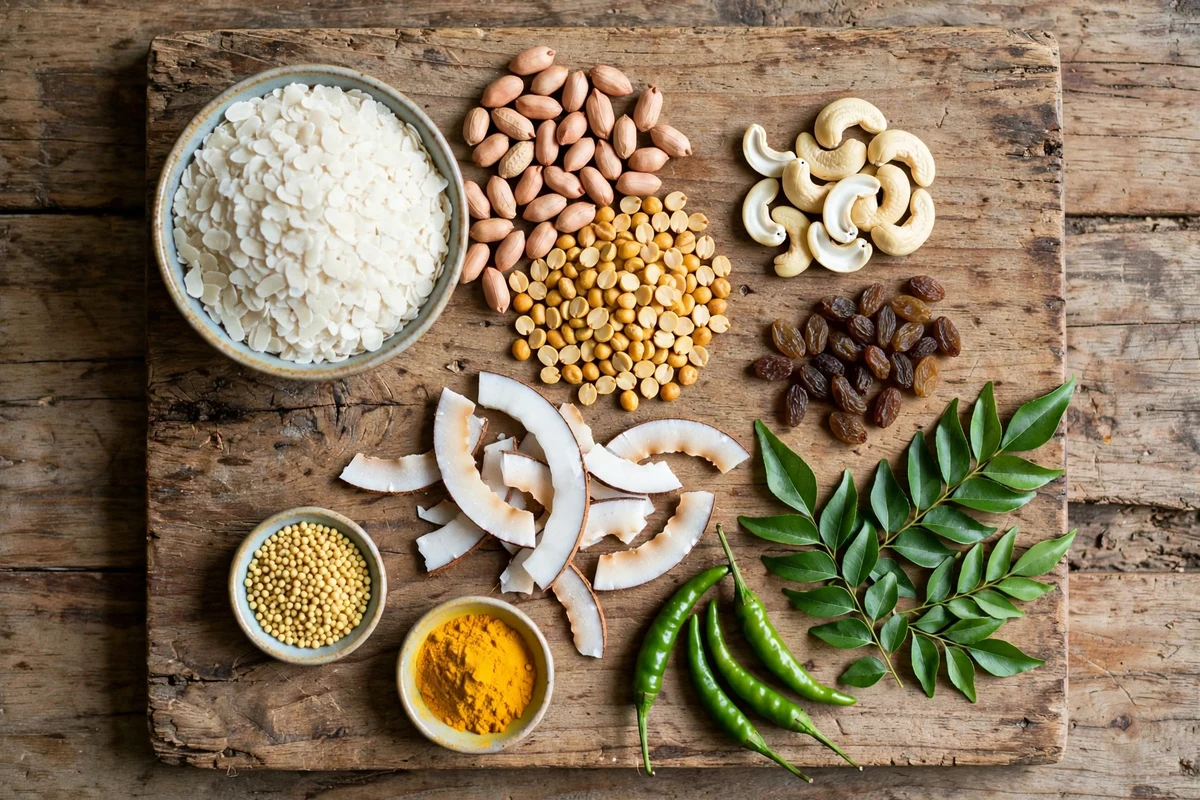
- 4 cups thin poha (patla poha / thin flattened rice)
- 3 tablespoons oil
- 1/2 cup raw peanuts
- 1/4 cup roasted chana dal (dalia)
- 1/4 cup cashew halves
- 2 tablespoons dry coconut slices (kopra), optional
- 2 tablespoons raisins
- 1 teaspoon mustard seeds
- 10–12 fresh curry leaves
- 3–4 green chillies, slit or sliced
- 1/2 teaspoon turmeric powder
- 1/4 teaspoon asafoetida (hing)
- 3/4 teaspoon salt, or to taste
- 1 teaspoon powdered sugar
Step-by-Step Instructions
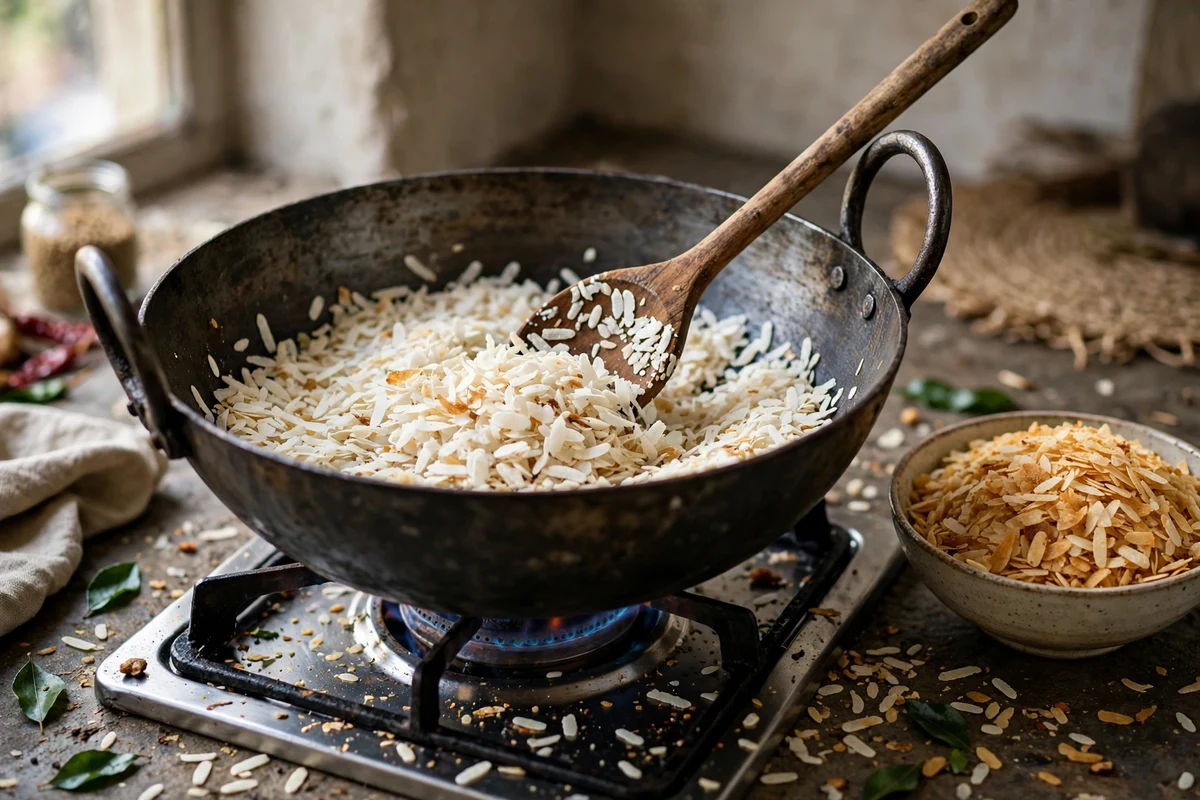
- Roast the poha. Heat a large, heavy kadai or pan on low heat. Add the thin poha in batches and dry-roast, stirring gently and constantly, until the flakes feel crisp and papery and break with a snap — about 5–7 minutes per batch. Tip into a wide mixing bowl. Handle it gently; crisp poha crushes easily.
- Start the tempering. In the same kadai, heat the oil over medium heat. Add the mustard seeds and let them splutter.
- Fry the nuts. Add the peanuts and fry, stirring, until they turn golden and crisp, about 2–3 minutes. Add the cashews and coconut slices and fry until lightly golden — they colour fast, so watch them.
- Add the aromatics. Add the roasted chana dal, curry leaves and green chillies. Fry until the curry leaves turn crisp, about a minute. The leaves must crisp, not just wilt, or they will soften the mixture later.
- Bloom the spices. Lower the heat, add the turmeric and asafoetida, and stir for a few seconds so the turmeric coats everything gold without burning.
- Toss it together. Pour the hot tempering over the roasted poha in the bowl. Add the raisins, salt and powdered sugar. Toss gently but thoroughly with two spoons until every flake is evenly tinted and coated.
- Cool completely. Spread the chivda out and let it cool fully to room temperature before transferring to an airtight tin. Taste once cool and adjust salt or sugar — seasoning reads differently warm.
Troubleshooting
Chivda turns soft the next day: the poha was under-roasted, or the tin was closed while the mixture was still warm. Re-crisp a soft batch by spreading it in a low oven or dry kadai for a few minutes, then cool fully before re-storing. Poha breaks into powder: it was stirred too hard after roasting — toss with a lifting motion, never a pressing one. Uneven colour: the tempering went onto cold poha; always toss while the tempering is hot. Burnt turmeric bitterness: the spices hit oil that was too hot — drop the heat before the turmeric goes in and give it seconds, not minutes.
Variations
- Masala chivda: add 1/2 teaspoon red chilli powder and 1/2 teaspoon amchur (dry mango powder) with the salt for a tangier, hotter mix.
- Cornflakes chivda: replace 1 cup of poha with plain cornflakes, added at the tossing stage without roasting.
- Makhana chivda: swap half the poha for roasted fox nuts (makhana) for a lighter, protein-friendly version.
- Sweet-shop style: add fried sev on top at serving time — never before storing, as sev softens.
Serving and Storage
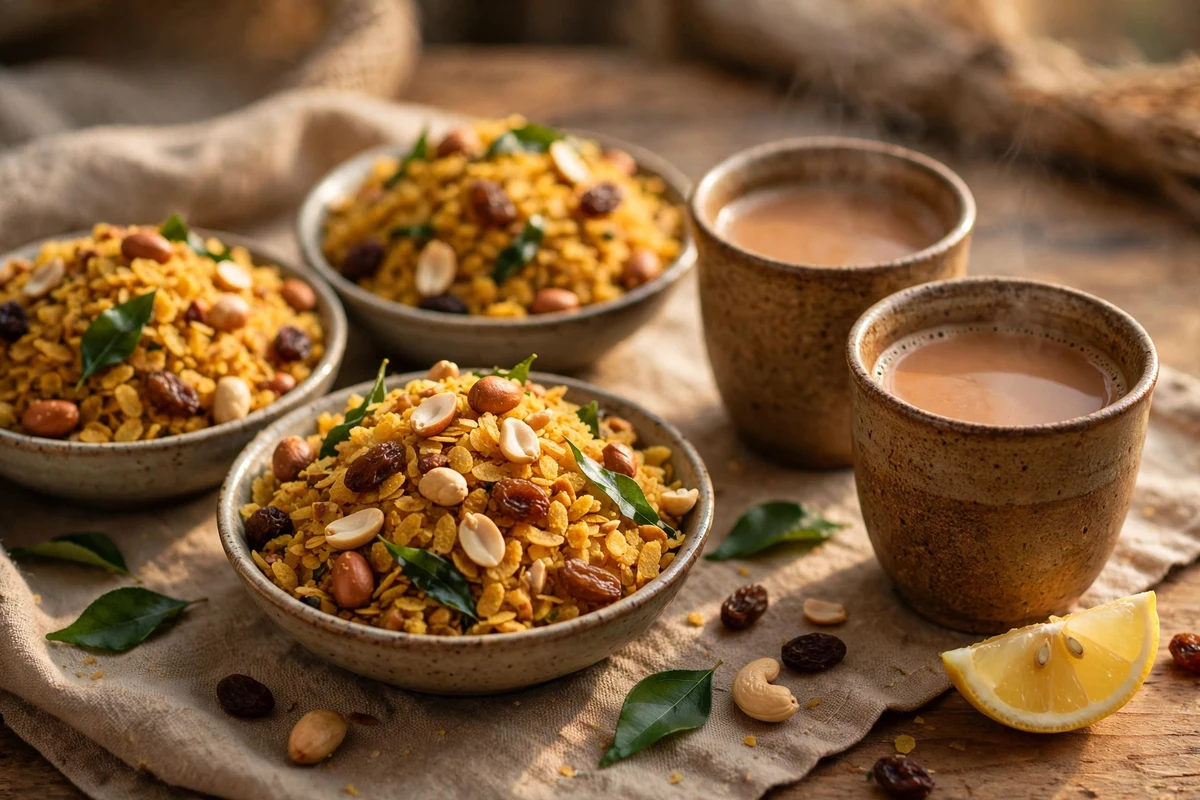
Serve poha chivda in small bowls with masala chai, or as the savoury anchor of the Diwali faral plate beside chakli, gujiya and besan ladoo. Stored in an airtight tin at room temperature, it stays crisp for 3–4 weeks. A squeeze of lemon and a spoonful of finely chopped onion on top, street-style, turns a bowl of it into a fresh snack all over again — just add those at the moment of eating, never before.
Frequently Asked Questions
Can I use thick poha instead of thin poha?
Thin poha is the right choice — it roasts crisp without oil. Thick poha stays chewy in the centre and needs deep-frying to crisp, which makes a much heavier chivda.
Why did my chivda go soft?
Either the poha was not roasted until fully crisp, or the mixture was stored while still warm. Roast until the flakes snap, and cool completely before sealing the tin.
Can I make chivda without deep-frying anything?
Yes — this recipe already only shallow-fries the nuts in the tempering oil; the poha itself is dry-roasted, never fried.
How long does poha chivda keep?
3–4 weeks in an airtight tin at room temperature, as long as it went in completely cool and dry.
Crisp flakes, hot tempering, a fully cooled tin — chivda is simple, and those three details are the whole difference between a tin that empties and a tin that lingers.