 By Camila
Gujiya Recipe — Crisp Half-Moons with Khoya & Coconut Filling
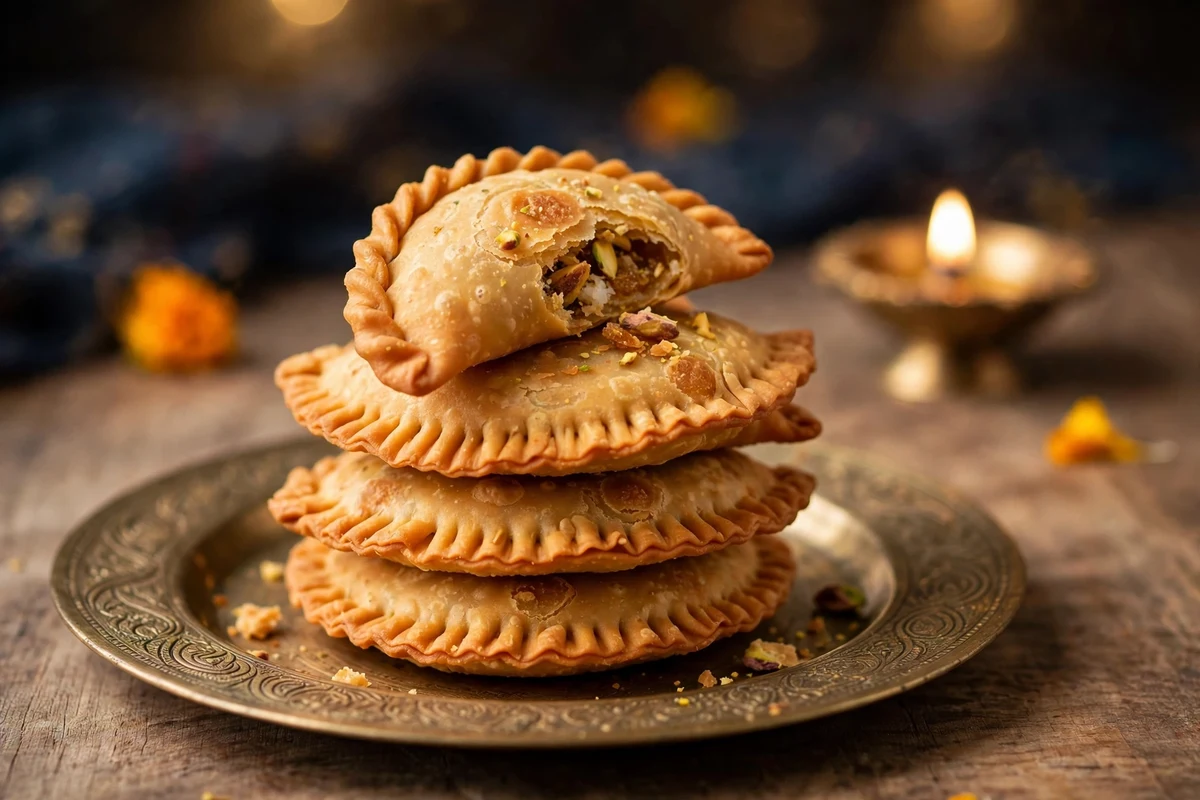
Gujiya is the sweet that Diwali (and Holi) households guard most fiercely: a crisp, flaky half-moon of pastry wrapped around a soft filling of khoya, coconut, nuts and cardamom, fried low and slow until the crust turns golden and shattering. It looks like a small treasure because it is one — the whole pleasure is in the contrast, brittle shell against a sweet, milky centre. This recipe makes about twenty, seals them properly so they don’t burst in the oil, and keeps them crisp for over a week, which is just as well: a plate of gujiya on the counter does not survive many days of passing family.
Prep time: 40 minutes (including resting) • Cook time: 30 minutes • Total time: 1 hour 10 minutes • Makes: about 20 gujiya • Level: Medium
The Two Things That Decide a Gujiya
The moyan and the seal. Moyan — the ghee rubbed into the flour before any water goes in — is what makes the crust flaky and crisp instead of tough; skimp on it and the pastry bakes up hard, overdo it and the gujiya falls apart in the oil. And the seal is everything: a gujiya that opens while frying spills its filling into the oil and comes out sad and empty. Wet the edge, press out the air, crimp firmly — with a fork or a gujiya mould — and never overfill. Fry on a low-medium heat: too hot and the crust blisters and browns before the inside warms through; patient oil gives you an even gold and a crust that stays crisp for days.
Ingredients
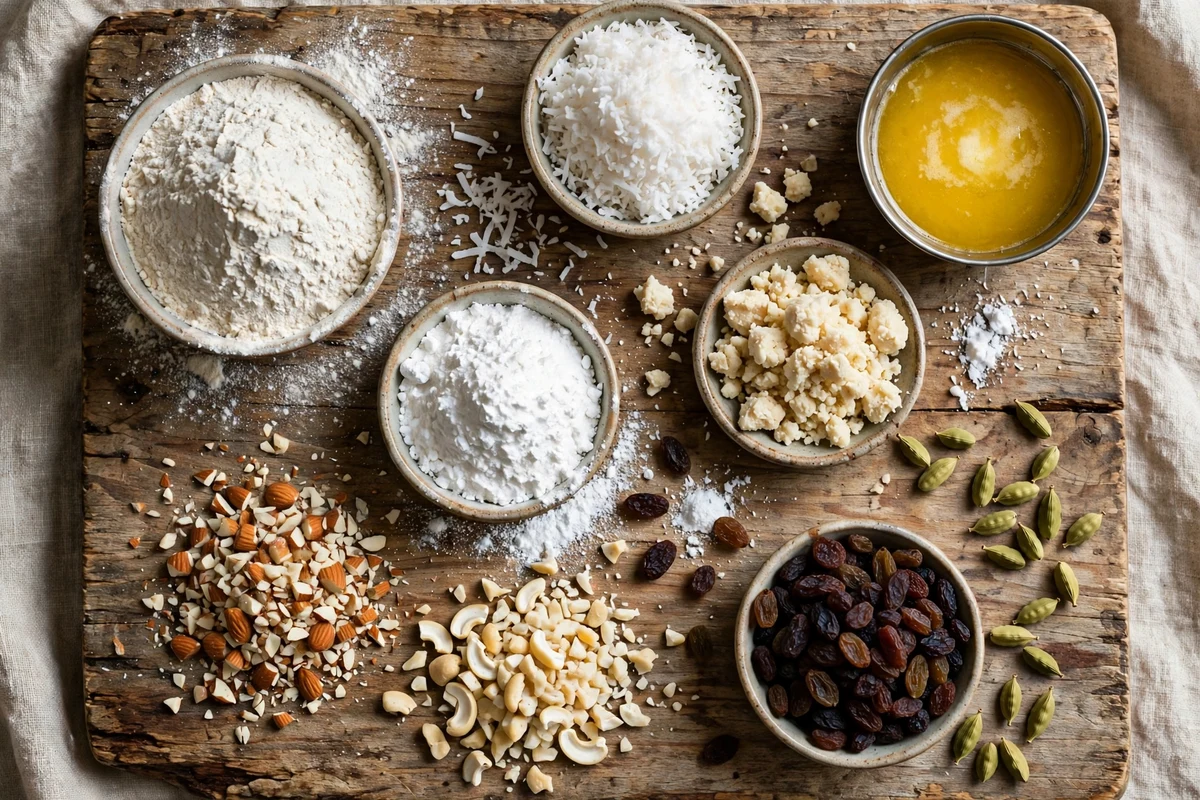
For the Pastry
- 2 cups all-purpose flour (maida)
- 4 tablespoons ghee, melted (for moyan)
- A pinch of salt
- About 1/2 cup water, as needed
For the Filling
- 200g khoya (mawa), crumbled
- 1/2 cup desiccated coconut
- 1/2 cup powdered sugar
- 2 tablespoons almonds, finely chopped
- 2 tablespoons cashews, finely chopped
- 1 tablespoon raisins
- 1/2 teaspoon cardamom powder
For Frying
- Ghee or oil, for deep frying
Step-by-Step Instructions
- Make the dough. In a large bowl, mix the flour and salt. Add the melted ghee and rub it in with your fingertips until the flour resembles breadcrumbs and holds together when pressed in your fist. Add water a little at a time and knead into a firm, smooth dough — firmer than chapati dough. Cover with a damp cloth and rest for 30 minutes.
- Prepare the filling. Crumble the khoya into a pan and roast on low heat, stirring, for 3–4 minutes until it softens and turns slightly aromatic — do not brown it. Tip it into a bowl and let it cool completely. Then mix in the desiccated coconut, powdered sugar, almonds, cashews, raisins and cardamom powder. The filling must be cool and dry; warm filling makes soggy pastry and weak seals.
- Roll. Divide the dough into about 20 small balls. Roll each into a thin circle roughly 4 inches across, keeping the rest covered so they don’t dry out.
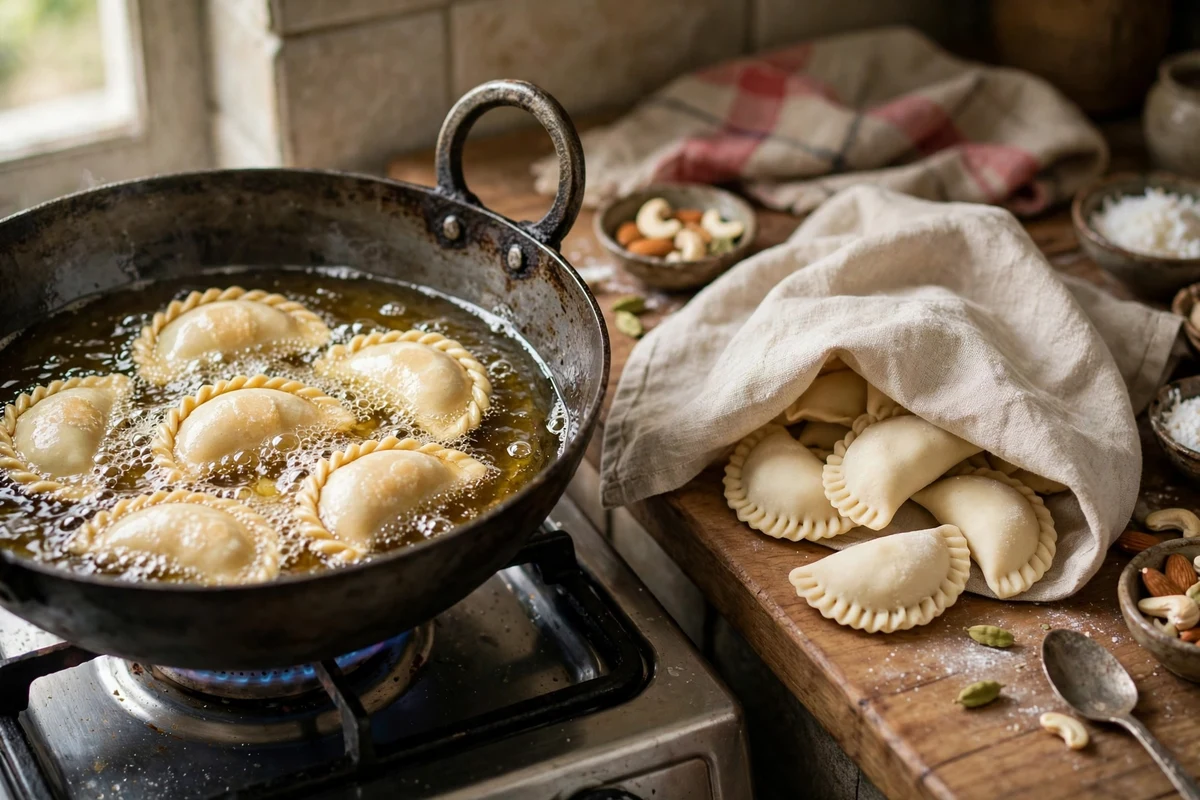
- Fill and seal. Place about 1 tablespoon of filling in the centre of a circle. Wet the edge with water, fold the circle over into a half-moon, and press the edges together firmly, pushing out any trapped air. Crimp the edge with a fork, or use a gujiya mould for the classic fluted edge. Set the sealed gujiya under a damp cloth while you shape the rest.
- Fry low and slow. Heat ghee or oil in a deep kadai over low-medium heat. Slide in a few gujiya at a time and fry gently, turning occasionally, until evenly golden and crisp — about 6–8 minutes per batch. The oil should bubble lazily, not fiercely.
- Cool. Drain on a rack or kitchen paper and cool completely before storing; the crust firms up as it cools.
Troubleshooting
Gujiya opens in the oil: the seal was wet with filling, the edge wasn’t pressed firmly, or the pastry was overfilled. Keep filling away from the rim, wet only the edge, crimp hard, and fill modestly. Blisters all over the crust: the oil was too hot or the moyan was short — fry the next batch lower and slower. Crust is hard, not flaky: too little ghee in the moyan, or the dough was too soft and absorbed water like bread dough; keep the dough firm. Filling leaks sweetness into the oil: the khoya was still warm when the sugar went in, melting it into syrup — always cool the khoya completely first.
Variations
- Chashni gujiya: dip the hot fried gujiya briefly in warm one-string sugar syrup for a glossy, sweeter finish (the Braj style).
- Rava gujiya: replace half the khoya with roasted semolina for a lighter, drier filling that keeps even longer.
- Chocolate gujiya: add a teaspoon of cocoa and a few chocolate chips to the filling for the kids’ batch.
- Baked gujiya: brush with ghee and bake at 180°C (350°F) for 20–25 minutes until golden — lighter, though the fried crust is the classic.
Serving and Storage
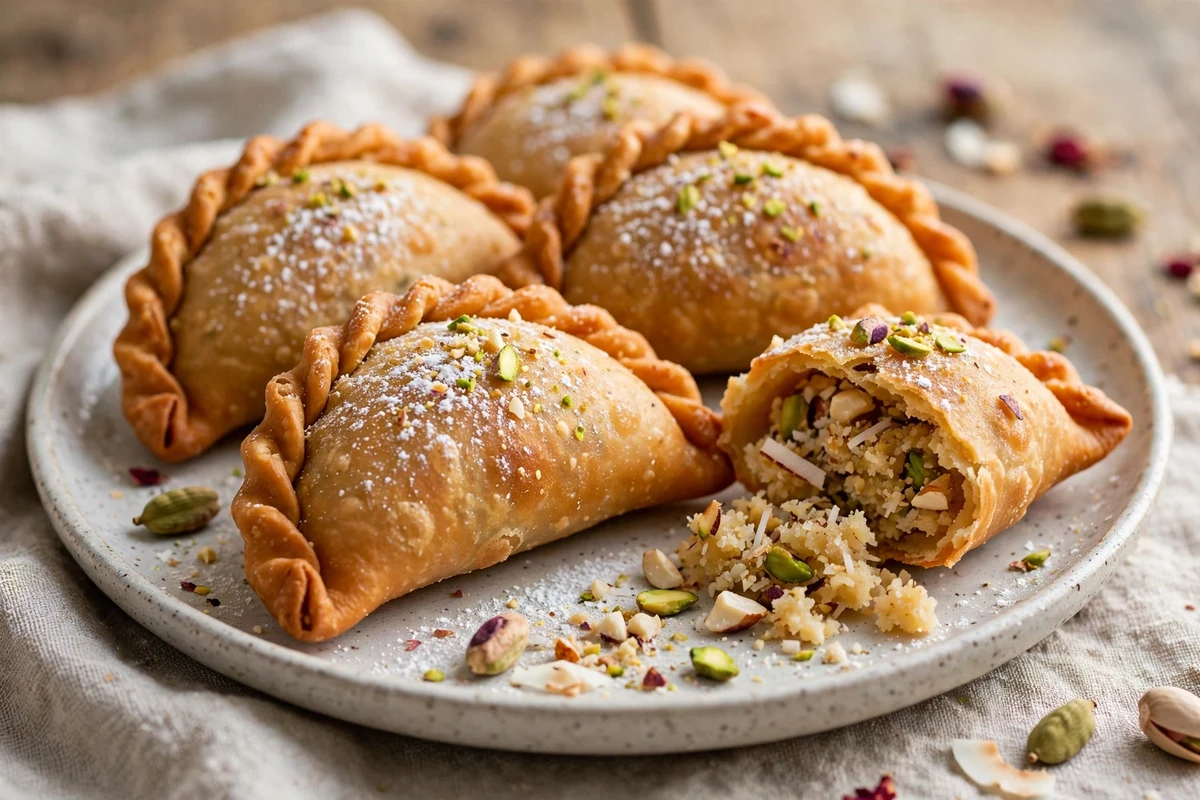
Serve gujiya at room temperature as part of the Diwali spread with kaju katli, besan ladoo and a savoury plate of chakli to cut the sweetness. Stored in an airtight tin at room temperature, gujiya keeps well for 7–10 days — never refrigerate them, which softens the crust. They travel beautifully, which is why they are the sweet most often packed into boxes for family in other cities.
Frequently Asked Questions
Why did my gujiya open while frying?
Almost always the seal: filling on the rim, too little water on the edge, or overfilling. Keep the rim clean, wet it, press out the air and crimp firmly.
Why does the crust get bubbles and blisters?
The oil is too hot, or the moyan (ghee rubbed into the flour) was too little. Fry low and slow for a smooth, even crust.
Can I bake gujiya instead of frying?
Yes — brush with ghee and bake at 180°C (350°F) for 20–25 minutes until golden. The texture is lighter and less rich than the fried original.
How long do gujiya stay fresh?
7–10 days in an airtight tin at room temperature. Cool them completely before storing and keep them away from the fridge.
Warm ghee, a dry filling, a patient fry — gujiya rewards the unhurried cook like few sweets do.