 By Camila
Shakarpara Recipe — Sweet Diamond-Cut Diwali Snack
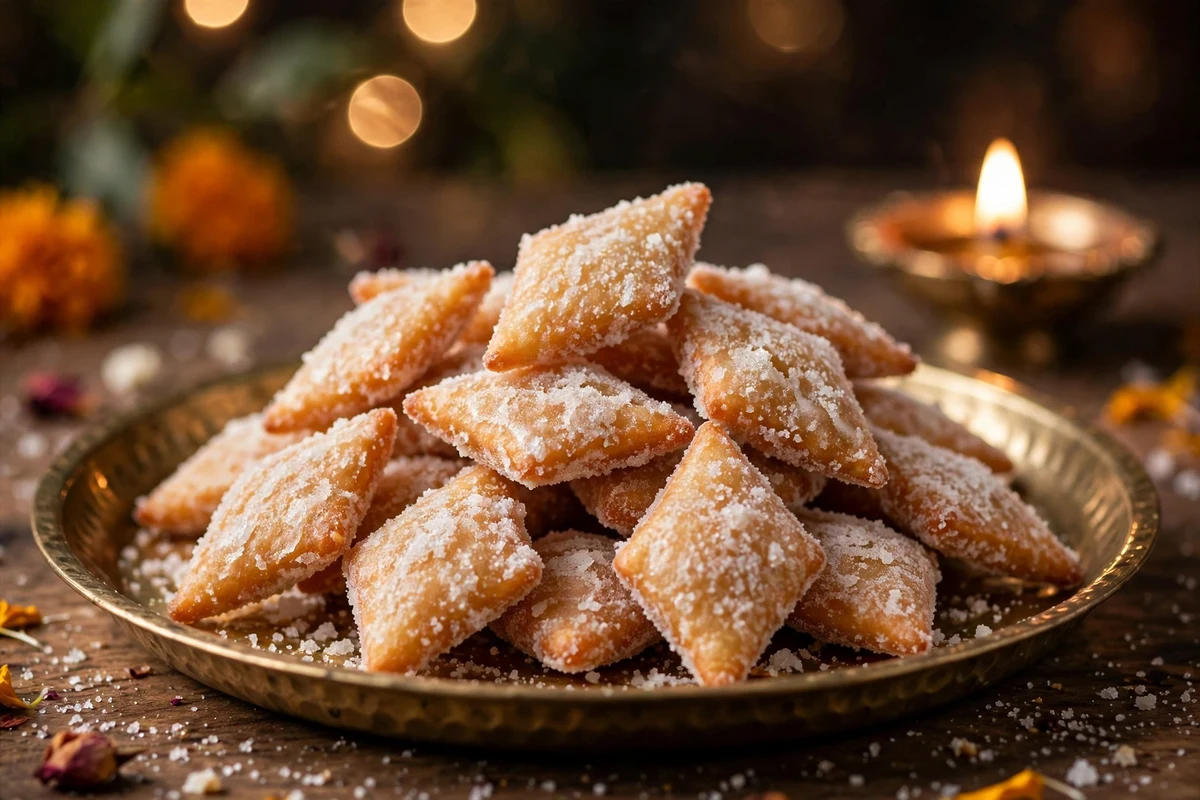
Shakarpara (also called shakkarpara or khurma in different regions) is Diwali’s sweet little diamond: bite-sized pieces of firm, ghee-rubbed dough, fried golden and tumbled through cardamom sugar syrup until every piece wears a thin, crisp, frosty coat. They are dangerously snackable — sweet but not sticky, crisp but not hard — and a single batch fills a big tin that will carry a household through the whole festival and well past it. If the faral tray has a sweet counterpart to chakli’s savoury crunch, this is it.
Prep time: 30 minutes (including resting) • Cook time: 25 minutes • Total time: 55 minutes • Makes: about 40 pieces • Level: Easy
What Makes Shakarpara Crisp Under the Syrup
The dough is deliberately firm — firmer than you think it should be — and that is the first secret. A soft dough drinks oil and fries up limp; a firm dough, rested so the flour hydrates, fries into a piece with a real snap that survives the syrup. The second secret is the syrup itself: one-string consistency, no more. Too thin and it soaks in and turns the pieces soft and soggy; too thick and it sets into a chalky shell before it can coat evenly. And the third is timing — warm pieces, warm syrup, a quick tumble, then spread them out to dry so the coat sets frosty instead of sticky.
Ingredients
For the Dough
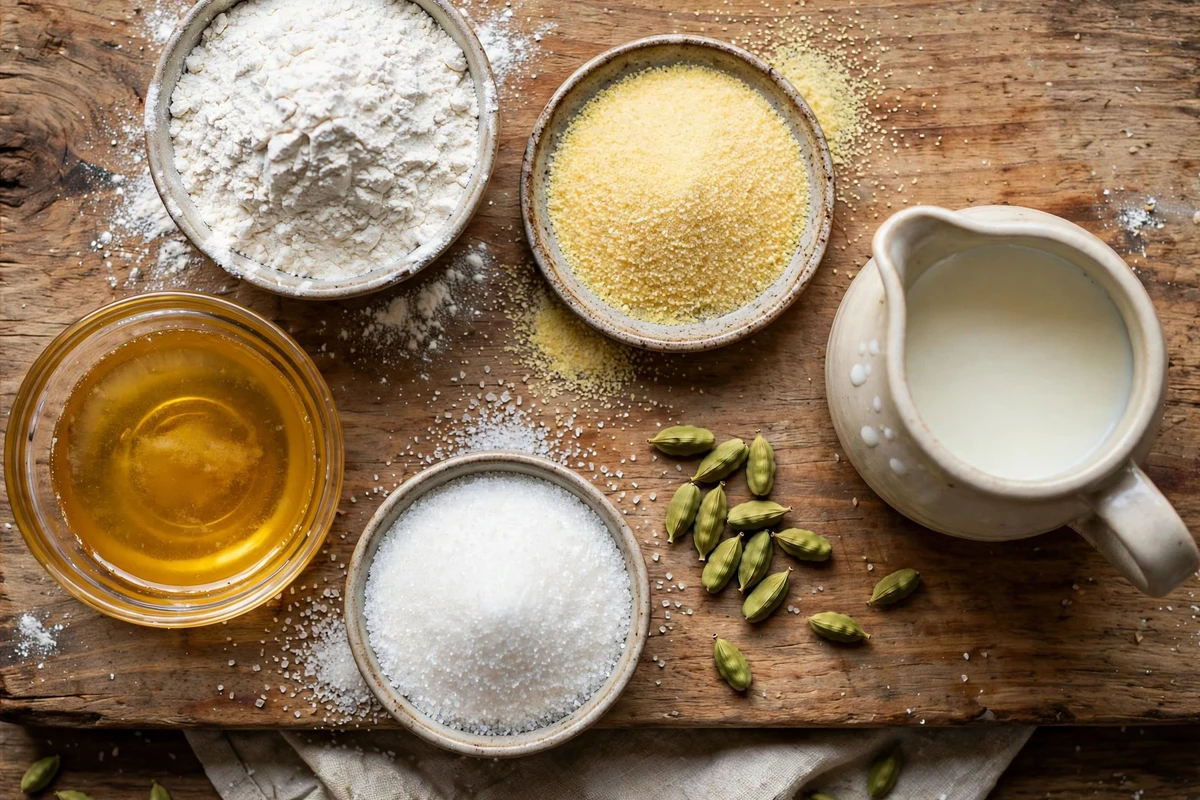
- 2 cups all-purpose flour (maida)
- 1/4 cup fine semolina (rava), for extra crispness
- 4 tablespoons ghee, melted (for moyan)
- A pinch of salt
- About 1/2 cup warm water or milk, as needed
For the Sugar Syrup
- 1 cup granulated sugar
- 1/2 cup water
- 1/2 teaspoon cardamom powder
- A few saffron strands (optional)
For Frying
- Ghee or oil, for deep frying
Step-by-Step Instructions
- Make the dough. In a large bowl, mix the flour, semolina and salt. Rub in the melted ghee with your fingertips until the mixture resembles breadcrumbs and holds when pressed. Add warm water or milk a little at a time and knead into a firm, smooth dough — it should feel tight, not soft. Cover and rest for 20–30 minutes.
- Roll. Divide the dough into 3–4 portions. Roll each into a thick sheet, about 1/4 inch thick — thicker than a chapati. Shakarpara needs body; rolled too thin, the pieces turn into crisps and burn at the edges.
- Cut the diamonds. With a knife or pizza cutter, cut the sheet into strips about 1 inch wide, then cut across at an angle to make diamond shapes. Separate the pieces gently and keep them covered while you cut the rest.
- Make the syrup. In a wide pan, combine the sugar and water and bring to a boil, stirring until the sugar dissolves. Simmer until it reaches one-string consistency — a drop pressed between thumb and finger pulls into a single thread. Stir in the cardamom (and saffron, if using), then keep the syrup warm on the lowest heat. Do not let it keep reducing.
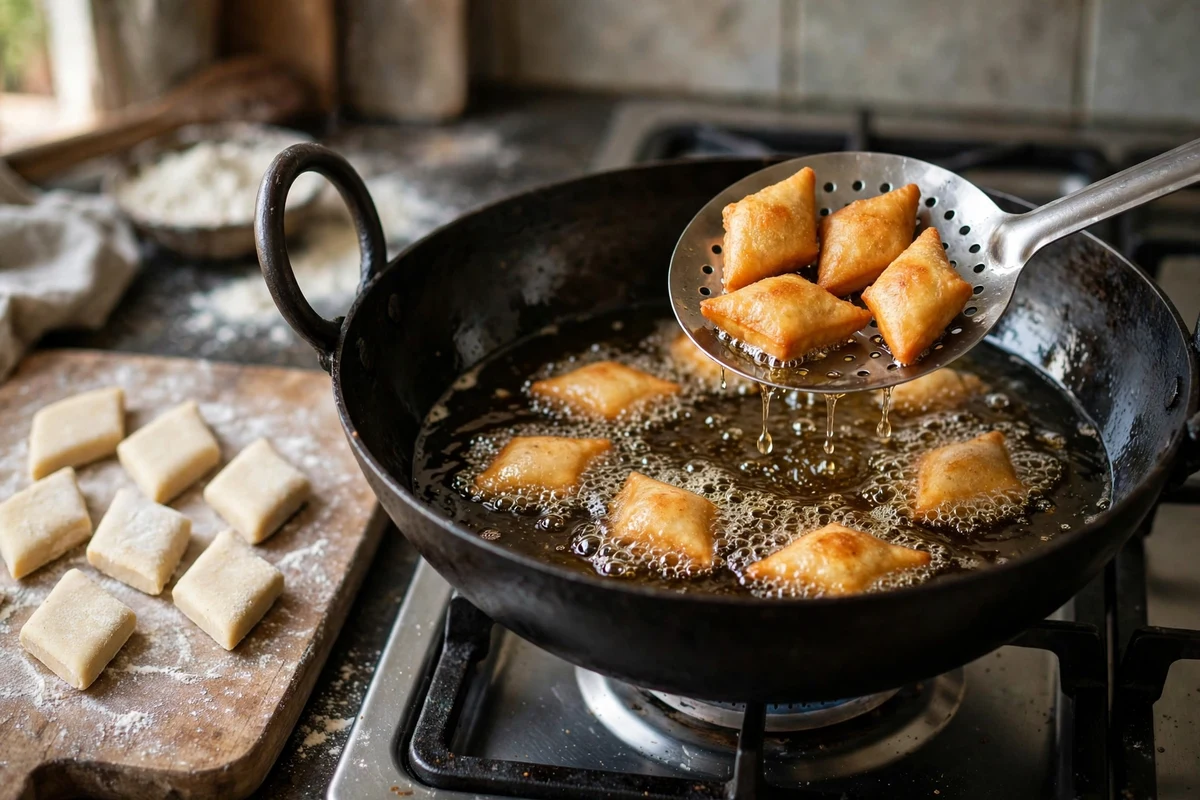
- Fry. Heat ghee or oil in a deep kadai over medium heat, then reduce to low-medium. Fry the diamonds in batches, stirring gently, until evenly golden and crisp — about 5–6 minutes per batch. The oil should be active but not fierce; fierce oil browns the outside while the centre stays raw. Drain well.
- Coat. While the pieces are still warm, add them to the warm syrup in batches and toss quickly until every piece is coated. Lift them out with a slotted spoon and spread in a single layer on a plate or tray.
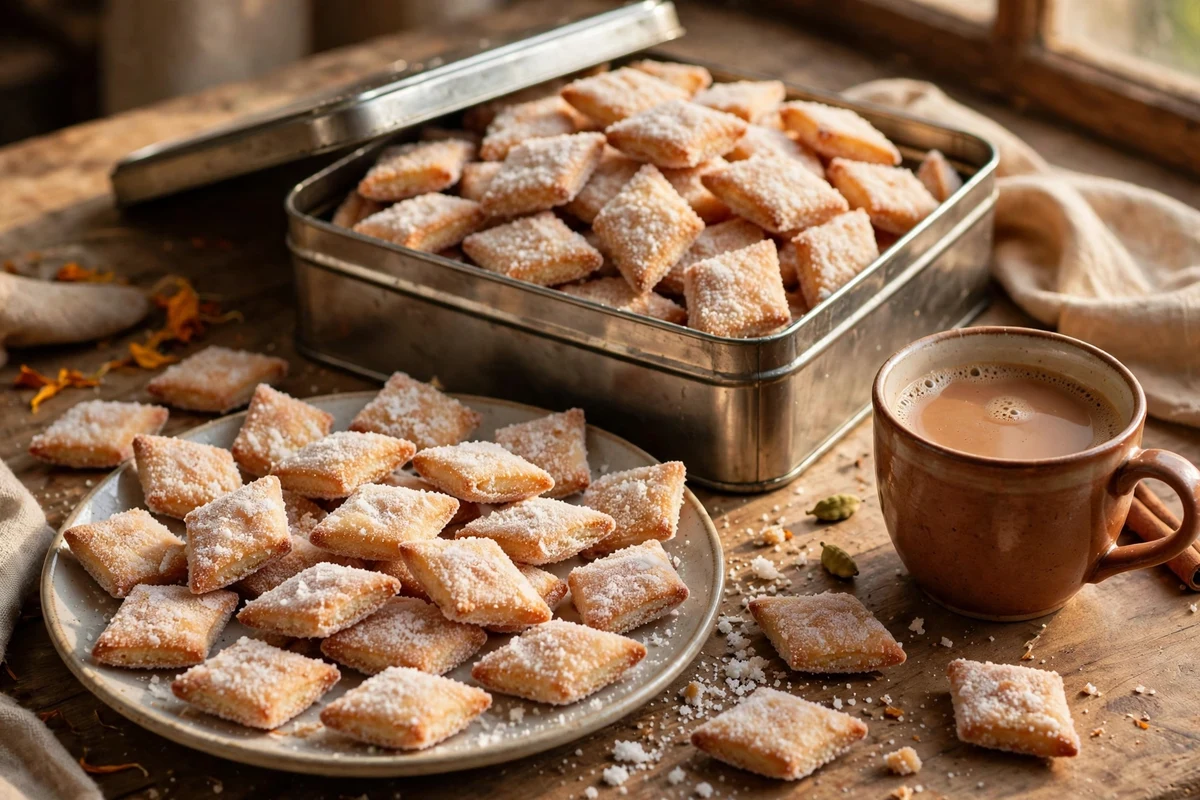
- Dry and store. Let the coated shakarpara dry and cool completely — the syrup sets into a frosty, non-sticky coat. Separate any pieces that stuck together, then store in an airtight tin.
Troubleshooting
Shakarpara turned soft after coating: the syrup was too thin and soaked in instead of setting on the surface — it must reach one-string consistency. A soft batch can be re-crisped briefly in a low oven before coating next time. Syrup crystallised into white lumps in the pan: it reduced too far or was stirred after boiling; keep it warm, don’t over-reduce, and a few drops of lemon juice in the syrup helps prevent crystallisation. Pieces puffed up and split: the dough was too soft or rolled unevenly — knead firmer and roll to an even 1/4 inch. Dark outside, raw centre: oil too hot. Shakarpara fries low and slow.
Variations
- Jaggery (gur) shakarpara: replace the sugar syrup with jaggery syrup for a deeper, caramel flavour — the Bihari khurma direction.
- Sugar-dusted (dry) version: skip the syrup; toss the hot fried pieces in powdered sugar with cardamom for a lighter coat.
- Whole wheat shakarpara: swap half the flour for whole wheat atta — slightly denser, very homestyle.
- Baked shakarpara: brush the cut pieces with ghee and bake at 180°C (350°F) for 18–22 minutes until golden, then coat as usual.
Serving and Storage
Serve shakarpara with chai, or set it on the Diwali tray next to its savoury twin chakli, with gujiya and kaju katli completing the spread. In an airtight tin at room temperature, shakarpara keeps crisp for 3–4 weeks — just make sure the syrup coat is fully dry before the lid goes on, since trapped moisture is the only thing that shortens its life.
Frequently Asked Questions
Why did my shakarpara become soft?
The sugar syrup was too thin. It needs one-string consistency so it sets as a coat on the surface instead of soaking into the fried dough.
How do I check one-string consistency?
Let a drop of syrup cool for a few seconds, press it between your thumb and forefinger, and pull apart — it should form a single thread that doesn’t break immediately.
Can I make shakarpara without sugar syrup?
Yes — toss the hot fried pieces in powdered sugar mixed with cardamom for the dry, dusted version.
How long does shakarpara stay fresh?
3–4 weeks in an airtight tin at room temperature, once the coating is completely dry.
Firm dough, one-string syrup, warm-on-warm coating — three small disciplines, and the tin stays crisp until the last diamond is gone.