 By Camila
Chakli Recipe — Crispy, Spiced Spirals for Diwali
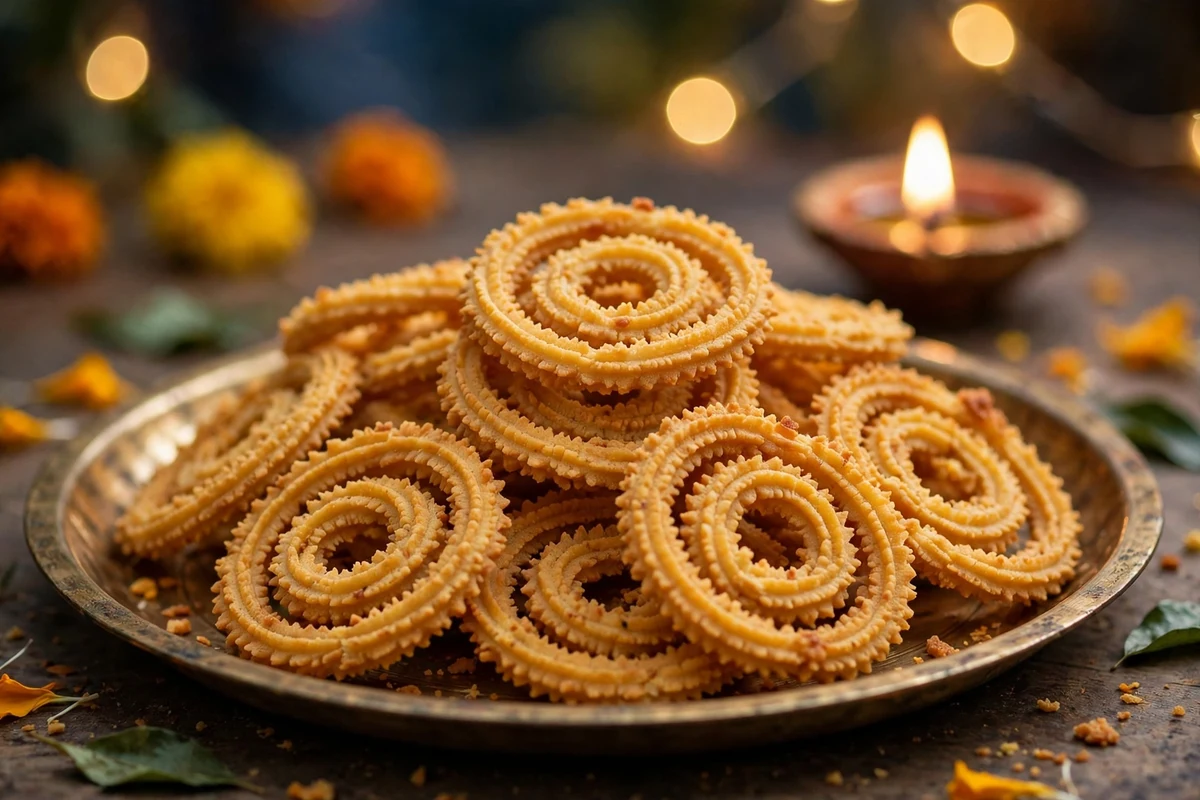
No Diwali faral tray is complete without chakli — the golden, ridged spirals that shatter with a crunch and leave cumin and sesame on your tongue. This version uses rice flour with a little urad dal flour for flavour and strength, warm spices, and the one tool that makes chakli chakli: a press with a star plate that pipes the dough into perfect coils. The dough takes ten minutes, the shaping is genuinely fun, and a batch fries up into about twenty-five spirals that stay crisp in a tin for weeks — which matters, because Diwali snacking is a marathon, not an event.
Prep time: 20 minutes (including resting) • Cook time: 30 minutes • Total time: 50 minutes • Makes: about 25 chaklis • Level: Medium
What Makes a Chakli Crisp (Not Hard, Not Soft)
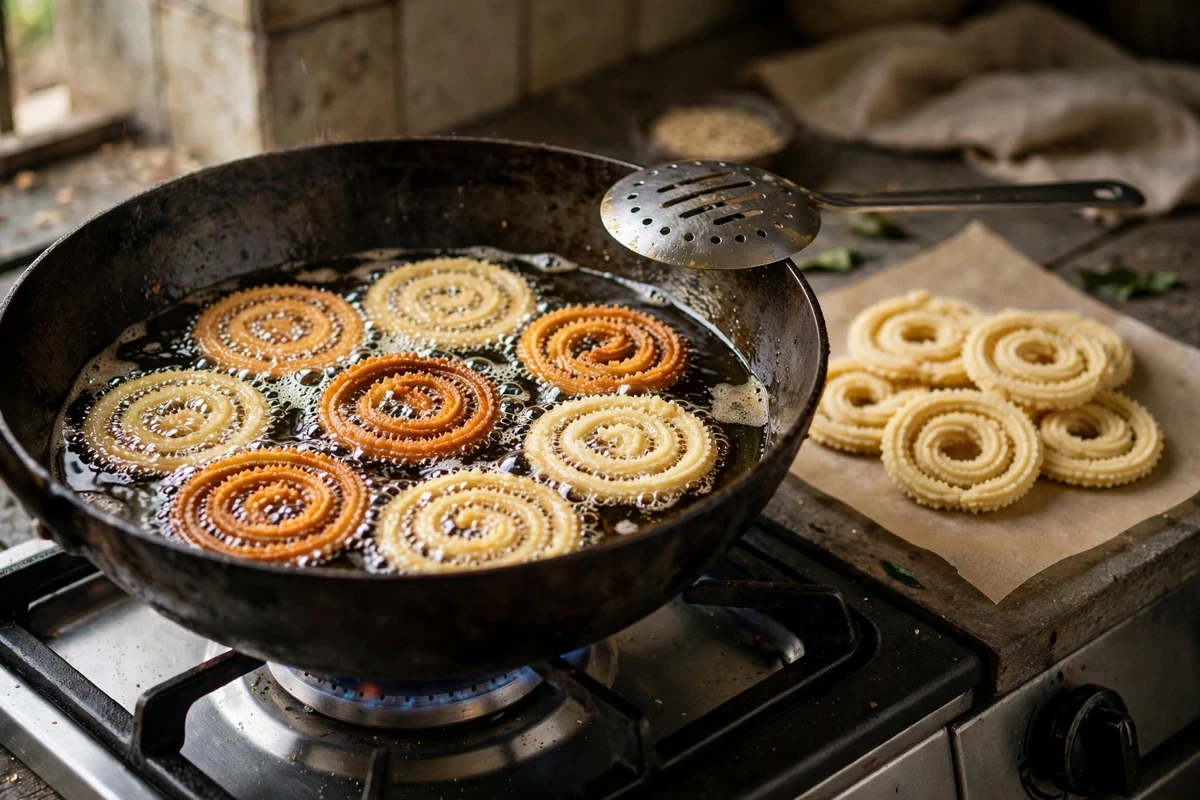
Three things decide the texture. The flour ratio — mostly rice flour, a little urad dal flour — gives a spiral that fries up light instead of dense. The dough moisture is the skill: soft and pliable, never stiff, or the spirals crack as you pipe and break in the oil; too wet and they drink grease and slump. And the oil temperature must stay at a steady medium — chakli lowered into oil that is too hot browns before it crisps through, and oil that is too cool makes it oily and soft. Fry one test spiral first, always: it tells you everything about your dough and your oil before the batch is committed.
Ingredients
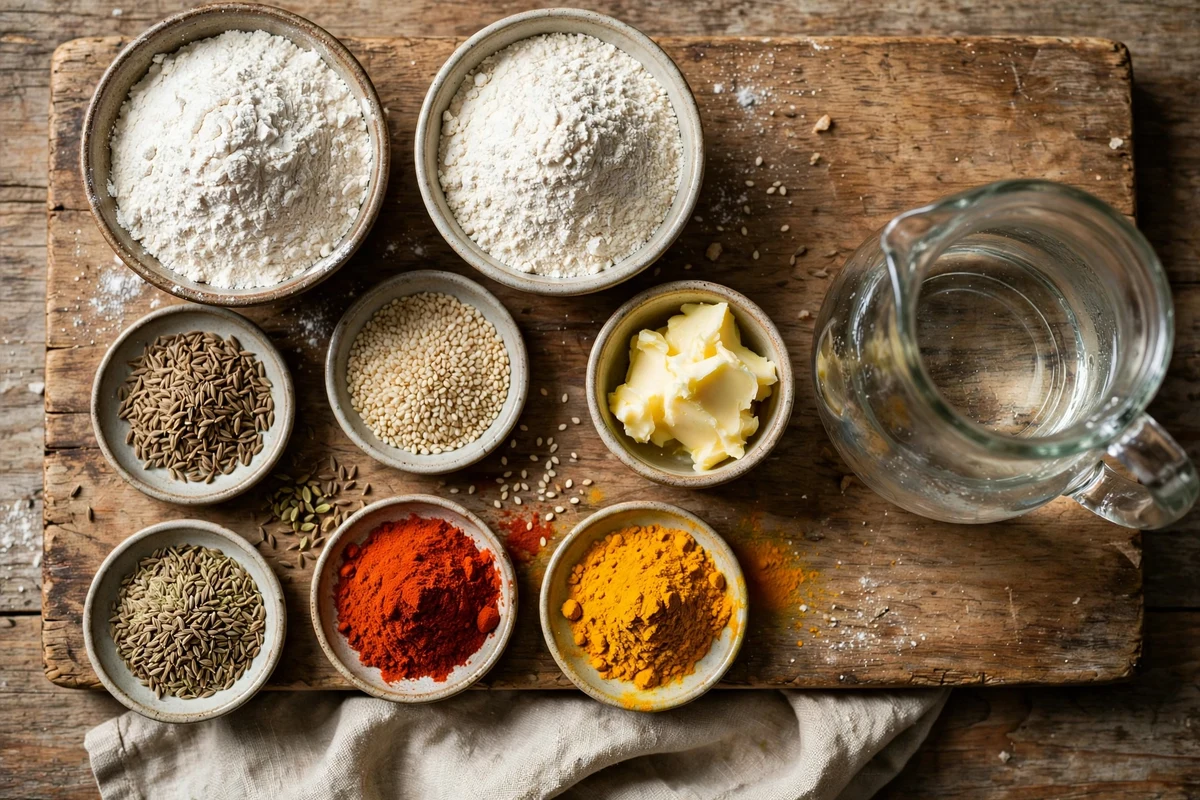
- 2 cups rice flour
- 1/2 cup urad dal flour
- 2 tablespoons butter, softened (or hot oil, for a vegan version)
- 1 teaspoon cumin seeds
- 1 teaspoon white sesame seeds
- 1/2 teaspoon ajwain (carom seeds), lightly crushed
- 1 teaspoon red chilli powder
- 1/4 teaspoon turmeric powder
- 1/4 teaspoon asafoetida (hing)
- Salt, to taste (about 3/4 teaspoon)
- About 3/4 cup warm water, as needed
- Oil, for deep frying
Step-by-Step Instructions
- Mix the dry ingredients. In a large bowl, combine the rice flour, urad dal flour, cumin, sesame, ajwain, red chilli powder, turmeric, asafoetida and salt. Mix well so the spices are evenly distributed.
- Rub in the butter. Add the softened butter and rub it into the flour with your fingertips until the mixture looks like breadcrumbs. This fat is what keeps the chakli tender-crisp rather than hard.
- Knead the dough. Add warm water a little at a time and knead into a soft, smooth, pliable dough — it should feel like soft playdough, not chapati dough. Cover with a damp cloth and rest for 15 minutes. Keep the dough covered the whole time you work; it dries out fast.
- Load the press. Grease the inside of a chakli press (murukku maker) fitted with the star plate. Fill it with a portion of dough.
- Pipe the spirals. Pipe tight spirals, about 3 inches across, onto parchment paper or a greased plate, turning the press in a circle and joining the end neatly to the coil with a fingertip. Make one batch of spirals at a time so they don’t dry out.
- Fry. Heat oil in a deep kadai over medium heat. Slide the spirals in gently, a few at a time. Fry, turning once, until golden, crisp and the bubbling subsides — about 3–4 minutes per batch. Do not rush them dark; pale gold and fully crisp is the target.
- Cool completely. Drain on a rack or kitchen paper and cool fully before storing — chakli crisps up the last of the way as it cools. Store in an airtight tin.
Troubleshooting — Read This Before Your First Batch
The spiral breaks while piping: the dough is too dry or has rested uncovered. Knead in warm water a teaspoon at a time until it pipes smoothly. Chakli turns soft after cooling: it was under-fried or the oil was too cool; fry the next batch a little longer at a steady medium heat, and cool fully before judging. Chakli is hard, not crisp: too little fat or the dough was kneaded stiff — check the butter measure and aim for that soft playdough feel. Spirals break apart in the oil: usually dry dough again, or the coil ends weren’t joined; press the tail into the spiral before frying.
Variations
- Besan chakli: swap half the rice flour for gram flour (besan) for a nuttier, slightly softer spiral.
- Garlic chakli: add 1/2 teaspoon of garlic powder to the dry mix.
- Extra-spicy: add crushed black pepper along with the chilli powder.
- Bhajani chakli: the traditional Maharashtrian route uses roasted multi-grain bhajani flour in place of the two flours — deeper flavour, same method.
Serving and Storage
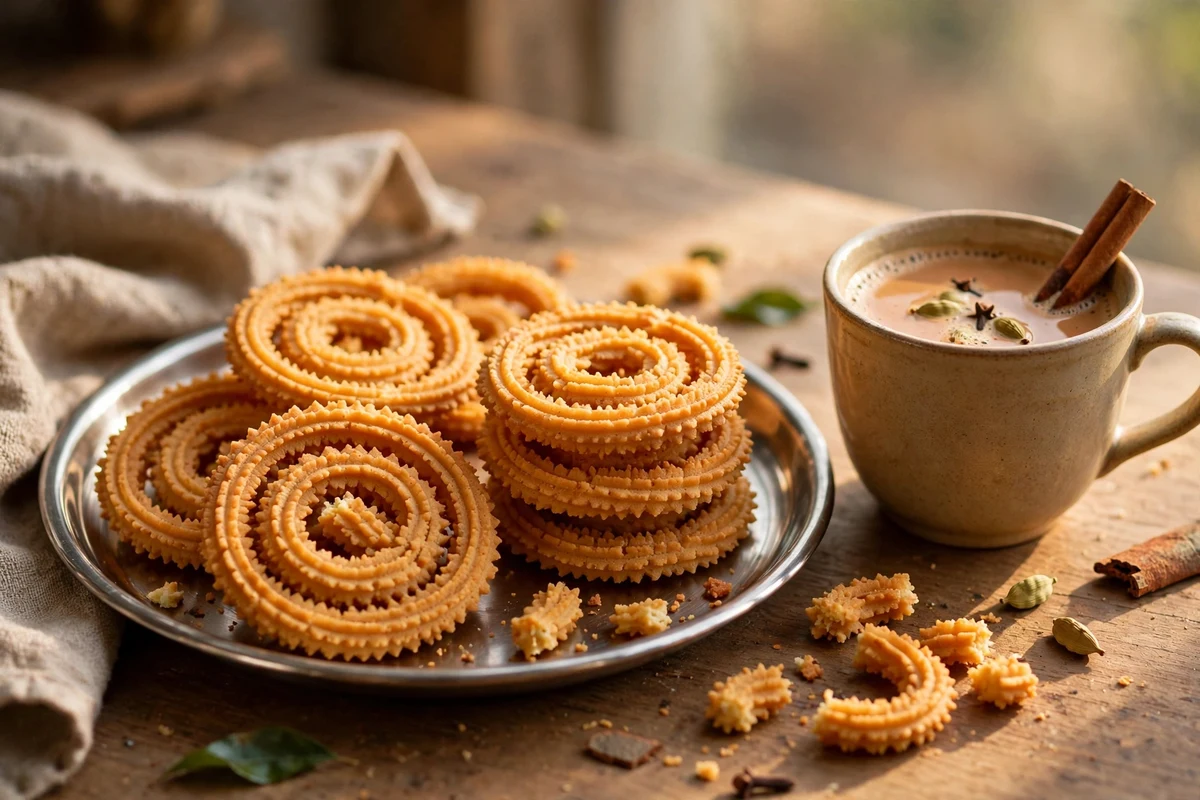
Serve chakli as part of the Diwali faral spread alongside the sweets — it is the savoury crunch that balances a plate of besan ladoo and kaju katli — or with afternoon chai any day of the year. Stored in an airtight tin at room temperature, chakli stays crisp for 2–3 weeks, which is exactly why it is made in big batches before the festival. Complete the tray with our gulab jamun and aloo poha cutlets and the faral is done.
Frequently Asked Questions
Why does my chakli break while pressing?
The dough is too dry. Add warm water a teaspoon at a time and knead until it feels soft and pliable, and keep the dough covered with a damp cloth while you work.
Why is my chakli soft instead of crispy?
Either the oil was too cool or the spirals were under-fried. Keep the oil at a steady medium heat, fry until the bubbling subsides, and cool the chakli completely before testing — it crisps as it cools.
Can I make chakli without a press?
A press gives the classic ridged spiral. Without one, roll the dough into thin ropes and coil them by hand — the flavour is the same, the ridges are not.
How long does chakli stay fresh?
In an airtight tin at room temperature, 2–3 weeks. Never store it warm; trapped steam softens it.
One test spiral, steady oil, soft dough — master those three and the tin will never stay full for long.