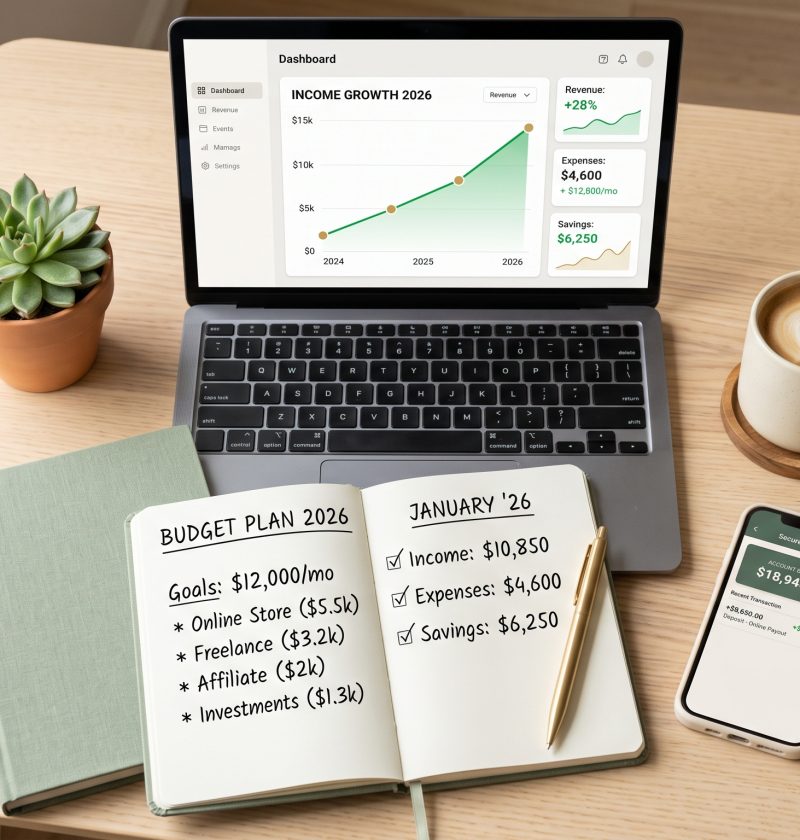
Three years ago, “making money online” mostly meant grainy YouTube thumbnails promising overnight riches. In 2026, it means something very different: an economy where over 70 million Americans now do freelance or independent work in some form, representing more than a third of the entire U.S. workforce, according to gig economy research from Speakwise. Globally, an estimated 1.57 billion people freelance in some capacity, and the worldwide gig economy is now valued at roughly $582 billion, per Capital Counselor’s 2026 freelance report.
The barrier to entry has never been lower. AI tools have compressed the time it takes to produce quality work, freelance platforms have matured into trusted marketplaces, and buyers — individuals and businesses alike — are more comfortable than ever paying for digital products, services, and content. In fact, Upwork’s 2026 Future Workforce Index found that 38% of skilled knowledge workers freelanced in the past year, up sharply from 28% just twelve months earlier, according to data compiled by Makerstations.
This guide walks through 11 realistic, genuinely free ways to start earning online in 2026 — what each one actually involves, how fast you can realistically expect results, and where to start today.
Quick Comparison: Which Method Fits You?
| Method | Startup Cost | Time to First Payout | Income Ceiling | Best For |
|---|---|---|---|---|
| Freelancing | $0 | Days | High | People with a marketable skill |
| Faceless YouTube | $0 | Months | Very High | Consistent, patient creators |
| Affiliate Marketing | $0 | Weeks–Months | Very High | Content creators, bloggers |
| Digital Products | $0 | Weeks | High | Subject-matter experts |
| Freelance Writing | $0 | Days | Medium–High | Strong writers |
| Print-on-Demand | $0 | Weeks | Medium | Designers, niche hobbyists |
| Online Tutoring | $0 | Days | Medium | Teachers, subject experts |
| Reselling/Flipping | $0 | Days | Medium | Deal-hunters, organizers |
| Micro-SaaS Tools | $0 | Months | Very High | Problem-solvers |
| Paid Surveys/Testing | $0 | Days | Low | Anyone, as a supplement |
| Ad-Monetized Blogging | $0 | Months | High (passive) | Long-term content builders |
1. Freelance Your Existing Skills
Freelancing remains the fastest realistic path from zero to your first online dollar. If you can write, design, edit video, code, manage social media, or handle bookkeeping, platforms like Upwork, Fiverr, and Contra let you list services and land a client within days, not months.
What’s changed in 2026 is specialization. Generalist freelancers increasingly compete with AI tools directly, but specialists who pair a human skill with AI fluency — think “AI-assisted video editor” or “conversion-focused copywriter using AI research tools” — are commanding premium rates rather than getting undercut by them.
Pro tip: Build a tight portfolio around one specific outcome (e.g., “I write high-converting email sequences for SaaS companies”) rather than a broad list of services. Specific positioning gets picked over generic listings almost every time.
2. Start a Faceless YouTube Channel
Faceless channels — built on voiceovers, licensed stock footage, screen recordings, or AI-generated visuals — remain one of the lowest-barrier ways to build a real audience without ever appearing on camera. Once monetized through the YouTube Partner Program, you unlock ad revenue, brand sponsorships, and affiliate income simultaneously.
Niches like personal finance, productivity, and technology explainers consistently attract the highest-paying advertisers, which directly increases your revenue per 1,000 views compared to entertainment or gaming content.
3. Affiliate Marketing Through Content
Affiliate marketing pays you a commission for recommending products people already intend to buy — no inventory, no customer service, no product creation. You simply need a platform (blog, YouTube channel, or newsletter) and an honest recommendation.
Finance tools, SaaS software, and health/wellness products tend to run the most generous affiliate programs, frequently paying 20–50% commission per sale or a flat bounty per signup. Networks like Impact and ShareASale list thousands of programs across nearly every niche imaginable.
4. Sell Digital Products
Templates, spreadsheets, Notion dashboards, printables, and mini-courses cost nothing to produce beyond your own time — and you sell the exact same product infinitely with zero marginal cost. Gumroad and Etsy’s digital download category both let you list for free.
The winning formula in 2026 isn’t a bloated $99 course nobody finishes — it’s a $9 tool that solves one specific, annoying problem extremely well.
5. Remote Freelance Writing for Businesses
Companies constantly need blog content, email newsletters, and website copy. Rather than only relying on job boards, cold-pitching small businesses directly — with a short, specific proposal showing you understand their audience — routinely lands better-paying, longer-term clients with far less competition than public listings.
6. Print-on-Demand, Without the Upfront Cost
Print-on-demand services print and ship products only after a customer buys, which means zero inventory risk. Printful integrates free with both Etsy and Shopify storefronts. Success here comes down almost entirely to niche specificity — designs built for a very particular hobby, profession, or fandom consistently outsell generic slogan t-shirts.
7. Online Tutoring and Coaching
If you’re knowledgeable in an academic subject, a language, fitness, or a professional skill, platforms like Preply and Cambly let you start tutoring with no setup cost. One-on-one coaching in high-demand areas — coding, English fluency, resume writing, standardized test prep — can pay meaningfully more per hour than most entry-level freelance categories.
8. Flip Items You Already Own (or Find for Free)
Reselling isn’t glamorous, but it’s genuinely fast, zero-cost cash if you start with items already sitting in your closet or garage. Facebook Marketplace, eBay, and Poshmark all list for free. Many resellers graduate from personal items to free curb finds, garage-sale flips, and clearance arbitrage once they learn what consistently sells.
9. Build a Micro-SaaS or Simple Web Tool
You no longer need to be a professional developer to ship something useful. AI coding assistants make it realistic for a motivated beginner to build a simple, genuinely helpful web tool — a calculator, converter, or niche generator — and monetize it through display ads or a small subscription. This path has a longer runway than most on this list, but the payoff compounds since the tool keeps earning without your continued hands-on time.
10. Get Paid for Your Opinion
Market research companies pay real money for surveys, usability testing, and focus groups. It won’t replace a full income, but it’s genuinely free to start and works well as a supplement while you build something bigger. UserTesting and Respondent typically pay $10–$60 for a 15–30 minute session.
11. Blog With High-CPM Ad Monetization
Starting a blog in a high-value niche — personal finance, insurance, software reviews, or “making money online” itself — and monetizing it through display ads via networks like Google AdSense or Google Ad Exchange remains one of the most durable passive income paths available. It takes months of consistent publishing to build meaningful traffic, but content in these specific niches commands some of the highest ad rates online, simply because advertisers in finance and software are willing to pay a premium to reach that exact audience.
Frequently Asked Questions
Do I really need $0 to start any of these? Yes — every method above can be started with tools you already own (a laptop and internet connection) and free-tier platform accounts. Paid tools can accelerate results later, but none are required to earn your first dollar.
How fast can I realistically expect to earn something? Freelancing, tutoring, reselling, and paid surveys can produce income within days. Content-based methods — YouTube, blogging, affiliate marketing — typically take weeks to months of consistent effort before meaningful income appears, because they depend on building an audience first.
Do I have to pay taxes on this income? In the U.S., self-employment and freelance income is taxable starting from the first dollar earned, regardless of the platform. The IRS self-employed individuals guide is the authoritative resource for what you’ll owe and when to file.
Which method has the best long-term income potential? Content-driven methods — a monetized blog, a YouTube channel, or a micro-SaaS tool — have the highest ceiling because the same piece of work keeps earning long after you’ve created it, unlike freelancing or tutoring, where income stops when you stop working.
The Real Takeaway for 2026
None of these methods are truly passive on day one — every one of them requires genuine effort upfront. What’s changed in 2026 is how quickly that effort compounds: AI tools have cut production time dramatically, platforms have matured into trustworthy, well-trafficked marketplaces, and audiences are more willing than ever to pay for digital products, services, and content.
Pick the one method above that most closely matches a skill or interest you already have. Commit to it for 90 days before judging the results, and once you see traction, reinvest your first earnings into scaling what’s already working rather than chasing the next idea.