Some stories you hear and immediately know they’ll stick with you forever.
This is one of those Rarest Pasta stories. It’s about pasta, sure, but it’s really about stubbornness, tradition, and one elderly woman’s refusal to let centuries of culinary history disappear. Grab a tissue—this one got me emotional.
The Rarest Pasta That Almost Died
In a small village called Nuoro on the Italian island of Sardinia, there exists a pasta so rare that only three people in the entire world know how to make it. It’s called su filindeu, which translates to “threads of God.” And trust me, after hearing this story, you’ll understand why it has such a heavenly name.
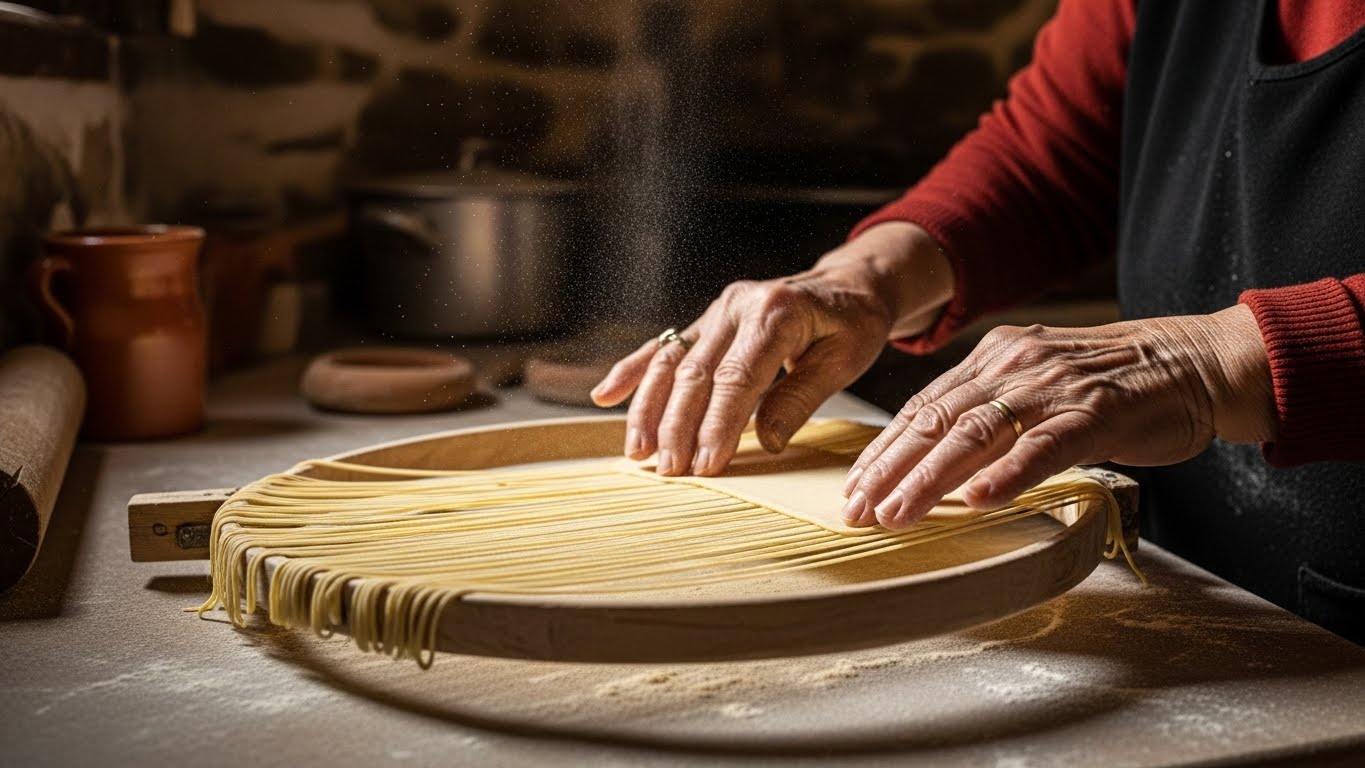
This isn’t your typical spaghetti or penne. Su filindeu looks like impossibly thin threads stretched across a circular frame, creating a pattern that resembles lace or a Rarest Pasta spider’s web. Each strand is thinner than a human hair, and the whole thing is made entirely by hand using only semolina flour, water, and salt.
The technique has been passed down through generations for over 400 years. But by 2015, it was on the verge of extinction. That’s when the world discovered Paola Abraini.
Meeting Paola: The Keeper of an Ancient Art
Paola Abraini was 81 years old when journalists first started showing up at her door. She’d been making su filindeu since she was a young girl, learning from her mother, who learned from her mother, going back generations in an unbroken chain stretching back to the 1600s.
I had the incredible privilege of meeting Paola last spring during a trip to Sardinia. Walking into her kitchen felt like stepping back in time. Stone walls, a wood-burning stove, and the most incredible smell of fresh pasta you can imagine.
She greeted me in Italian mixed with Sardinian dialect, her hands already dusted with flour despite it being seven in the morning. “The dough wakes early,” she explained through a translator. “So must I.”
The Technique That Defies Explanation
Here’s where things get really interesting. Master pasta makers from around the world have tried to learn Paola’s technique. Engineers have studied it. Food scientists have analyzed the dough. Even a famous British celebrity chef spent days in her kitchen attempting to master it.
Every single one of them failed.
According to food historians at Serious Eats, su filindeu represents one of the most technically difficult culinary techniques still practiced today, with a learning curve that can take decades to master.
Watching Paola work is like witnessing magic. She takes a simple dough ball and begins pulling it apart with movements so fast your eyes can barely follow. The dough stretches into thin strands, which she lays across a circular wooden frame in three layers, each at a different angle, creating that distinctive web pattern.
The whole process takes about ten minutes. She’s done it so many thousands of times that her hands move automatically, like a pianist playing a piece they’ve performed for fifty years. When I tried, my dough broke immediately. When a trained chef tried, same result. The dough requires just the right hydration, the right gluten development, and movements perfected over decades.
Why This Pasta Nearly Disappeared
So why was this amazing tradition dying? The answer is heartbreakingly simple: young people weren’t interested in learning it.
Paola had taught her daughters the technique when they were young, but both left Nuoro for careers in the city. One became a lawyer, the other a teacher. Neither wanted to spend their lives in a village making pasta by hand when they could have modern careers.
“I understood,” Paola told me, her eyes getting a bit watery. “The world changes. Young people want different things. But my heart… it hurt to think this would end with me.”
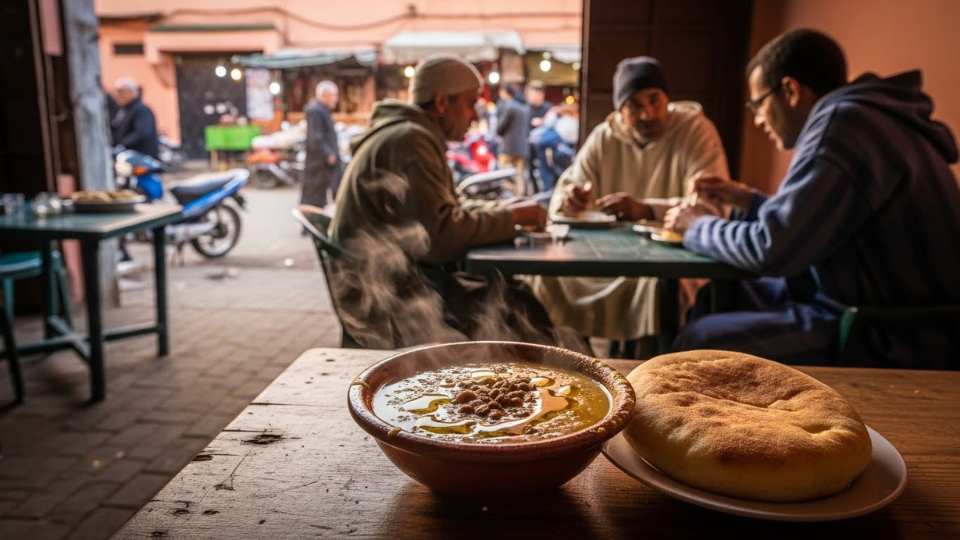
For years, she made su filindeu only for her family and for a local festival celebrating the Feast of San Francesco. That festival, by the way, happens only twice a year and is the only time you can actually taste this pasta. It’s served in a simple mutton broth—nothing fancy, just the pasta and the broth, because the pasta itself is the star.
The Day Everything Changed
In 2015, a food blogger stumbled upon the festival and posted about su filindeu online. The post went viral. Suddenly, journalists from around the world descended on tiny Nuoro. Food Network called. The New York Times sent a reporter. Paola, who’d lived her entire life in relative obscurity, was suddenly famous.
At first, she hated the attention. “Too many people asking questions,” she said. “Too many cameras. I just want to make pasta in peace.”
But then something unexpected happened. Young people from the village started reaching out. They’d seen their grandmother’s technique celebrated globally and suddenly realized what they’d been taking for granted. Three young women, all in their twenties, approached Paola and asked to learn.
Teaching the Unteachable
Training her new students became Paola’s mission. She started holding lessons three times a week in her kitchen. The learning process was brutal—all three women spent months producing broken, unusable pasta before they could even create one proper strand.
“She is very strict,” one student, Maria, told me with a laugh. “She does not accept ‘good enough.’ It must be perfect, or you do it again. Sometimes I cry from frustration, but she just says ‘again’ and hands me more dough.”
The fascinating part? Paola can’t really explain what she’s doing. When you ask her about technique, she struggles to articulate it. “You must feel it,” she says. “The dough tells you what it needs. Your hands must listen.”
This is what food anthropologists call embodied knowledge—skills so deeply ingrained that they bypass conscious thought. According to researchers at The Guardian, many traditional cooking techniques around the world are disappearing precisely because they rely on this kind of knowledge that’s incredibly difficult to transfer.
The Bigger Picture: Tradition in a Modern World
Paola’s story represents something happening across Italy and the world. Traditional food techniques are vanishing at an alarming rate. Young people move to cities. Industrial production makes handmade methods obsolete. Knowledge accumulated over centuries disappears in a single generation.
But Paola’s story also shows how things can change. Sometimes it takes outside recognition for communities to value what they have. Those young women learning su filindeu probably wouldn’t have been interested if the world hadn’t first validated what Paola was doing.
The Festival Experience
I was fortunate enough to attend the Feast of San Francesco festival where su filindeu is served. Hundreds of people line up for hours to taste this rare pasta. The atmosphere is incredible—part religious pilgrimage, part cultural celebration, part community gathering.
When I finally received my bowl of pasta in broth, I understood what all the fuss was about. The texture was unlike any pasta I’d ever eaten—simultaneously delicate and substantial. The thin strands dissolved on my tongue but still had this incredible chew. The simple broth let the pasta’s subtle flavor shine through.
But honestly? The pasta itself was almost secondary to the experience of being there, knowing the history, understanding the struggle to preserve this tradition. Every bite felt meaningful.
What Happened to the Three Students?
As of last year, all three of Paola’s students can now make su filindeu independently, though Paola still supervises them. They’ve started making it for the festival, taking some pressure off Paola, who is now 87 and dealing with arthritis in her hands.
One student, Francesca, has become particularly skilled. “Maybe in ten more years, I will be as good as Paola,” she told me. “Maybe twenty. She has been doing this for seventy years. I have been doing it for seven. There is still so much to learn.”
The relationship between Paola and her students has become deeply emotional. They call her “Nonna” (grandmother) even though they’re not related. She tears up when talking about them. “Now when I die,” she said, “this does not die with me. That is everything.”
Lessons Beyond Pasta
This story teaches us something important about preserving traditions. It’s not enough to just document techniques in books or videos. True mastery requires human connection, patience, and years of practice. Some knowledge can only be transferred from hand to hand, heart to heart.
It also reminds us that traditions don’t have to remain frozen in time. Paola’s students are already thinking about how to share su filindeu with more people while respecting its cultural significance. Maybe special workshops. Maybe small-batch production for restaurants. The tradition can evolve and still maintain its soul.
How You Can Experience This Rare Pasta
Getting to taste su filindeu is incredibly difficult but not impossible. The Feast of San Francesco happens twice a year in Nuoro—in May and October. You’ll need to plan far in advance, as accommodation in tiny Nuoro fills up fast.
Alternatively, one restaurant in Nuoro called “Su Filindeu” (yes, named after the pasta) sometimes serves it, but only when Paola or one of her students makes a batch. You can’t reserve it—you just have to get lucky.
For those interested in traditional Italian food culture, Gambero Rosso provides excellent resources on regional specialties and where to find authentic experiences.
Paola’s Message to the World
When I asked Paola what she wanted people to know, she thought for a long moment before responding.
“Food is memory,” she said. “When you make something the way your grandmother made it, and her grandmother before her, you are keeping people alive. Every time I make su filindeu, my mother’s hands are there with mine. Her mother’s hands. All the women who came before. This is not just pasta. This is love made visible.”
I’m not ashamed to say I cried a little when she said that.
The Future of Su Filindeu
Today, su filindeu’s future looks brighter than it has in decades. Paola is training her students well. The village has recognized the cultural and economic value of this unique tradition. There’s even talk of applying for UNESCO Intangible Cultural Heritage status.
But the technique’s survival still depends on human hands and patient teaching. It can’t be mechanized. It can’t be rushed. It requires dedication that’s increasingly rare in our fast-paced world.
And you know what? Maybe that’s beautiful. Maybe in a world where everything is instant and mass-produced, we need things that demand time, patience, and human connection. We need reminders that some things are worth preserving precisely because they’re difficult.
Paola Abraini is now 87 years old and still makes su filindeu several times a week. She’s living proof that one person’s determination can preserve centuries of history. And that, my friends, is the most nourishing story I’ve ever encountered.