Let’s talk about something crazy I did last month.
I spent more money on a single dinner than most people spend on their monthly grocery budget. We’re talking about Noma Copenhagen—the restaurant that’s been called the best in the world multiple times. Was it worth it? Well, grab a coffee and let me tell you about the most surreal dining experience of my life.
Noma Copenhagen: Let’s Get Real About the Cost
Before we go any further, let’s address the elephant in the room. A dinner at Noma costs around 3,000 Danish kroner per person (about $430 USD) just for the food. Add wine pairings, and you’re looking at closer to $700 per person. Then there’s the flight to Copenhagen, the hotel, the whole trip.
My total damage? Just over $2,500 for the entire experience including travel. That’s a used car. That’s a vacation to Bali. That’s three months of rent in some cities.
So yeah, this better be good.
Getting a Reservation: The Hunger Games of Fine Dining
Here’s something nobody tells you—actually getting a table at Noma is harder than the meal itself. Reservations open exactly two months in advance at 10 AM Copenhagen time. I’m talking about setting alarms, having multiple devices ready, and clicking faster than you’ve ever clicked in your life.
I failed three times before finally snagging a spot. The website crashed twice. My hands were literally shaking when the confirmation email came through. It felt like winning the lottery, except I had to pay for the privilege.
According to food critics at The Guardian, Noma’s reservation system has become notoriously difficult, with tables selling out within minutes of becoming available.
First Impressions: Not What You’d Expect
When you spend this much money, you expect… I don’t know, gold-plated doors? A red carpet? But Noma sits in a renovated warehouse in Copenhagen’s Christianshavn neighborhood. From the outside, it looks like any other industrial building.
Inside, it’s surprisingly casual. No stuffy tablecloths or uptight atmosphere. Natural wood everywhere, large windows overlooking the water, and staff wearing comfortable-looking uniforms rather than formal attire. It felt more like visiting a friend’s really cool loft than entering a temple of gastronomy.
The vibe immediately put me at ease, which I wasn’t expecting at all.
The Food: Eighteen Courses of Pure Madness
Okay, so here’s where things get wild. The menu changes completely with the seasons—I visited during their “ocean season,” which meant everything came from the sea or the shore.
Course One: Live shrimp, still moving on the plate. Yes, you read that right. They served me living creatures and expected me to eat them. I hesitated for exactly three seconds before remembering how much this cost. Sweet, delicate, and surprisingly not weird once I got over the initial shock.
Course Five: Fermented sea vegetables that tasted like the ocean concentrated into pure umami flavor. Paired with a mushroom broth so complex it made me rethink everything I knew about soup.
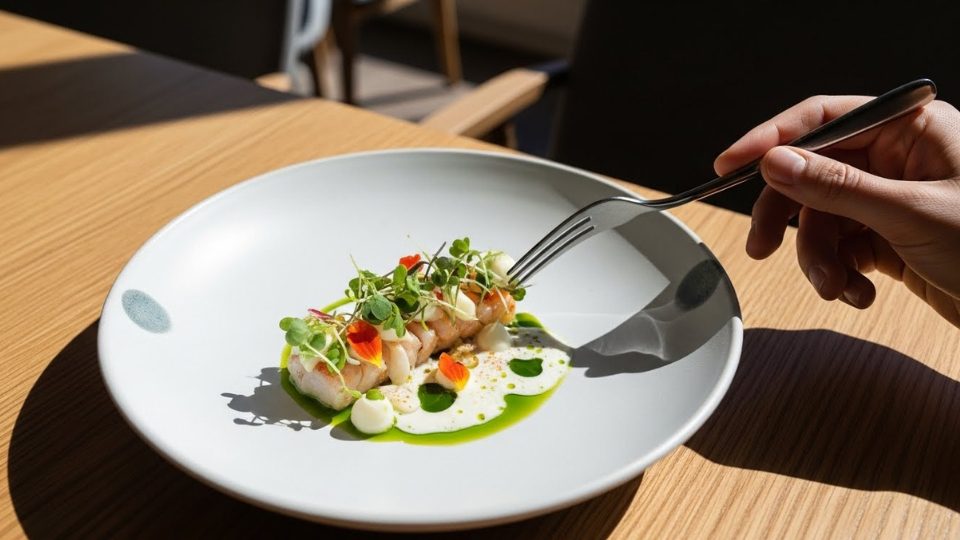
Course Twelve: Langoustine served with a sauce made from its own head. Sounds gross, tastes incredible. The chef came out personally to explain how they extract every bit of flavor.
Each course came with a story. Where it was foraged, who found it, why this particular preparation method. The staff spoke passionately about every single ingredient like they were introducing you to their best friends.
For insights into modernist cuisine techniques, Chef’s Table features excellent articles about innovative cooking methods used in top restaurants.
The Wine Pairings: Worth Every Extra Penny
I almost skipped the wine pairing to save money. Thank goodness I didn’t. Each course came with a different wine, many from small Nordic producers I’d never heard of. Some weren’t even technically wines—there was a fermented pear juice that blew my mind.
The sommelier explained each pairing like a professor giving a masterclass, but without any pretension. Just genuine excitement about these unique bottles. By course ten, I was fully converted to natural wines.
Service: Where Noma Really Shines
Here’s what separated this from every other fancy restaurant I’ve visited: the service felt human. Staff members sat down at our table to explain dishes. They joked around. They asked genuine questions about where we were from and what we thought.
One server spent fifteen minutes telling us about foraging in Danish forests. Another shared her grandmother’s recipe for pickling vegetables. It never felt scripted or robotic like it does at some high-end places.
The Atmosphere and Other Guests
Looking around the room, I noticed something interesting. Sure, there were some wealthy-looking couples celebrating anniversaries. But there were also young people in their twenties who’d clearly saved for this moment. Food enthusiasts from every continent. Nobody was dressed overly formal.
Everyone shared this unspoken understanding—we were all here because we love food, not to show off. That collective energy made the experience feel special rather than exclusive.
The Honest Critique: Not Everything Was Perfect
Let me be real with you. A few courses didn’t land for me. There was this sea urchin preparation that tasted too intensely of iodine. One dish was so salty it made my eyes water. And honestly, by course fifteen, I was getting full and losing the ability to appreciate subtle flavors.
Also, the whole meal took nearly four hours. By the end, my back hurt from sitting, and I desperately needed to walk around. Not exactly comfortable, even if the chairs were nice.
According to restaurant reviewers at Bon Appétit, even the world’s best restaurants have dishes that don’t work for everyone, and that’s actually part of pushing culinary boundaries.
Comparing to Other Three-Michelin-Star Experiences
I’ve been fortunate enough to eat at a few other three-star restaurants—The French Laundry in California, Eleven Madison Park in New York, and Le Bernardin. How does Noma compare?
Noma feels more experimental and less about perfection. The French Laundry was technically flawless but almost too formal. Eleven Madison Park had incredible theatrics. Noma landed somewhere in between—innovative but approachable, serious but fun.
The ingredient sourcing at Noma surpasses anywhere else I’ve visited. Everything is hyperlocal, foraged, or sustainably sourced. They’re not just saying it for marketing—you can taste the difference.
The Value Question: Would I Go Back?
Here’s my honest take: Noma provides an experience you literally cannot get anywhere else in the world. The techniques, the ingredients, the philosophy—it’s unique. If you’re deeply passionate about food and cooking, it’s worth experiencing once in your lifetime.
But would I go back? Probably not. Once was enough to understand what they’re doing and why it matters. I’d rather spend that money experiencing ten different excellent restaurants than returning to one, even if it’s the best.
For someone casually interested in food, this might not be worth it. But for serious food lovers, it’s like visiting the Louvre or seeing the Northern Lights—a bucket list experience that changes how you think about the subject.
Practical Tips If You’re Planning to Go
Book way in advance: Set multiple reminders and be ready to click the second reservations open.
Come hungry: Skip breakfast and lunch. You’ll need the appetite.
Budget for the full experience: Don’t just calculate the meal cost. Factor in travel and accommodation.
Ask questions: The staff loves talking about the food. Don’t be shy about engaging with them.
Take photos early: You’ll want memories, but don’t let photography distract from actually enjoying the meal.
Plan recovery time: Schedule nothing for the next morning. You’ll need time to process the experience.
Final Verdict: The Bottom Line
Noma earns 4.5 out of 5 stars from me. It’s not perfect, and it’s definitely not for everyone. But it represents something important in the culinary world—a commitment to innovation, sustainability, and pushing boundaries.
Is it worth the money? That depends entirely on your relationship with food. If eating is just fuel for you, absolutely not. If food is your passion and you can afford it without serious financial strain, then yes, do it once.
Just maybe pack some snacks for the plane ride home. After eighteen courses, you’d think I’d be stuffed, but somehow I was hungry again by the next morning. The magic of tiny portions, I guess!
Have you ever splurged on a once-in-a-lifetime dining experience? Or is this completely bonkers to you? I’d love to hear your thoughts!