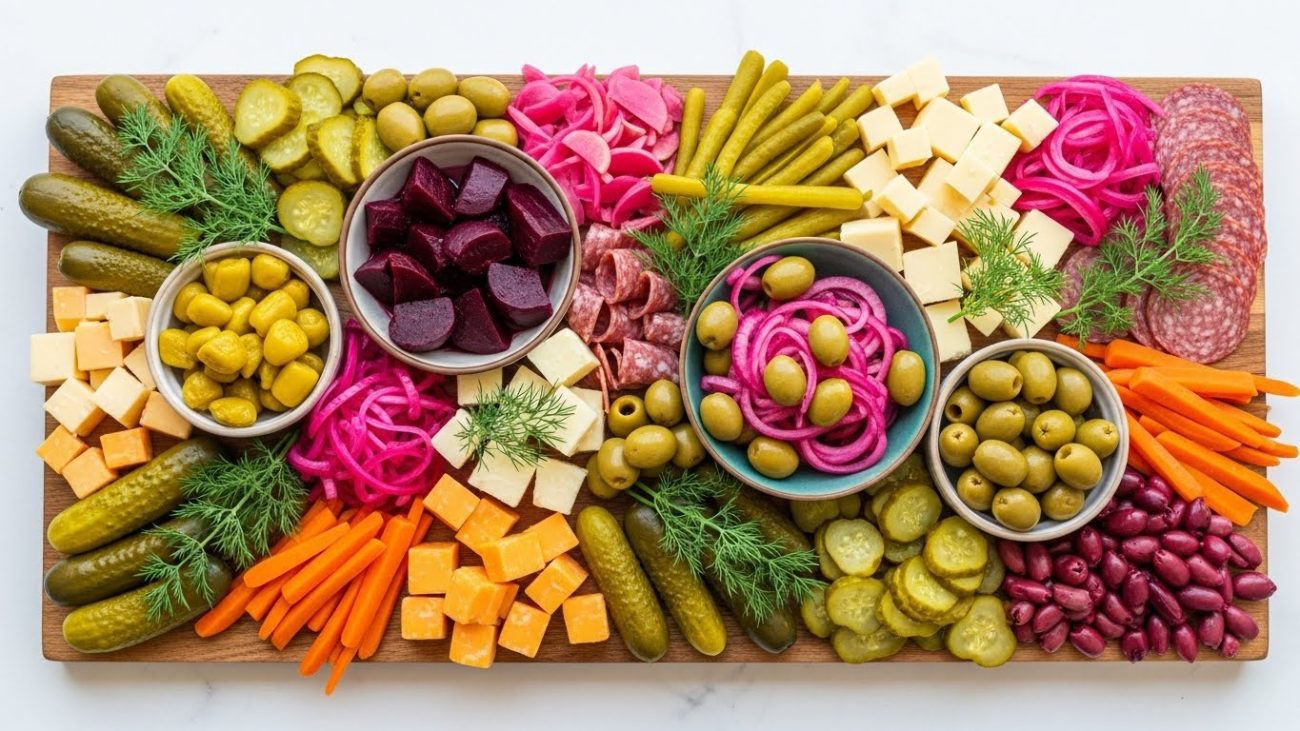
Okay, I know what you’re thinking.
Pickle boards? Really? That’s the big trend? But hear me out—this is actually way cooler than it sounds, and I’m lowkey obsessed with how creative Butter Boards people are getting with this.
What Even Is a Butter Boards Pickle?
Remember when butter boards blew up in 2022 and everyone was smearing softened butter on wooden boards and topping it with fancy salt? Yeah, that was wild. Well, pickle boards are kind of like that, but way more interesting and honestly more practical.
A pickle board is basically a beautiful arrangement of pickled and fermented foods displayed on a board or platter. We’re talking pickles (obviously), but also pickled vegetables, olives, fermented foods, cured meats, cheeses, and various accompaniments. It’s like a charcuterie board’s tangy, zingy cousin.
The trend started gaining traction on TikTok around December 2025, and by January 2026, everyone from food bloggers to home cooks to fancy restaurants was jumping on the pickle board bandwagon. The hashtag #pickleboard has already racked up over 500 million views.
Why Pickle Boards Are Actually Genius
Unlike butter boards (which, let’s be honest, were kind of weird), pickle boards make total sense. Here’s why people are loving them:
They’re actually practical. You can eat everything on the board without scraping butter off wood. Game changer.
The flavor combinations are incredible. The acidity Butter Boards from pickled items cuts through rich cheeses and cured meats perfectly. Your taste buds get a workout.
They’re naturally low-carb and keto-friendly. No bread required, though you can totally add some if you want.
They look absolutely stunning. The bright colors of pickled vegetables make for seriously Instagram-worthy presentations.
They’re conversation starters. Everyone has opinions Butter Boards about pickles, and pickle boards give people something fun to talk about at parties.
According to food trend analysts at Food & Wine, pickle boards represent a broader movement toward bold, acidic flavors that have been gaining popularity since the pandemic changed our taste preferences.
What Goes on a Pickle Board? Let’s Break It Down
Here’s where you can get creative. There are no strict rules, but I’ll share what’s been working for me:
The Pickle Foundation: Start with at least three different types of pickles. I like having classic dill, bread and butter, and something spicy like pickled jalapeños. Some people go crazy and include pickle spears, pickle chips, and cornichons. More is definitely more here.
Pickled Vegetables: This is where color and variety come in. Pickled beets, carrots, cauliflower, red onions, pepperoncini, and pickled green beans all work beautifully. The visual contrast is what makes these boards so eye-catching.
Olives: Multiple varieties are key. Green olives, Kalamata, Castelvetrano, maybe some marinated olives with herbs. Olives bring a different kind of brininess that complements the pickles.
Fermented Foods: Kimchi, sauerkraut, or fermented carrots add probiotic benefits and complex flavors. Fair warning—not everyone loves fermented foods, so maybe put these in a separate small bowl.
Cheeses: Sharp cheddar, aged gouda, blue cheese, or smoked gouda work great. The salt and fat from cheese balance the acid from pickles perfectly. Avoid soft, creamy cheeses—they don’t hold up as well to the acidity.
Cured Meats: Salami, prosciutto, or pepperoni add protein and saltiness. I usually fan these out or roll them up for visual interest.
Accompaniments: Whole grain mustard, grainy Dijon, hot honey, or even pickle juice shots (yes, really). Some people add crackers or crostini on the side, but Butter Boards that’s optional.
The Science Behind Why We’re Craving Sour
There’s actually interesting science behind why pickle boards are resonating right now. Research shows that our collective palate has been shifting toward more intense, bold flavors over the past few years.
Some food scientists believe that increased stress levels make us crave more extreme flavors—sweet, salty, sour, and spicy. Pickled foods hit that sour note hard, and the vinegar tang literally makes your mouth water, which can be incredibly satisfying.
Plus, there’s growing awareness about gut health and probiotics. Fermented and pickled foods support digestive health, so people feel good about eating them. It’s indulgent but also kind of healthy? Win-win.
How to Build Your First Pickle Board
Alright, let’s get practical. Here’s my step-by-step process for creating a pickle board that’ll impress everyone:
Step 1: Choose Your Board Use a large wooden cutting board, a slate serving board, or even a rimmed baking sheet lined with parchment. You want something big enough to spread everything out without crowding.
Step 2: Start with Small Bowls Place small bowls around the board for items that might roll away or have lots of liquid (olives, fermented foods, pickled items with juice). This creates anchor points for your arrangement.
Step 3: Add Your Pickles First Arrange different pickle varieties in sections. Fan out pickle spears, pile pickle chips, create little mounds of different types. Let colors guide your placement.
Step 4: Fill in with Cheese and Meat Cube some Butter Boards cheese, leave some in blocks with a small knife. Roll or fold your cured meats. Distribute them around the board, filling in gaps.
Step 5: Add Pickled Vegetables Use the bright colors of pickled beets, carrots, and peppers to create visual interest. Think about color contrast when placing items next to each other.
Step 6: Scatter the Small Stuff Fill any remaining gaps with olives, cornichons, or pepperoncini. Every space should have something interesting.
Step 7: Finish with Fresh Herbs Fresh dill, parsley, or thyme sprigs make everything look professional and add a pop of green.
For more creative serving ideas and presentation tips, Bon Appétit regularly features innovative approaches to entertaining and food styling.
Creative Pickle Board Variations People Are Making
The pickle board trend has evolved into some seriously creative variations:
The Bloody Mary Board: Everything you’d want with a Bloody Mary—pickles, olives, celery, cheese, meat, plus actual Bloody Mary shots. Perfect for brunch.
The All-Dill Everything Board: Different types of dill pickles (chips, spears, whole, fried pickles) plus dill-forward cheeses and dill-cured salmon. For pickle purists.
The Spicy Pickle Board: All pickled items are spicy versions—jalapeños, spicy pickled carrots, hot peppered salami, pepper jack cheese, spicy mustard. Not for the faint of heart.
The Sweet and Sour Board: Combines pickled items with sweet elements like candied nuts, fruit preserves, and honey. Interesting flavor contrast.
The International Pickle Board: Features pickled items from different cuisines—Korean kimchi, Japanese tsukemono, Middle Eastern pickled turnips, German sauerkraut, American dill pickles. A global tour of fermentation.
The Social Media Angle
Let’s be real—part of pickle boards’ success comes from how photogenic they are. The bright colors and varied textures make them perfect for Instagram and TikTok. Food influencers have been going wild with these.
Some creators make ASMR videos of assembling pickle boards. Others film reaction videos of people trying unusual pickled items. There are even pickle board “mukbangs” where people eat entire boards in one sitting (which seems like a lot of sodium, but you do you).
The trend has spawned pickle board “challenges” where people try to create the most creative or unusual versions. One guy made a pickle board entirely of items he pickled himself from his garden. Another person created a dessert pickle board with pickled fruits. The creativity is honestly impressive.
Where to Buy Pickle Board Ingredients
You don’t need fancy specialty stores for this. Here’s where I source my pickle board items:
Regular grocery stores have surprisingly good pickle selections. Check the international aisle for interesting varieties.
Trader Joe’s is pickle board heaven—they have amazing pickled vegetables, unique olives, and interesting cheeses at great prices.
Farmers markets often have vendors selling homemade pickles and fermented foods. These are usually higher quality than store-bought.
Costco is great for buying olives and cheeses in bulk if you’re feeding a crowd.
Online specialty shops like Murray’s Cheese or igourmet.com for really special items if you want to go all out.
The Pickle Board Party: How to Serve This to Guests
I hosted a pickle board party last weekend, and it was honestly the most fun I’ve had entertaining in ages. Here’s what worked:
Make it interactive: Set up a build-your-own pickle board station with all the ingredients in separate containers. Let guests create their own personal boards.
Pair with drinks: Pickle board flavors go amazingly well with beer, dry white wine, or vodka-based cocktails. Some people were even sipping pickle juice between bites (pickle juice shots are apparently a thing now).
Provide proper utensils: Small forks, toothpicks, and napkins are essential. Pickle juice gets everywhere.
Set expectations: Warn people about the strong flavors and high sodium. This isn’t subtle food, and some guests might need to ease into it.
Have palate cleansers available: Plain crackers or bread help reset taste buds between intense bites.
The Backlash: Yes, Some People Hate This Trend
Like any viral food trend, pickle boards have their critics. Some people think they’re trying too hard. Others say it’s just an excuse to eat pickles and call it a trend. Food snobs complain that it’s not sophisticated enough.
And you know what? They’re entitled to their opinions. Not every trend is for everyone. But the people who love pickle boards REALLY love them, and that enthusiasm is contagious.
The most common complaint is the sodium content. Pickled foods are indeed high in sodium, so this isn’t an everyday thing. But as an occasional party food or special treat? Totally fine for most people.
My Honest Take on Pickle Boards
After making probably a dozen pickle boards over the Butter Boards past month (yes, I have a problem), here’s my verdict: this trend actually has staying power.
Unlike butter boards, which were more gimmick than substance, pickle boards solve a real problem—how to create an impressive, delicious party spread that accommodates different dietary preferences while looking amazing and tasting even better.
The flavor combinations genuinely work. The presentation is foolproof—even if you just dump everything on a board randomly, the colors make it look intentional. And the variety means there’s something for everyone (except maybe people who genuinely hate pickles, but those people are suspect anyway).
Will pickle boards still be trendy in a year? Probably not as a specific “trend,” but I think they’ll stick around as a regular entertaining option, like charcuterie boards or cheese plates. Some trends fade because they were never that good to begin with. This one might actually become a classic.
Try It Before You Judge It
Look, I get it. When I first heard about pickle boards, I rolled my eyes hard. It sounded like peak food trend ridiculousness. But after actually making and eating several, I’m a convert.
There’s something genuinely fun about building these boards, about playing with different flavor combinations, about watching people’s faces light up when they try an unexpected pickle pairing that works perfectly.
So before you dismiss this as just another weird internet food trend, maybe give it a shot? Worst case scenario, you end up with a bunch of delicious pickles and cheese. Best case? You discover your new favorite way to entertain.
And if nothing else, it’s definitely more practical than Butter Boards smearing butter on a board. I’m still not over that one.
