I walked into Sushi Yamamoto expecting good fish. I left questioning my entire approach to life.
This isn’t hyperbole. Spending three hours watching a 73-year-old man make sushi with the precision of a surgeon and the passion of a first-year apprentice genuinely changed how I think about work, dedication, and what it means to master something.
Let me tell you about Takashi Yamamoto, and why his tiny eight-seat restaurant in Tokyo’s Ginza district might be the most important dining experience I’ve ever had.
Finding the Restaurant Nobody Writes About
Sushi Yamamoto doesn’t have a website. No Instagram account. No Michelin stars (by choice—he turned down the inspection). The only way you learn about it is through word of mouth, and even then, getting a reservation requires knowing someone who knows someone.
I heard about it from a taxi driver in Tokyo who mentioned his uncle ate there weekly. After some persistence and questionable Google translation attempts, I managed to secure a seat three months later. The reservation confirmation was a handwritten postcard in Japanese. Very old school.
The restaurant sits on the second floor of an unmarked building, accessible only by a narrow staircase. No sign outside, no menu posted. If you didn’t know it was there, you’d walk right past it every single day.
Meeting Yamamoto-san
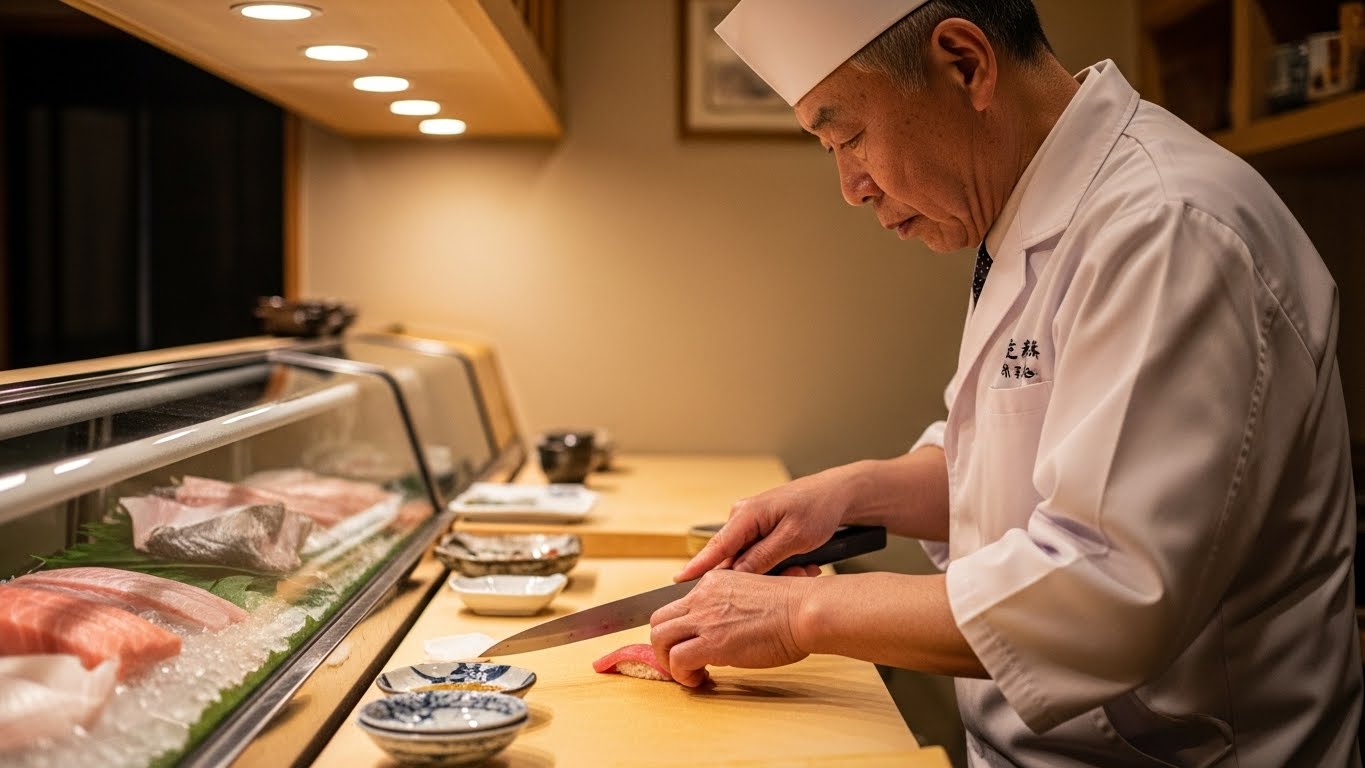
Takashi Yamamoto looks exactly like you’d imagine a master sushi chef should look. White hair, weathered hands, impeccable posture, wearing a pristine white chef’s coat. He greeted each guest with a bow, making eye contact with everyone before we sat down.
The restaurant is impossibly small—just a hinoki wood counter that seats eight people, with Yamamoto-san standing behind it. No tables, no private rooms, no separation between chef and diner. Everything happens right in front of you.
He started working as a sushi apprentice at age fifteen. That was 58 years ago. He’s been standing behind this exact counter for forty years, serving roughly the same menu, using the same suppliers, following the same routines. And he shows up six days a week, never missing a service.
According to food anthropologists at Bon Appétit, the Japanese concept of “shokunin”—craftsperson dedicated to perfecting their craft—represents one of the purest forms of culinary dedication still practiced today.
The Omakase Experience Unlike Any Other
Omakase means “I’ll leave it up to you”—basically, the chef decides what you eat. At Sushi Yamamoto, this takes on deeper meaning. You don’t choose anything. You don’t make requests. You simply trust.
The meal started with a small bowl of homemade tsukemono (pickled vegetables). Not fancy, just perfectly pickled daikon and cucumber. Simple enough that my grandmother could make them, but somehow these tasted better than any I’d ever had.
Yamamoto-san explained through minimal English and hand gestures that he’d been making these pickles the same way for forty years. Same recipe his teacher taught him. Same ceramic crock for fermenting. He pulled out a small jar to show me—it was older than I am.
This attention to tradition and consistency mirrors the dedication found in other centuries-old culinary techniques where recipes and methods are preserved across generations.
The Sushi: Twenty Pieces of Perfection
The omakase consisted of twenty pieces of nigiri sushi, served one at a time over roughly two hours. Each piece prepared immediately before placing it in front of you. No batch preparation, no assembly line efficiency. Just complete focus on one piece at a time.
The first piece was chu-toro (medium fatty tuna). Yamamoto-san sliced it, formed the rice ball with three quick movements, brushed it with nikiri (sweet soy sauce), and placed it directly on the counter in front of me. The whole process took maybe fifteen seconds, but every movement was deliberate and precise.
I picked it up with my fingers (using chopsticks is actually considered odd for sushi). The rice was warm—not hot, not room temperature, but precisely body temperature. It nearly dissolved on my tongue. The tuna was buttery, melting immediately, with that nikiri adding just enough sweetness to complement the fish.
“How long does it take to learn to make rice like this?” I asked through another guest who spoke Japanese.
Yamamoto-san smiled slightly. “I am still learning,” he said. Fifty-eight years in, still learning.
The Philosophy: There Is No Arrival, Only Practice
Between courses, Yamamoto-san would occasionally share thoughts through our translator. His philosophy was consistent: mastery isn’t a destination you reach. It’s a practice you commit to until you die.
He told a story about his teacher, who he studied under for twelve years before being allowed to make sushi for customers. During those twelve years, he did nothing but prep work—cleaning fish, making rice, maintaining the workspace. No actual sushi making.
“Americans would quit after one month,” he said with a slight laugh. “They want to be chef immediately. But if you rush learning, you miss the details. Details are everything.”
He pointed to the rice. “Perfect rice is not one thing. It is ten thousand small decisions. The rice variety. The water hardness. The soaking time. The cooking temperature. The cooling technique. The seasoning balance. The storage humidity. The serving temperature. How you handle it. How much pressure you use.”
Each of those variables can ruin the rice if wrong. Getting them all right consistently requires years of practice and complete attention. Most people, he suggested, don’t have the patience.
The Daily Routine: Discipline as Devotion
I asked about his typical day. The answer was both inspiring and slightly terrifying.
He wakes at 4:30 AM every morning, six days a week. By 5:00 AM, he’s at Tsukiji Market (now Toyosu Market) selecting fish. He’s known every fish vendor there for decades. They save certain pieces specifically for him.
By 8:00 AM, he’s back at the restaurant preparing rice. This takes two hours—washing, soaking, cooking, seasoning, cooling, maintaining. By 10:00 AM, he’s prepping fish—filleting, aging certain pieces, preparing others. By 3:00 PM, he’s ready for service.
Service runs from 6:00 PM to 10:00 PM. Then cleanup, prep for tomorrow, home by midnight. Sleep, repeat. Six days a week. For forty years.
“Don’t you get tired?” I asked. “Don’t you want to retire?”
He looked genuinely confused by the question. “Retire to do what? This is what I do. This is who I am. Why would I stop?”
The Economics: Survival Through Simplicity
Here’s something fascinating: Sushi Yamamoto charges significantly less than comparable sushi restaurants. The omakase costs about 25,000 yen (roughly $170 USD). In Ginza, that’s almost cheap. Other top sushi spots charge $400-$500 per person.
Why the lower price? Yamamoto-san explained that he doesn’t need more money. He owns the building (paid off decades ago), buys fish directly without middlemen, has no employees to pay, and keeps expenses minimal. He charges enough to buy excellent ingredients and maintain the space. Nothing more.
“I didn’t become a sushi chef to get rich,” he said. “I became a sushi chef because I love sushi. The money is just what allows me to keep doing this.”
This philosophy stands in stark contrast to modern food culture where expensive tasting menus at three-Michelin-star restaurants often prioritize innovation and prestige over pure craft.
The Lesson in Every Piece
As the meal progressed, I started noticing things. The way he cleaned his knife between every cut. How he kept his workspace completely organized with nothing unnecessary in reach. The small adjustments he’d make to each piece based on the specific cut of fish.
One piece of mackerel was slightly thicker on one side. He noticed before cutting, adjusted his angle by maybe two degrees, and the result was perfectly uniform. Most people wouldn’t have seen the imbalance. He couldn’t not see it.
Another moment: he made a piece, looked at it for one second, then remade it completely. I couldn’t tell what was wrong with the first one. But to him, something was off—maybe the rice compression, maybe the fish placement—and that wasn’t acceptable.
This isn’t perfectionism in the neurotic sense. It’s perfectionism as respect—for the fish, for the customer, for the craft itself. Nothing leaves his hands unless it meets his standard, and his standard hasn’t dropped in six decades.
Teaching the Next Generation (Or Not)
I asked if he had students, if he was passing on his knowledge. He shook his head.
“No one wants to learn this way anymore,” he explained. “Young people want to be famous chef in two years. Open restaurant, get Instagram followers, be on TV. They don’t want to spend ten years just watching and practicing.”
He’d had three apprentices over the years. One quit after six months. Another lasted two years before leaving for a restaurant that paid more. The third stayed seven years and now runs his own place, though Yamamoto-san noted that his sushi is “good, but too fast. He rushes.”
The traditional apprenticeship system is dying because it requires something rare: the willingness to delay gratification for years, to work hard for no recognition, to value mastery over success.
“Maybe I am the last generation,” he said quietly. “Maybe this way of learning is finished. Young people have different values now. I don’t judge them. Times change. But something is lost.”
The Most Memorable Piece: Simplicity as Mastery
Near the end of the meal, Yamamoto-san served tamago—sweet egg omelet. In sushi restaurants, tamago is often considered the test of a chef’s skill because it’s deceptively simple. Just eggs, sugar, dashi, and technique.
His tamago was extraordinary. Slightly sweet but not dessert-sweet. Custardy but with structure. Warm but not hot. It was simultaneously rich and light, and I still don’t understand how that’s possible.
“This took me fifteen years to perfect,” he said. “Just eggs. Fifteen years.”
That statement encapsulates everything about Yamamoto-san’s approach. Fifteen years to perfect something as “simple” as eggs. Most people wouldn’t invest fifteen weeks. But those fifteen years are why his tamago is different from everyone else’s.
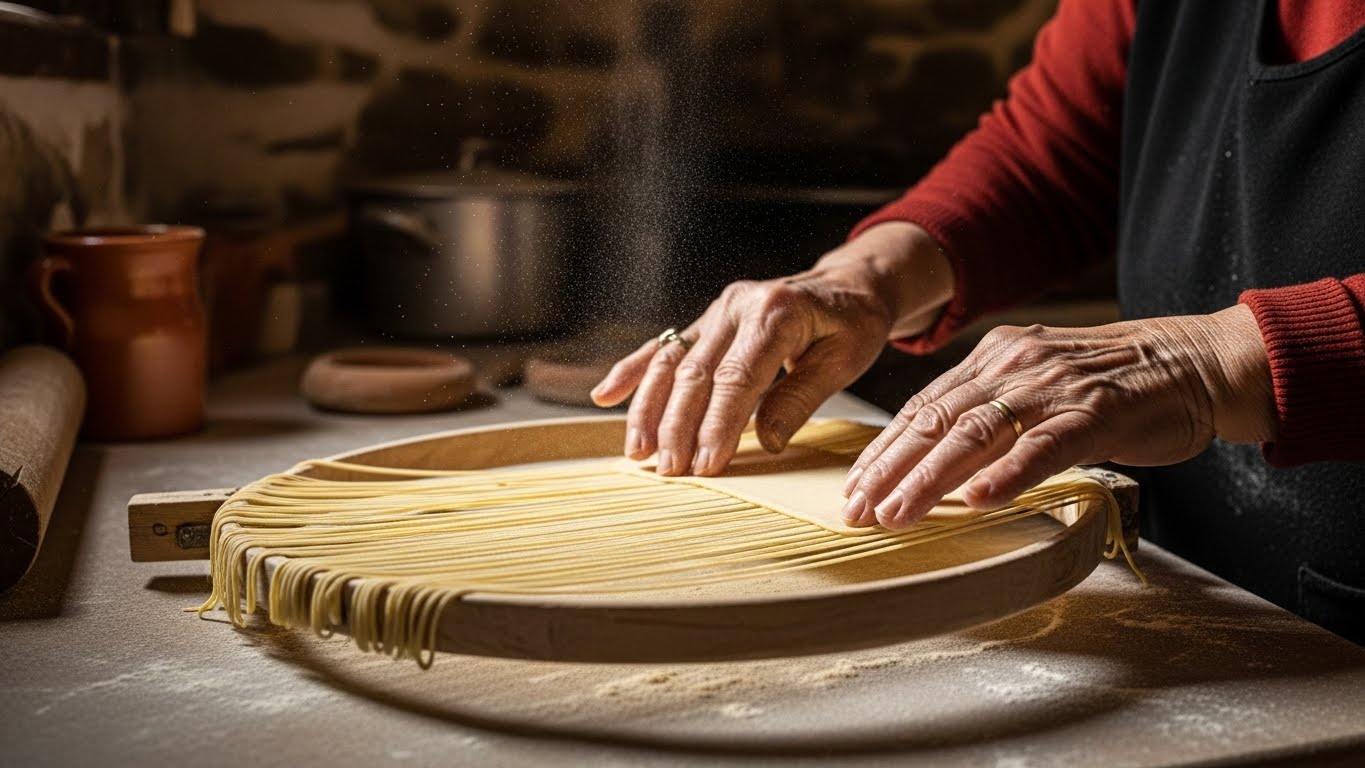
It’s the same principle you see in any true craft—whether it’s hand-making the rarest pasta or perfecting a simple shrimp dish. Mastery reveals itself in simplicity.
The Question That Changed My Perspective
At the end of the meal, I asked Yamamoto-san what advice he’d give to young people today. He thought for a long moment before responding.
“Find one thing you love more than success. Then do that thing every day for your whole life. Don’t worry about being the best. Don’t worry about recognition. Just practice with complete attention. If you can do that, you will become good. If you cannot do that, nothing I can teach you matters.”
He paused, then added: “Most people cannot do this. They want results too fast. They get bored. They see others becoming famous and feel like they are falling behind. But there is no behind. There is only your own practice.”
I thought about my own career, my impatience with progress, my constant comparison to others. This seventy-three-year-old man, still learning after six decades, had just called out every anxiety I’ve ever had about work.
Why This Matters Beyond Sushi
You might be reading this thinking, “Okay, cool sushi story, but what does this have to do with my life?” Fair question.
Here’s what struck me: Yamamoto-san represents something increasingly rare—complete commitment to craft for its own sake. Not for Instagram likes. Not for Michelin stars. Not even for money beyond what’s necessary. Just pure dedication to doing something excellently.
In a world obsessed with “hacks,” shortcuts, and overnight success, watching someone who’s spent 58 years perfecting sushi is almost subversive. It suggests that maybe the path to real mastery hasn’t changed—it still requires time, patience, and unglamorous daily practice.
This applies whether you’re a chef, a writer, a programmer, a teacher, or anything else. The principles don’t change: show up consistently, pay attention to details, never stop learning, measure yourself against your own standard rather than others’ success.
The Economics of Patience
One thing that surprised me: Yamamoto-san isn’t wealthy by Tokyo standards. His restaurant is successful but not lavish. He lives in a modest apartment above the restaurant. He doesn’t take expensive vacations.
But when I asked if he ever regretted not pursuing more commercial success, he looked confused again.
“Why would I regret this?” he gestured around the small restaurant. “I do exactly what I want every single day. I answer to no one. My customers respect my work. My suppliers respect my business. I sleep well at night knowing I did my best. What else is there?”
That response has stuck with me for months. What else is there, indeed?
We’re taught that success means scaling up—bigger restaurants, more locations, franchise deals, TV shows. But Yamamoto-san chose to stay small, to maintain complete control over quality, to be present for every single piece of sushi that leaves his counter.
That’s not failure to grow. That’s choosing craft over empire. Both are valid paths, but only one allows you to maintain the level of attention Yamamoto-san demonstrates.
The Final Piece and the Bow
The meal ended with a simple piece of tuna—not the fancy toro, just regular maguro. Perfectly cut, perfectly seasoned, perfectly formed. Nothing flashy, just fundamentally excellent.
After we finished, Yamamoto-san cleaned his workspace methodically, placing each tool back in its specific location. Then he came around the counter and bowed deeply to each guest, thanking us for coming.
Here’s a man who’s a master of his craft, who could be arrogant or dismissive, bowing in gratitude to customers who just paid him money. The humility was as impressive as the sushi.
As we left, he handed each of us a small package—tsukemono from his personal batch, wrapped in wax paper. “For tomorrow,” he said simply. The pickles were delicious the next day, just like they’d been at dinner.
What I Learned From Three Hours at a Counter
I’ve eaten at acclaimed restaurants around the world. I’ve had molecular gastronomy, fusion cuisine, and innovative trending dishes. But none of those meals taught me as much as three hours with Yamamoto-san.
The lesson wasn’t really about sushi. It was about commitment. About the dignity of craft. About finding one thing and doing it with complete attention for your entire life, regardless of external validation.
In an age of constant distraction and optimization, Yamamoto-san’s approach feels almost radical. Do one thing. Do it well. Do it every day. Don’t worry about what anyone else is doing. Just practice.
I don’t know if I can live up to that philosophy. Honestly, I probably can’t. But I’m going to try. And every time I feel impatient with my own progress, I’ll remember a seventy-three-year-old man who’s been making sushi for 58 years and still says he’s learning.
If you ever make it to Tokyo and somehow manage to get a reservation at Sushi Yamamoto, go. The sushi is incredible, but the real meal is the lesson. And that lesson will stay with you far longer than the taste of perfect tuna.