Let’s be real—most weeknights, cooking feels like too much work.
You’re tired, you’re hungry, and the idea of dirtying multiple pots and pans while measuring ingredients makes ordering pizza sound really Mediterranean Chicken appealing. I get it. I’ve been there many times.
But what if I told you there’s a recipe that’s genuinely as easy as people claim when they say “so easy!”—and it actually tastes like restaurant food? This one-pan Mediterranean chicken has legitimately changed my weeknight dinner game, and I need to share it with you.
Why This Recipe Works When Others Don’t
I’ve tried hundreds of “quick and easy” recipes that weren’t either quick or easy. They required weird ingredients, multiple steps, precise timing, or generated a sink full of dishes. This recipe avoids all those pitfalls.
Everything cooks in one pan. Not “one pan plus a pot for rice.” Actually one pan. The chicken, vegetables, and sauce all happen together.
The ingredient list is short and normal. Nothing you need to hunt down at specialty stores. If you have a moderately stocked kitchen, you probably have most of this already.
It’s nearly impossible to mess up. The cooking method is forgiving. A few minutes over? Still good. Vegetables not cut perfectly uniform? Doesn’t matter. This recipe tolerates mistakes.
It looks impressive but isn’t. When you serve this, people think you worked hard. You didn’t, but they don’t need to know that.
According to cooking experts at Serious Eats, one-pan meals that allow ingredients to cook together develop deeper flavors through the mingling of juices and fats, creating complexity that belies their simplicity.
What You’ll Need (And Why)
For the chicken:
- 4 bone-in, skin-on chicken thighs (trust me on the thighs—they stay juicy)
- 2 tablespoons olive oil
- Salt and black pepper
- 1 teaspoon dried oregano
- 1/2 teaspoon paprika (smoked if you have it)
For everything else:
- 1 pint cherry tomatoes
- 1 cup Kalamata olives (pitted—don’t make this harder than it needs to be)
- 1 red onion, cut into wedges
- 4 garlic cloves, smashed (don’t even bother mincing)
- 1/2 cup chicken broth or white wine
- 4 ounces feta cheese, crumbled
- Fresh basil or parsley for garnish
- Lemon wedges for serving
Optional but great additions:
- Artichoke hearts (from a jar, already marinated)
- Capers for extra brininess
- Red pepper flakes if you like heat
- Fresh spinach thrown in at the end
The Method: Easier Than You Think
Step 1: Season and Sear the Chicken (10 minutes)
Pat your chicken thighs dry with paper towels. This is important—wet chicken won’t brown properly. Season both sides generously with salt, pepper, oregano, and paprika.
Heat your largest oven-safe skillet over medium-high Mediterranean Chicken heat. Add the olive oil. Once it’s shimmering, place the chicken thighs skin-side down. Don’t move them! Let them sear for 6-7 minutes until the skin is golden and crispy.
Flip them over and cook another 3 minutes. The chicken won’t be fully cooked yet—that’s fine. Remove it from the pan and set aside.
Why bone-in, skin-on thighs? They’re more forgiving than breasts, they have better flavor, and the skin protects the meat from drying out. Plus crispy chicken skin is delicious. This is similar to how proper protein selection can make or break a quick dinner recipe.
Step 2: Build the Flavor Base (5 minutes)
Lower the heat to medium. In the same pan (with all that delicious chicken fat), add your onion wedges. Sauté for 2-3 minutes until they start to soften.
Add the smashed garlic cloves. Sauté another minute until fragrant. The garlic doesn’t need to be minced—whole smashed cloves will soften and become sweet as everything cooks.
Pour in your chicken broth or wine. Scrape up any browned bits from the bottom of the pan—that’s where the flavor lives. Let it bubble for a minute.
Step 3: Add the Good Stuff (2 minutes)
Toss in your cherry tomatoes and olives. Give everything a stir to coat it in the pan juices. The tomatoes will release liquid as they cook, creating more sauce.
Nestle the chicken thighs back into the pan, skin side up, resting on top of the vegetables. Pour any accumulated juices from the chicken plate into the pan too.
Step 4: Roast Everything Together (20 minutes)
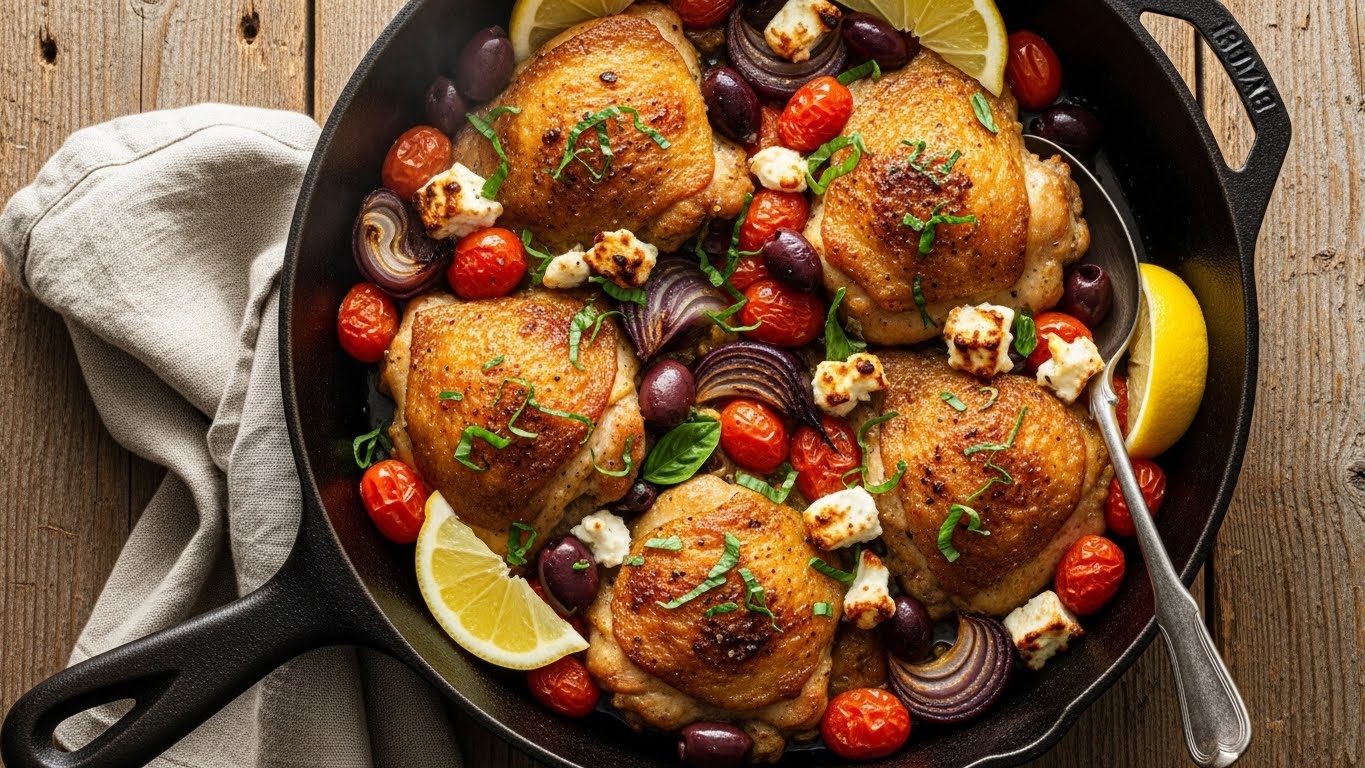
Transfer the entire pan to a preheated 400°F oven. Roast for 20-25 minutes until the chicken reaches 165°F internal temperature and the tomatoes have burst and created a sauce.
Five minutes before it’s done, scatter the feta cheese over everything. It’ll get slightly melty and golden on top while staying creamy underneath. This is the magic moment.
Step 5: Finish and Serve (2 minutes)
Remove from oven (use potholders—this seems obvious but I’ve burned myself multiple times forgetting the handle is hot). Let it rest for 5 minutes.
Tear some fresh basil or parsley over the top. Squeeze lemon juice over everything. Serve straight from the pan if you want maximum laziness, or transfer to a serving platter if you’re feeling fancy.
What to Serve It With (Keep It Simple)
The beauty of this dish is that it’s already complete, but you might want something to soak up that delicious sauce:
Crusty bread: My favorite option. You can mop up every drop of that tomato-olive-feta sauce. No utensils required for the last few bites.
Rice or orzo: If you want something more substantial. Cook it separately (sorry, can’t make everything one-pan), but plain rice works perfectly.
Roasted potatoes: Throw them in the pan around the chicken if you have room. They’ll roast in the same pan and soak up the flavors.
Simple salad: If you need some freshness. Arugula with lemon vinaigrette balances the richness of the chicken.
Nothing: Honestly, four chicken thighs plus all those vegetables is a complete meal. You could eat this on its own and be perfectly satisfied.
The Science of Why This Tastes So Good
This isn’t just easy—it’s also delicious because of how the flavors develop:
Fat renders from the chicken skin, creating a rich base for everything else to cook in. This adds depth you can’t get from just adding oil.
Tomatoes burst and concentrate in the oven, becoming sweeter and more intense. The acids break down and mellow out.
Olives and feta provide umami and saltiness, creating a savory foundation. You barely need to add salt because these ingredients are naturally salty.
Everything mingles together as it roasts. The chicken juices mix with tomato juice, olive brine, and feta to create a complex sauce that tastes like it took hours.
The lemon at the end brightens everything, cutting through the richness and making all the flavors pop. Never skip this step.
Common Mistakes and How to Avoid Them
Mistake: Using boneless, skinless chicken breasts Result: Dry, flavorless chicken that’s disappointing. Solution: Use bone-in, skin-on thighs. If you absolutely must use breasts, reduce cooking time by 5-10 minutes.
Mistake: Crowding the pan Result: Steaming instead of roasting, leading to pale, sad vegetables. Solution: Use your biggest pan. If things are too crowded, use two pans or make less food.
Mistake: Skipping the sear Result: Rubbery, pale chicken skin. Solution: Don’t skip the initial sear. Those 10 minutes make a huge difference.
Mistake: Forgetting to pat the chicken dry Result: No crispy skin, just soggy sadness. Solution: Always, always dry your protein before cooking it.
Mistake: Using pre-crumbled feta from a container Result: Dry, flavorless cheese dust. Solution: Buy a block of feta and crumble it yourself. The texture and flavor are completely different.
For more insights on common cooking mistakes and how to fix them, Bon Appétit offers excellent troubleshooting guides for home cooks.
Variations to Mediterranean Chicken Keep Things Interesting
Once you’ve made this a few times, experiment:
Greek-Style: Add lemon slices to the pan before roasting. Use more oregano. Serve with tzatziki on the side.
Italian-ish: Swap olives for sun-dried tomatoes. Use mozzarella instead of feta. Add fresh basil and balsamic glaze at the end.
Spicy Version: Add red pepper flakes, hot cherry peppers, or a drizzle of hot honey over the finished dish. The sweet-spicy contrast is incredible.
With Greens: Add a couple handfuls of fresh spinach or kale in the last 5 minutes of cooking. They’ll wilt perfectly in the residual heat.
Moroccan-Inspired: Use preserved lemons instead of fresh, add a pinch of cumin and coriander, swap feta for goat cheese.
The basic method works with tons of different flavor profiles. Once you understand the technique, you can make this Mediterranean version, or riff on it endlessly.
Meal Prep and Leftovers
This recipe is fantastic for meal prep, which is rare for one-pan dishes:
It reheats well: The chicken stays moist, the vegetables don’t get mushy. Reheat gently in a 325°F oven for 15 minutes.
It keeps for 4 days: Store in an airtight container in the fridge. The flavors actually improve after a day as everything marinates together.
It freezes decently: Not my first choice for freezing because the texture of the tomatoes changes, but in a pinch, it works. Freeze for up to 2 months.
It works cold: Leftover chicken, torn into pieces, makes an excellent salad topping or grain bowl component. The cold feta and tomatoes are delicious.
I often make a double batch on Sunday and eat it throughout the week. The second and third servings honestly taste better than the first because the flavors have had time to meld.
The Budget Breakdown
Let’s talk money because that matters:
- Chicken thighs: $6-8 for 4 large thighs
- Cherry tomatoes: $3-4 for a pint
- Olives: $4-5 for a jar (which provides multiple uses)
- Feta: $5-6 for a block
- Onion, garlic, herbs: $3 total
- Olive oil, spices: pennies from your pantry
Total cost: roughly $20-25 for 4 generous servings. That’s $5-6 per serving for food that tastes like it cost $18 at a Mediterranean restaurant.
Compare that to takeout or even a meal kit service, and this is genuinely affordable. Especially considering how good it tastes and how easy it is.
Why I Make This Weekly
I’m going to be completely honest with you—I make this recipe at least once a week. Sometimes twice if I’ve meal prepped it. Here’s why it’s become a staple:
It requires almost no mental energy. After a long day, I don’t have the capacity for complicated recipes with multiple steps. This is throw-stuff-in-a-pan simple.
It satisfies my need for “real food.” This isn’t depressing health food or sad desk lunch. It’s legitimate, delicious dinner that makes me feel like I cooked something worthwhile.
My partner actually likes it. He’s picky, and finding dinners we both enjoy is challenging. This passes his test every time.
The cleanup is laughably easy. One pan. That’s it. I’ll hand-wash a single pan to avoid dealing with multiple dirty dishes any day.
It feels special without being fussy. Some nights I want to feel like I’m treating myself, but I don’t want to work hard. This delivers that restaurant-quality feeling without the restaurant effort.
Similar to how traditional cooking methods often use simple techniques to create impressive results, this modern one-pan approach achieves complexity through simplicity.
The Dinner Party Trick
Here’s a secret: this recipe scales up beautifully and makes you look like a cooking genius at dinner parties.
Use two pans if you’re feeding 6-8 people. Prep everything ahead of time (season the chicken, cut the vegetables, crumble the feta). When guests arrive, just sear the chicken and throw everything in the oven.
Thirty minutes later, you’re pulling beautiful roasted chicken out of the oven while everyone’s having drinks. You look effortlessly competent, the house smells amazing, and you’ve barely broken a sweat.
Serve it family-style straight from the pans with crusty bread for people to tear and share. Very Mediterranean, very impressive, secretly super easy.
Teaching Kids to Cook with This Recipe
If you have kids or teenagers you’re trying to teach cooking skills to, this is an excellent starter recipe:
The steps are clear and simple. Not many places to get confused or overwhelmed.
The results are rewarding. It actually tastes really good, which motivates them to cook again.
It’s hard to mess up badly. Even if they don’t execute perfectly, it’ll still be edible and probably pretty good.
They learn real techniques. Searing, roasting, building flavors—these are foundational skills that transfer to other recipes.
My nephew made this for his family after watching me do it once. He was so proud of himself, and his parents were genuinely impressed. That confidence-building aspect of cooking is valuable.
The Mental Health Aspect (Not Kidding)
I want to talk about something that might sound silly but matters: cooking this recipe makes me feel competent on days when not much else does.
On tough days when work was frustrating or nothing went right, coming home and successfully making dinner—even something this simple—gives me a small win. I created something. I took care of myself. I didn’t default to sad desk snacks or expensive takeout.
There’s something grounding about Mediterranean Chicken the physical process of cooking. Smashing garlic, hearing chicken sizzle, smelling tomatoes roast. It brings you into the present moment in a way that scrolling your phone doesn’t.
The act of making real food and sitting down to eat it, even if you’re eating alone, is a form of self-care that matters. This recipe makes that self-care achievable on days when elaborate cooking feels impossible.
Final Thoughts: Just Try It
Look, I know you’ve read a lot of “easy weeknight dinner” recipes that promised more than they delivered. I understand the skepticism. But I’m genuinely telling you that this one lives up to the hype.
You don’t need to be a skilled cook. You don’t need fancy Mediterranean Chicken equipment. You don’t need hours of time or tons of money. You just need one pan, some chicken, a handful of Mediterranean ingredients, and 35 minutes.
Make it this week. If you hate it, you’re out like $20 and an hour of your time. But I’m betting you’ll add it to your regular rotation, just like I did.
And when you do make it and realize how easy and delicious it is, text your friends about it. Post it to your Instagram. Share the recipe. Because genuinely good, genuinely easy recipes deserve to spread.
Let me know how it goes when you make it! And if you have variations or improvements, I’m all ears. Happy cooking!