Easy Bibimbap Recipe
Discover the vibrant flavors of this traditional Korean dish, perfect for any meal!
Why This Recipe?
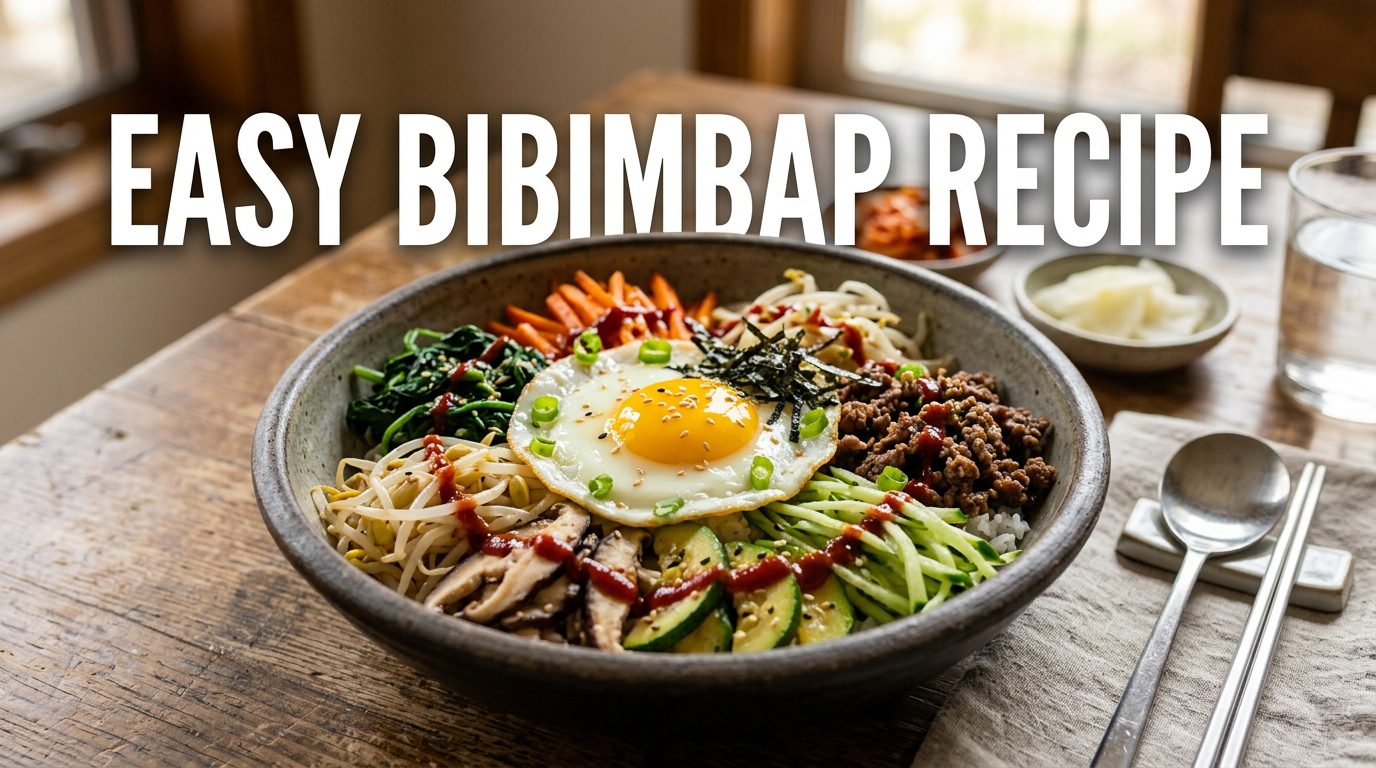
Bibimbap, which means ‘mixed rice’ in Korean, is a beloved dish that combines a variety of fresh vegetables, protein, and flavorful sauces, served over a bed of warm rice. This easy bibimbap recipe allows you to create a colorful and nutritious meal in no time!
This dish is not only a feast for the eyes but also for the palate. The combination of textures and flavors—from the crunchy vegetables to the creamy egg yolk and the spicy kick of gochujang—is simply irresistible. Plus, it’s incredibly versatile; you can use any vegetables you have on hand, making it a great way to clean out your fridge while enjoying a delicious meal.
Recipe Details
Ingredients
- 2 cups cooked rice
- 1 cup spinach, blanched
- 1 cup carrots, julienned
- 1 cup zucchini, julienned
- 1 cup shiitake mushrooms, sliced
- 2 eggs
- Gochujang (Korean chili paste) to taste
- Sesame oil for drizzling
- Sesame seeds for garnish
Instructions
- Prepare the rice according to package instructions and let it cool.
- Blanch the spinach in boiling water for 30 seconds, then cool it in ice water.
- Sauté the carrots and zucchini in a pan with a bit of oil until tender.
- Sauté shiitake mushrooms in the same pan until golden brown.
- Fry the eggs sunny-side up in a separate skillet.
- To serve, place rice in a bowl and arrange the vegetables and egg on top. Drizzle with sesame oil and gochujang.
Pro Tips
For a truly authentic bibimbap experience, consider adding a variety of seasonal vegetables and proteins. You can include marinated beef, tofu, or even kimchi for an extra burst of flavor. Don’t forget to adjust the amount of gochujang based on your spice preference! Also, for the best taste, serve the bibimbap in a hot stone bowl, which helps to create a crispy rice layer at the bottom.
Variations
This easy bibimbap recipe is incredibly flexible! Here are a few variations you might enjoy:
- Vegetarian Bibimbap: Omit the egg and add more vegetables like bell peppers and bean sprouts.
- Seafood Bibimbap: Add shrimp or octopus for a seafood twist.
- Spicy Kimchi Bibimbap: Mix in chopped kimchi for an extra kick.
FAQ
Bibimbap is often served with a side of kimchi or pickled vegetables for a balanced meal.
Yes! You can prepare the vegetables and rice ahead of time. Just assemble and serve with the egg and sauce when ready to eat.
Bibimbap is packed with vegetables and can be a healthy choice when made with brown rice or quinoa.
While gochujang is traditional, you can substitute with sriracha or a sweet chili sauce for a different flavor.
Short grain rice is typically used for bibimbap for its sticky texture, but you can use jasmine or brown rice as alternatives.
Conclusion
This easy bibimbap recipe is not just a meal; it’s an experience that brings the vibrant flavors of Korea right to your kitchen. With its colorful presentation and delightful taste, bibimbap is sure to impress your family and friends. Enjoy making it your own by experimenting with different ingredients and flavors. Whether you’re a seasoned cook or a beginner, this dish is simple enough to master and delicious enough to keep you coming back for more.
For more delicious recipes, check out our Korean Noodle Soup and Spicy Tofu Stir-Fry. You can also explore more about Korean cuisine on our website. Happy cooking!