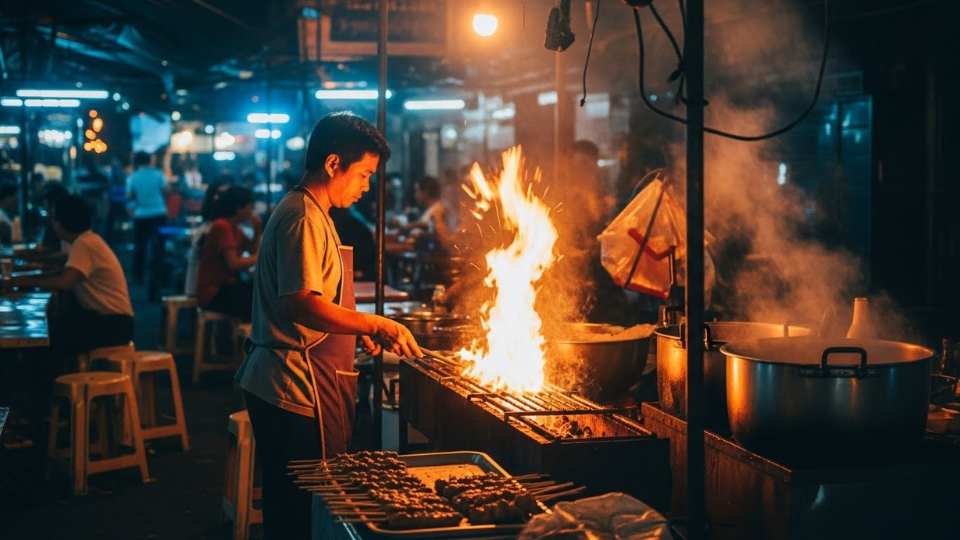
Three in the morning, and I’m standing in a parking lot eating the best boat noodles of my life.
This wasn’t the plan. My original plan involved sleeping in my hotel after a long day of sightseeing. But then my Grab driver (Thai equivalent of Uber) asked if I’d been to the Midnight Food Markets real Bangkok food scene yet—the one that starts after midnight when tourists are asleep.
Twenty minutes later, I’m in a random parking lot somewhere in the Thonburi district, surrounded by locals, with no idea how to get back to my hotel. And I’ve never been happier.
Why Bangkok After Midnight Hits Different
Most tourists experience Bangkok’s famous night markets—Rot Fai, Rod Fai Ratchada, the weekend markets. These are great, don’t get me wrong. But they’re designed for visitors. The prices are higher, the food is milder, and everything shuts down by midnight.
Real Bangkok street food happens later. Much later. Between 1 AM and 5 AM, a completely different food ecosystem emerges. Vendors roll out carts in seemingly random locations. Locals finishing late shifts gather around plastic tables. The food is spicier, cheaper, and infinitely more interesting.
Nobody writes English guidebooks about these spots because they’re not really “spots” in the traditional sense. They’re temporary gatherings that exist for a few hours, then disappear before sunrise. You can’t Google Map them. You just have to know, or get lucky like I did.
According to food writers at Eater, Bangkok’s late-night food culture represents one of the most authentic street food experiences remaining in Southeast Asia, as gentrification and tourism haven’t yet reached these temporary midnight markets.
My First Midnight Market: Khlong Toei After Dark
My Grab driver, whose name was Somchai, took me to Khlong Toei—Bangkok’s largest wet market. During the day, it’s overwhelming chaos with meat, fish, and vegetables everywhere. But at 2 AM, it transforms.
Food vendors set up along the perimeter serving market workers who’ve been up all night. The smell hits you first—charcoal smoke, fish sauce, cilantro, and chilies. Then you see the glow of charcoal grills, steam rising from massive pots, and people crammed around tiny tables eating from plastic bowls.
Somchai led me to a cart with no signage, just a woman grilling pork skewers over hot coals. “Best moo ping in Bangkok,” he said with absolute certainty. The skewers cost 10 baht each—about 30 cents. I ordered five.
He was right. The pork was perfectly charred on the outside, juicy inside, sweet and savory from the marinade, with that irreplaceable smoky flavor from the charcoal. I immediately ordered five more.
What You’ll Actually Find at Midnight Markets
The food at these late-night gatherings is different from what you see during the day. Here’s what to look for:
Jok (Thai rice porridge): At 3 AM, after drinking or working late, locals crave jok—comforting rice porridge with pork, liver, or egg. It’s the Thai equivalent of comfort food, and every vendor has their own recipe. Some are thin and simple, others thick and Midnight Food Markets complex. All are perfect for late night.
Kuay Teow Reua (boat noodles): These are everywhere during the day, but midnight versions hit different. Smaller portions, more intense flavor, the broth darker and richer. Served in tiny bowls, you order multiple rounds. I ate seven bowls at one sitting and regret nothing.
Moo Tod Kratiem Prik Thai (fried garlic pork): Thinly sliced pork fried with tons of garlic and black pepper. Served with sticky rice, this is drunk food elevated to an art form. The garlic-to-meat ratio is insane, and it’s glorious.
Pla Tod (fried fish): Whole fish fried until incredibly crispy, served with spicy, tangy sauce. The fish is usually whatever was caught that day, and it’s so fresh it’s still moving in the market across the street.
Thai BBQ: Not the typical tourist grilled-meat-on-a-stick. I’m talking whole fish, beef offal, marinated chicken, grilled over charcoal with minimal seasoning. The smoke and char are the stars.
Similar to traditional pasta-making techniques, these midnight food vendors use methods passed down through families, with recipes that have remained unchanged for decades.
The Unwritten Rules of Midnight Street Food
After visiting about a dozen different midnight spots over two weeks, I figured out some patterns:
Sit where the locals sit. If Thai people are crowded around a particular vendor, that’s where you want to be. Empty stalls late at night mean something’s wrong.
Don’t expect menus in English. Most of these vendors don’t have any menus at all. Point at what others are eating, or use your phone’s translation app to say “same as them.”
Bring cash—lots of small bills. Most vendors don’t take cards, and breaking a 1,000 baht note at 3 AM is awkward. Have plenty of 20s, 50s, and 100s.
Eat fast and move on. These aren’t places to linger for hours. Eat, pay, make room for the next person. There’s often a line.
The spice is no joke. When vendors ask if you want it spicy, and you say yes, they’re going to make it Thai-person spicy, not tourist spicy. Be prepared or be honest about your tolerance.
Bathroom situation is rough. Plan accordingly. Most spots don’t have facilities, or if they do, they’re… rustic. Hit a 7-Eleven beforehand.
For more on navigating Southeast Asian street food culture, Lucky Peach (archived articles) offers excellent cultural context and etiquette guides.
The Minburi Morning Market: Where Market Vendors Eat
Someone told me about Minburi, a district way out east that nobody visits. It’s not convenient to anything touristy, but the morning market there—which starts at 2 AM—is where other market vendors go to eat before setting up their own stalls elsewhere.
Getting there took nearly an hour by taxi. The driver kept asking if I was sure this was where I wanted to go. When we arrived at 2:30 AM, I understood his confusion. It looked like a random residential area with some bright lights in the distance.
But walking closer, I found maybe thirty food vendors set up along a street, serving early-bird market workers. The energy was different here—quieter, more focused. People eating quickly before starting long days of physical work.
I had kanom krok (coconut rice pancakes) from a vendor who’d been making them at this spot for 32 years. She cooked them in a traditional cast iron pan with multiple round indentations, each pancake getting perfectly crispy on the bottom and custardy on top. Ten pancakes for 20 baht. Incredible.
The Food Safety Question Everyone Asks
“But is it safe?” Yes and no. Here’s the honest truth:
These vendors are feeding their neighbors, family, and friends. They have reputations to maintain. Most practice better food safety than you’d expect—meat is stored in coolers with ice, cooking temperatures are high, turnover is fast so nothing sits around.
That said, your stomach might need time to adjust. Start slow. Don’t go straight from airport food to midnight street food. Build up your tolerance over a few days. Bring Imodium just in case.
I ate at these midnight markets almost every night for two weeks and only had one minor stomach issue, which was honestly my fault for eating too much pork belly at 4 AM.
The Talat Phlu Community: A Hidden Gem
One night around 1 AM, I wandered into Talat Phlu station area and stumbled upon what I can only describe as a street food block party. It wasn’t a formal market—just dozens of vendors who’d claimed sidewalk space, with locals sitting everywhere eating and drinking.
There was a woman making pad krapow (holy basil stir-fry) in a wok so large I could have bathed in it. The flames shot up three feet high every time she tossed the food. People were lined up ten deep waiting for her to finish each batch.
I waited 40 minutes. Worth every second. The wok heat (called “wok hei” in Chinese cooking) was intense—the kind of seared, slightly charred flavor you can’t replicate on a home stove. The basil was fresh, the chilies were fresh, the pork was sliced right there. Over rice with a fried egg on top, it was perfection.
This cooking technique—super high heat, quick cooking, minimal ingredients—produces flavors that are impossible to replicate in restaurant kitchens with their different equipment and health code requirements. Much like the precise techniques used in high-end dining, street food mastery comes from years of practice and understanding your tools intimately.
What Nobody Tells You About Midnight Food Culture
It’s social. Unlike formal dining where you sit with just your group, midnight street food is communal. You’ll end up sharing tables with strangers, talking to vendors, making friends with the person next to you who’s explaining what to order.
It’s affordable. A full meal costs 50-100 baht ($1.50-$3). You can eat like a king for less than a McDonald’s combo.
It’s educational. Want to really understand Thai food? These late-night spots show you the foundations—the techniques, the real flavors, the ingredients before they’re adjusted for tourist palates.
It’s disappearing. Modernization, gentrification, and changing work patterns mean fewer people work overnight, which means fewer midnight vendors. What exists now might not exist in ten years.
The timing matters. Too early (before 1 AM) and the good stuff isn’t out yet. Too late (after 5 AM) and vendors are packing up. The sweet spot is 2-4 AM.
How to Find These Spots Yourself
You’re not going to find these on TripAdvisor or in Lonely Planet guides. Here’s how to actually locate them:
Take late-night taxis or Grab cars and ask drivers. They know where food is at any hour. Offer to buy them something and they’ll take you to their favorites.
Follow delivery drivers. Around 1-2 AM, you’ll see motorcycle delivery people gathering at certain spots. Follow them—they know where the good food is.
Look for bright lights and smoke. From BTS stations late at night, scan for areas with unusual activity and lighting. Walk toward the smoke.
Use Facebook. Search Thai-language terms like “ตลาดนัดกลางคืน” (midnight market) or “อาหารดึก” (late night food) and look at photos to identify locations.
Stay near Khlong Toei, Huai Khwang, or Ramkhamhaeng. These areas have more consistent late-night food activity.
Ask hotel staff who work night shifts. They know. They’re eating at these places on their breaks.
The Best Drinks for Midnight Eating
Thai iced tea and coffee are too sweet for Midnight Food Markets midnight eating (controversial opinion). Here’s what works better:
Nam Manao (lime juice): Fresh lime, sugar, salt, ice water. Cuts through rich, oily food perfectly. Refreshing without being heavy.
Cha Yen Iced Tea: Only if you get the less-sweet version. The sweetness helps with spicy food but can be overwhelming.
Beer: Leo or Chang, local Thai beers. They’re light enough not to fill you up but pair well with grilled food.
Plain water: Underrated option. When you’re eating spicy food at 3 AM, sometimes boring water is exactly what you need.
Nam Kratiem (garlic water): Sounds weird, is weird, but locals swear by it for digestion. Basically lightly salted water infused with crushed garlic. Acquired taste.
The People Who Make Midnight Food Happen
Behind every vendor cart is a person who’s chosen to work while the rest of the city sleeps. I started talking to vendors about their lives, and the stories were fascinating.
One woman selling khanom krok told me she’s been at the same spot for 30 years, since her mother ran the cart before her. She sleeps from 8 AM to 4 PM, wakes up, preps ingredients, then sells from 11 PM to 7 AM. Her kids grew up eating dinner at midnight, doing homework while she worked.
A boat noodle vendor explained that midnight is when he makes his profit. Rent is cheaper on weird hours, ingredients are cheaper buying at odd times, and his regular customers are intensely loyal. He’s sent two kids to university selling 30-baht bowls of noodles.
These aren’t people who couldn’t find “real” jobs. Many chose this specifically because they love the work, the independence, or the community. That’s worth remembering when you’re eating their food.
Safety and Common Sense
Bangkok is very safe, even at 3 AM, but use normal city awareness:
Stick to well-lit areas with multiple people around. Avoid completely empty streets even if your map says food is there.
Know how you’ll get back to your hotel. Screenshot your hotel address in Thai. Have the Grab app ready. Keep a taxi card from your hotel.
Don’t flash expensive stuff. Leave the nice camera, obvious jewelry, and excess cash in your hotel safe.
Trust your instincts. If something feels off, it probably is. There are dozens of food spots—you don’t need to go to one that makes you uncomfortable.
Watch your drinks. Keep your beverage in sight. This is just normal travel safety.
Have fun but don’t get stupid drunk. Being stumbling drunk at 4 AM in an unfamiliar area is never smart, no matter how safe a city is.
Why This Experience Matters
Look, you can visit Bangkok and eat at nice restaurants and street food markets designed for tourists. You’ll have a perfectly fine time and probably some good meals.
But midnight food markets offer something else—a glimpse into real Bangkok life. The food that locals actually crave when they’re hungry and no one’s watching. The vendors who’ve been perfecting their craft for decades without Instagram or blog coverage.
It’s raw, authentic, and occasionally uncomfortable. Your clothes will smell like smoke. You’ll be tired the next morning. You might not be able to find the same spot again even if you try.
And that’s exactly what makes it special.
Similar to discovering authentic regional specialties off the beaten path, midnight food markets reward curiosity and willingness to venture beyond comfort zones.
My Last Midnight Market
On my final night in Bangkok, I went back to the parking lot where this all started—my driver Somchai’s favorite spot. I’d been there several times by then, and the vendors recognized me. The boat noodle lady remembered I liked extra blood in my broth (yes, really—it’s traditional). The moo ping guy saved me the end pieces I preferred.
Sitting at a plastic table at 3 AM, eating noodles that cost less than a dollar, surrounded by strangers who’d become familiar faces, I felt more connected to Midnight Food Markets Bangkok than any temple visit or river cruise had made me feel.
That’s the magic of midnight food markets. They’re not about Instagram photos or checking boxes. They’re about experiencing a city the way locals do, in those quiet hours when the tourist version of the city sleeps and real life continues.
If you make it to Bangkok, stay up late at least one night. Find a midnight market. Eat something that scares you a little. It’ll be the meal you remember most.
