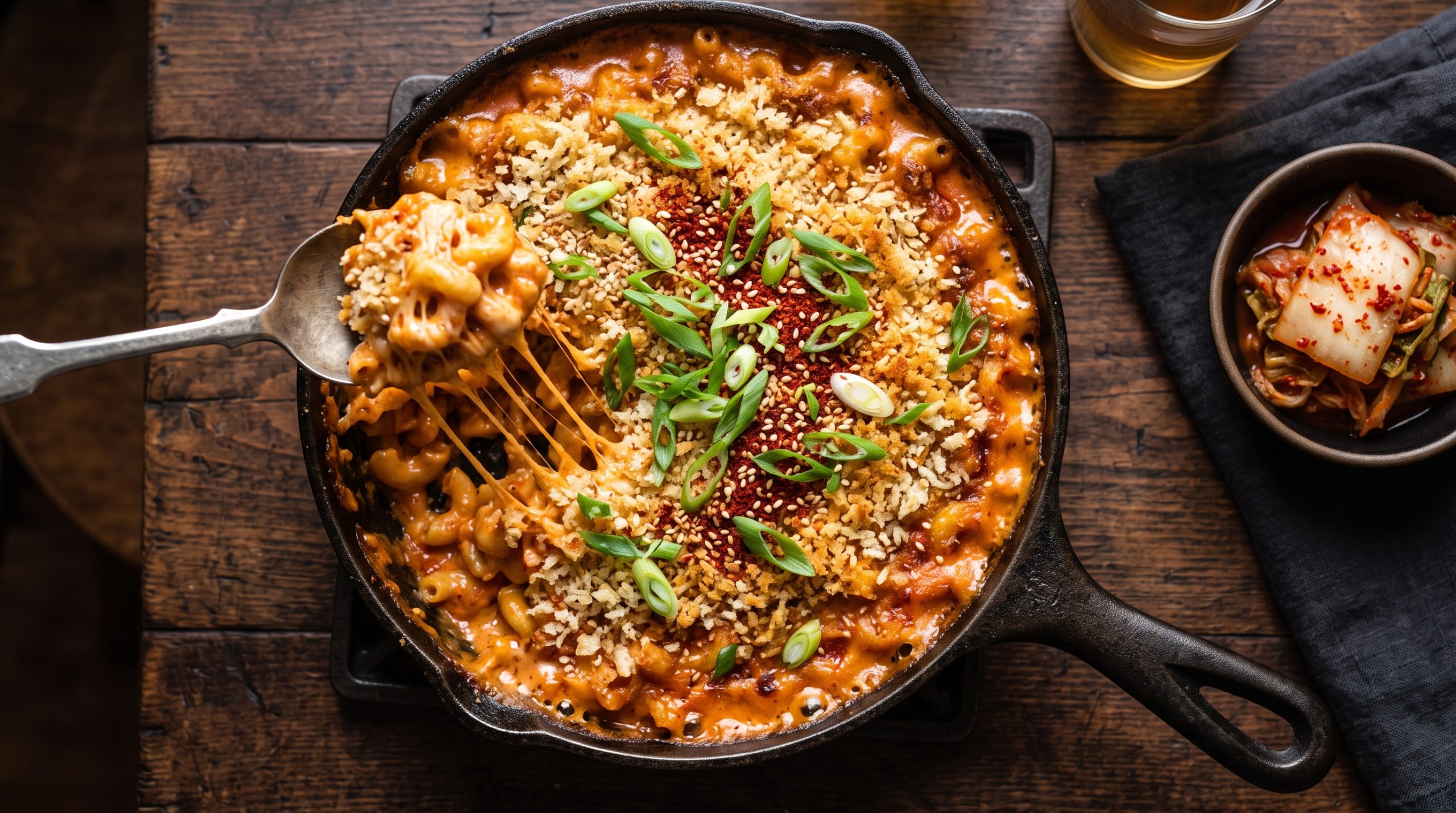
Spicy Korean Mac and Cheese (Gochujang Baked)
Creamy elbow macaroni loaded with sharp cheddar, mozzarella, and gruyere, spiked with gochujang and kimchi, then baked under a crispy panko topping — bold, comforting, and completely addictive.
Spicy Korean mac and cheese has been all over Pinterest and food TikTok lately, and once you make it you’ll understand why. It takes everything comforting about a classic baked mac and cheese and layers in the deep, funky heat of gochujang and the tang of kimchi, so every bite has both richness and a real kick. It sounds like an unusual combination until you taste it — then it makes total sense.
This version bakes up with a crispy, golden panko top over a sauce that stays silky instead of grainy, which is the number one thing that can go wrong with any baked mac and cheese. It’s a great dish for potlucks, game day, or just a weeknight when you want something with more personality than the usual pasta bake.
Why This Korean Mac and Cheese Works
This Korean fusion recipe works because gochujang isn’t just spicy — it’s fermented, slightly sweet, and deeply savory, which means it adds a whole layer of umami to the cheese sauce that plain hot sauce or cayenne could never replicate. Paired with sharp cheddar and nutty gruyere, it creates a sauce that’s rich without being one-note.
The kimchi is the other secret weapon here. Folded into the sauce rather than served on the side, it adds little pockets of tang and crunch throughout the dish, plus a subtle funk that balances all that melted cheese. If you’ve never combined kimchi and cheese before, this recipe is the perfect place to start.
Finally, the panko topping is non-negotiable. A baked mac and cheese without a crispy top is missing half the experience — that contrast between the creamy interior and the crunchy, golden crust is what makes this feel like a proper baked dish rather than just stovetop mac dressed up in the oven.
Looking for more comfort food with a twist? Try our kimchi fried rice or browse the full pasta recipes collection for more cheesy, baked favorites.
Ingredients You’ll Need
Most of these ingredients are pantry staples, with a couple of Korean pantry items doing all the heavy lifting on flavor.
- 1 lb elbow macaroni or cavatappi
- 4 tbsp unsalted butter, divided
- 3 tbsp all-purpose flour
- 2 cups whole milk
- ½ cup heavy cream
- 3 tbsp gochujang (Korean chili paste)
- 1 tsp garlic powder
- ½ tsp onion powder
- 2 cups sharp cheddar cheese, shredded
- 1 cup mozzarella cheese, shredded
- ½ cup gruyere cheese, shredded
- ½ cup chopped kimchi, drained
- 1 tsp gochugaru (Korean chili flakes), plus more for topping
- 1 cup panko breadcrumbs
- 2 green onions, thinly sliced
- 1 tsp toasted sesame oil
- Salt, to taste
Shred your own cheese from a block rather than using pre-shredded bags if you can — bagged cheese is coated in anti-caking starch that can make the sauce slightly grainy instead of perfectly smooth.
How to Make Spicy Korean Mac and Cheese
Building the sauce in stages — roux first, then dairy, then cheese — is what keeps it silky instead of broken or grainy. Don’t rush the early steps.
- Step 1 — Cook the Pasta Bring a large pot of salted water to a boil. Cook the macaroni 1 minute less than the package instructions for al dente, since it will continue cooking in the oven later. Drain and set aside.
- Step 2 — Make the Roux In a large saucepan, melt 3 tablespoons of butter over medium heat. Whisk in the flour and cook for 1–2 minutes until golden and fragrant, stirring constantly so it doesn’t scorch.
- Step 3 — Build the Gochujang Cheese Sauce Slowly whisk in the milk and heavy cream, then stir in the gochujang, garlic powder, and onion powder. Simmer gently, whisking often, until the sauce thickens enough to coat the back of a spoon, about 4–5 minutes.
- Step 4 — Melt in the Cheese Remove the sauce from the heat and stir in the cheddar, mozzarella, and gruyere a handful at a time, letting each addition melt fully before adding more. Fold in the kimchi and gochugaru, then season with salt to taste.
- Step 5 — Combine and Top Fold the cooked pasta into the cheese sauce until every piece is coated, then transfer to a greased baking dish. Melt the remaining tablespoon of butter, toss it with the panko breadcrumbs, and sprinkle evenly over the top.
- Step 6 — Bake Until Golden Bake at 375°F for 15–18 minutes, until the topping is golden brown and the sauce is bubbling at the edges. Let it rest for 5 minutes, then drizzle with sesame oil and finish with sliced green onions and an extra pinch of gochugaru before serving.
What to Serve With Korean Mac and Cheese
This dish is rich and filling enough to be a meal on its own, but it also makes a fantastic side for Korean-inspired mains. Try it alongside Korean BBQ chicken or grilled bulgogi for a full spread, or keep things simple with a crisp cucumber salad to cut through the richness.
Storage & Reheating
Store leftovers in an airtight container in the fridge for up to 4 days. Reheat individual portions in the microwave with a splash of milk stirred in to loosen the sauce, or rewarm larger portions in a 350°F oven, covered with foil, until heated through.
This dish can also be frozen before baking. Assemble it fully, cover tightly, and freeze for up to 2 months. Thaw overnight in the fridge, then bake as directed, adding a few extra minutes if it’s still cold in the center.
Nutrition Information
Approximate values per serving, based on 6 servings total:
| Calories | 560 kcal |
| Protein | 22 g |
| Fat | 32 g |
| Carbohydrates | 48 g |
| Fiber | 2 g |
| Sodium | 710 mg |
Nutrition values are estimates calculated using standard ingredient databases and may vary based on brands used. For dietary guidance, consult a reliable source such as the USDA FoodData Central.
Frequently Asked Questions
Where can I find gochujang and gochugaru?
Both are widely available at Korean and Asian grocery stores, and most large supermarkets now carry them in the international aisle. They’re also easy to order online if your local store doesn’t stock them.
Can I make this less spicy?
Yes — start with just 1 to 2 tablespoons of gochujang instead of 3, and skip the extra gochugaru on top. You can always add more heat at the table with a drizzle of chili oil.
Can I make this recipe ahead of time?
You can assemble the full dish up to a day ahead, cover it tightly, and refrigerate before baking. Add about 5 extra minutes to the bake time if it’s going into the oven cold.
What can I use instead of kimchi?
If you don’t have kimchi on hand, you can leave it out entirely, or substitute finely chopped pickled jalapeños for a different kind of tang and heat.