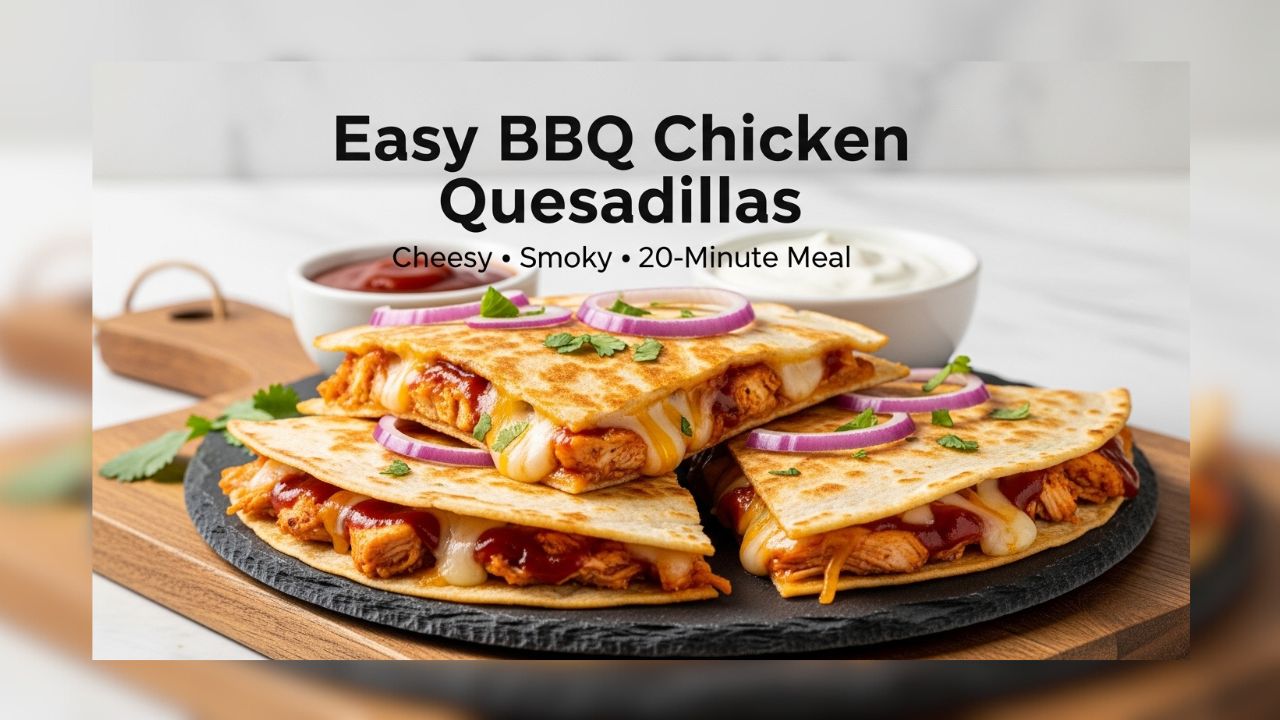
Easy BBQ Chicken Quesadillas
Crispy, cheesy quesadillas with smoky BBQ chicken ready in 20 minutes—perfect for busy weeknights and picky eaters
Why This Recipe Works
Most quesadilla recipes fail because they create soggy, falling-apart disasters with unevenly melted cheese and burnt exteriors. This Easy BBQ Chicken Quesadilla recipe solves those problems with three chef-developed techniques: 1) The perfect cheese blend that melts smoothly without oil separation, 2) Strategic ingredient layering that creates structural integrity, and 3) The medium-low heat method that ensures golden-brown crispness without burning.
The secret weapon in this recipe is using rotisserie chicken combined with quality BBQ sauce—a 5-minute shortcut that delivers complex smoky-sweet flavor without hours of cooking. The chicken gets tossed with just enough sauce to coat (not drown) it, preventing soggy tortillas. Paired with a blend of Monterey Jack for meltability and sharp cheddar for flavor depth, these quesadillas achieve that elusive perfect balance: crispy exterior, molten interior, and fillings that stay put when sliced.
According to a Cook’s Country study on quesadilla physics, the key to structural integrity is moisture control and cheese placement. Excess moisture from ingredients creates steam that softens tortillas and causes sogginess. Their testing revealed that placing cheese directly against both tortillas creates a “cheese seal” that acts as a moisture barrier—trapping fillings inside while keeping exteriors crisp. This recipe implements that exact technique for foolproof results every time.
The 20-Minute Dinner Solution
With 67% of Americans reporting they don’t have time to cook on weeknights (National Restaurant Association survey), this recipe delivers restaurant-quality results faster than delivery apps. Using pre-cooked chicken and pantry staples transforms what seems like a complex meal into a genuinely quick solution. The entire process—from fridge to table—takes less time than waiting for a pizza delivery, with significantly better nutrition and customization options for picky eaters.
Unlike frozen quesadillas loaded with preservatives and mystery ingredients, this homemade version lets you control sodium levels, spice intensity, and ingredient quality. It’s endlessly adaptable—add black beans for fiber, corn for sweetness, or jalapeños for heat. Serve it to kids who’ll devour the cheesy goodness while getting protein and vegetables they’d normally reject. This isn’t just dinner—it’s a weeknight lifesaver that makes you look like a kitchen hero with minimal effort.
Ingredients
For the Filling
For Assembly
For Serving
Ingredient Substitutions
Chicken Options: No rotisserie chicken? Use 1.5 lbs raw chicken breast seasoned with 1 tsp each chili powder, cumin, and garlic powder. Cook in skillet 6–8 minutes per side until 165°F, then shred. Canned chicken (drained well) works in a pinch but has less flavor.
BBQ Sauce Variations: Choose sauce based on preference: Sweet Baby Ray’s for balanced sweetness, Stubb’s for smokiness, or make your own with ½ cup ketchup + 2 tbsp apple cider vinegar + 1 tbsp molasses + 1 tsp smoked paprika.
Cheese Science: Monterey Jack melts smoothly without oil separation. Don’t substitute with pre-shredded “Mexican blend” cheeses—they contain anti-caking agents that prevent proper melting. Always shred your own cheese from a block for best results.
Step-by-Step Instructions
In a medium bowl, combine shredded chicken, BBQ sauce, diced bell pepper, red onion, cilantro, lime juice, cumin, smoked paprika, and salt. Mix gently until chicken is evenly coated but not swimming in sauce—there should be no pooling liquid at the bottom of the bowl. If mixture seems too wet, drain excess liquid before proceeding.
Pro tip: For deeper flavor, let mixture sit 5–10 minutes to allow spices to bloom and vegetables to soften slightly. This also gives time for any excess moisture to release so you can drain it before assembly—critical for preventing soggy quesadillas.
Place 4 tortillas on a clean work surface. Sprinkle 3 tablespoons of cheese blend evenly over each tortilla, leaving a ½-inch border around the edge. This creates the essential “cheese seal” that prevents fillings from leaking out during cooking.
Divide chicken mixture evenly among tortillas (about ½ cup per tortilla), spreading in an even layer over the cheese. Top with remaining cheese (3 tablespoons per tortilla), ensuring fillings are completely covered. Place remaining 4 tortillas on top to create sandwiches.
Critical step: Press down gently but firmly on each quesadilla with your palms to compact the layers—this improves structural integrity and ensures even cooking.
Heat a large cast-iron skillet or non-stick pan over medium-low heat (about 325°F). While heating, spread ½ tablespoon softened butter evenly over the top surface of each quesadilla using the back of a spoon or a pastry brush. This creates a golden, flavorful crust without burning.
Why medium-low? High heat burns the tortilla before cheese melts. Medium-low allows time for cheese to fully melt while achieving perfect golden-brown crispness. Test heat by sprinkling a drop of water in the pan—it should sizzle gently but not violently vaporize.
2 minutesCarefully place 1–2 quesadillas in the preheated skillet (don’t overcrowd). Cook 3–4 minutes until the bottom is golden brown and cheese begins melting along the edges. To check doneness without breaking, gently lift a corner with a thin spatula.
Flip carefully using two spatulas for support (one under each half). Cook second side 3–4 minutes until golden brown and cheese is fully melted. Press down gently with spatula during cooking to ensure even contact with the pan.
Transfer cooked quesadillas to a cutting board and let rest 2 minutes before slicing—this allows cheese to set slightly so fillings don’t spill out when cut. Repeat with remaining quesadillas, adding ½ tablespoon butter to pan between batches if needed.
6-8 minutesUsing a sharp chef’s knife or pizza cutter, slice each quesadilla into 6–8 wedges. For clean cuts that don’t drag fillings, wipe knife blade between slices. Arrange wedges on a platter in a pinwheel pattern for visual appeal.
Serve immediately with small bowls of sour cream, guacamole, and pico de gallo on the side—never on top of quesadillas, which makes them soggy. Garnish platter with lime wedges and extra cilantro leaves. For best texture and flavor, quesadillas should be served within 10 minutes of cooking while the cheese is still molten and tortillas are crisp.
For meal prep: Assemble quesadillas but don’t cook. Wrap individually in parchment paper, then place in a gallon freezer bag. Freeze up to 1 month. Cook directly from frozen: heat skillet to medium-low, add 1 tbsp butter, cook 5–6 minutes per side until golden and heated through.
Reheating leftovers: Never microwave—it makes tortillas rubbery and cheese greasy. Instead, reheat in a 350°F oven on a wire rack set over a baking sheet for 10–12 minutes until crisp. For stovetop: heat skillet over medium-low, add quesadilla, cover with lid for 3 minutes to melt cheese, then uncover and cook 1–2 minutes per side to re-crisp exterior.
Pro Tips & Tricks
Cheese Melting Science
Shredded cheese from blocks melts smoother than pre-shredded packages because commercial shreds contain cellulose (anti-caking agent) that prevents proper melting. For ultimate meltability, combine 60% Monterey Jack (excellent melt) with 40% sharp cheddar (flavor depth). Let cheese sit at room temperature 15 minutes before using—cold cheese takes longer to melt, increasing burn risk.
Perfect Heat Control
The #1 quesadilla mistake is cooking at too high heat. Medium-low (325°F) is ideal: hot enough to brown tortillas but gentle enough to melt cheese completely. Test with a bread cube—it should take 2–3 minutes to turn golden brown. If browning in under 90 seconds, heat is too high. Cast iron maintains even heat best, but non-stick works with careful temperature monitoring.
Moisture Elimination
Soggy quesadillas come from excess moisture. Combat this: 1) Drain BBQ chicken mixture in a fine-mesh strainer for 2 minutes before assembly, 2) Pat diced vegetables dry with paper towels, 3) Use the “cheese seal” technique (cheese against both tortillas), 4) Don’t overfill—½ cup filling per quesadilla is maximum. These steps create structural integrity that holds up to slicing.
Clean Cutting Technique
Soggy, messy slices happen when cheese hasn’t set. Let quesadillas rest 2 minutes after cooking—this allows cheese to firm slightly while staying molten inside. Use a sharp chef’s knife (not serrated) and wipe blade clean between cuts. For party presentation, cut into wedges but leave center intact until serving—this prevents drying and maintains heat.
Spice Control System
For families with varying heat tolerance: prepare base quesadillas mild, then create “heat stations” with toppings. Offer pickled jalapeños, hot sauce, and chili flakes on the side so everyone customizes their spice level. For kids’ versions, skip onions and bell peppers—just chicken, cheese, and a light brush of BBQ sauce creates a gateway quesadilla they’ll actually eat.
True 20-Minute Timeline
To actually hit 20 minutes: 1) Use pre-shredded cheese (yes, exception to our rule—convenience wins here), 2) Buy pre-diced vegetables from salad bar, 3) Use rotisserie chicken, 4) Have all ingredients measured before starting. Realistic timeline: 5 min prep, 10 min cooking (2 batches), 5 min slicing/serving. Multitask by heating skillet while assembling first batch.
Food Safety for Leftovers
According to USDA guidelines, cooked chicken should not remain in the “danger zone” (40–140°F) for more than 2 hours. For safe quesadilla storage:
- Cool completely within 2 hours of cooking before refrigerating
- Store in airtight container with parchment paper between layers to prevent sticking
- Consume within 3 days for best quality and safety
- Reheat to internal temperature of 165°F before serving
- Freeze uncooked assembled quesadillas (not cooked) for best texture upon reheating
Nutrition Information
Per Serving (2 quesadilla wedges with 2 tbsp sour cream)
These quesadillas deliver an impressive 32 grams of high-quality protein per serving from chicken and cheese—essential for muscle maintenance and satiety that keeps you full for hours. The complex carbohydrates from whole-wheat tortillas (if used) provide sustained energy without blood sugar spikes, while the healthy fats from cheese support absorption of fat-soluble vitamins.
Compared to restaurant versions that often exceed 800 calories with excessive cheese and oil, this recipe maintains balance without sacrificing satisfaction. To reduce sodium by 30%, choose low-sodium BBQ sauce and rotisserie chicken, and use reduced-sodium cheese. For a lighter version, substitute Greek yogurt for sour cream and add extra black beans to the filling for fiber—this boosts nutrition while keeping the satisfying cheesy experience intact.
Delicious Variations
🥑 Vegetarian Black Bean
Replace chicken with 1.5 cups cooked black beans (drained well) and 1 cup corn kernels. Add 1 tsp chipotle powder to BBQ sauce for smokiness. Increase cheese to 3 cups total to compensate for less filling volume. For extra protein, add ½ cup crumbled queso fresco to the filling. Serve with extra avocado for creaminess.
🌶️ Spicy Chipotle Lime
Mix 2 chipotle peppers in adobo (minced) + 1 tbsp adobo sauce into BBQ sauce. Add 1 diced jalapeño (seeds removed) to filling. Replace half the cheddar with pepper jack cheese. Finish with a squeeze of fresh lime juice over cooked quesadillas and serve with cilantro-lime crema (sour cream + lime zest + chopped cilantro).
🧀 Breakfast Quesadilla
Replace BBQ sauce with 2 tbsp hot sauce. Use scrambled eggs and cooked bacon instead of chicken. Add diced potatoes (par-cooked) and green onions to filling. Use pepper jack and cheddar cheese blend. Serve with salsa verde and avocado slices. Perfect for brunch or dinner—kids love the familiar flavors in handheld form.
🥬 Low-Carb/Keto Version
Replace tortillas with low-carb wraps or make “naked” quesadillas: layer cheese on parchment paper, top with filling, cover with more cheese. Bake at 400°F for 8–10 minutes until cheese sets into a shell. Flip carefully and fill with chicken mixture. Use sugar-free BBQ sauce (Primal Kitchen or homemade with ¼ cup tomato paste + 2 tbsp apple cider vinegar + 1 tbsp erythritol + spices).
Serving Suggestions
Complete Meal: Serve with Mexican street corn salad (esquites) and black beans for a balanced plate that feels like a fiesta.
Kid-Friendly: Cut into strips instead of wedges for easy handling. Serve with mild salsa for dipping—kids love the interactive element.
Game Day: Slice into bite-sized squares and secure with toothpicks. Arrange on platter with 3 dipping sauces in small bowls: chipotle mayo, cilantro crema, and mango salsa.
Light Lunch: Serve one wedge alongside a simple arugula salad with lime vinaigrette—the peppery greens cut through the richness beautifully.
Freezer Meal: Assemble uncooked quesadillas, wrap individually in parchment, freeze in gallon bags. Cook directly from frozen for emergency dinners—better than delivery any night of the week.
Frequently Asked Questions
Corn tortillas work but require technique adjustments. They’re more fragile and prone to cracking. To use them successfully: 1) Warm tortillas in damp paper towels for 30 seconds in microwave before assembling, 2) Use smaller 6-inch tortillas and make “tacos” instead of folding, 3) Apply cheese seal technique even more carefully—corn needs the moisture barrier, 4) Cook at slightly lower heat (medium-low) for 4–5 minutes per side. For best results with corn tortillas, make quesadilla “stacks” (tortilla-cheese-filling-cheese-tortilla) rather than folding a single large tortilla.
Sogginess has three main causes with specific solutions:
1. Excess moisture in filling: Drain BBQ chicken mixture in a strainer for 2 minutes before assembly. Pat vegetables dry with paper towels. Never use more than ½ cup sauce for 2 cups chicken.
2. Insufficient cheese seal: Always place cheese directly against both tortillas with filling sandwiched in between. The melted cheese creates a waterproof barrier.
3. Heat too low: If pan isn’t hot enough, tortillas steam instead of crisping. Test with bread cube—it should take 2–3 minutes to brown. Medium-low is ideal; if browning takes longer than 4 minutes, increase heat slightly.
For already-soggy quesadillas: place on wire rack in 400°F oven for 3–4 minutes to re-crisp exterior without overcooking filling.
Yes, with strategic timing. Best approach: assemble quesadillas up to 4 hours ahead and refrigerate between sheets of parchment paper on a baking sheet. Remove from fridge 15 minutes before cooking to take chill off. Cook in batches just before serving—quesadillas taste dramatically better fresh off the skillet.
For larger parties: cook quesadillas 75% done (lightly golden), let cool completely on wire racks, then refrigerate. Just before serving, finish cooking in a 400°F oven for 5–7 minutes until fully golden and heated through. This method prevents last-minute panic while delivering near-fresh results. Never fully cook quesadillas more than 30 minutes ahead—they lose crispness rapidly.
The best sauce depends on your flavor preference:
For balanced flavor: Sweet Baby Ray’s Honey BBQ—sweet with subtle smokiness that appeals to kids and adults.
For authentic smokiness: Stubb’s Original or Lillie’s Q Smoky BBQ—real wood-smoke flavor without overwhelming sweetness.
For heat lovers: Bone Suckin’ Sauce or Trader Joe’s Kansas City Style—moderate heat with complex spice notes.
Avoid: Extremely sweet sauces (like some KC styles) which can burn easily, or vinegar-based sauces (Carolina style) which make fillings too wet. Always taste sauce before using—if too sweet, balance with 1 tsp apple cider vinegar; if too thin, simmer 5 minutes to reduce.
Yes! Baking creates evenly cooked quesadillas with less hands-on attention. Preheat oven to 425°F with a large baking sheet inside. Assemble quesadillas on parchment paper. Carefully transfer to hot baking sheet. Bake 8–10 minutes until golden and cheese melted, flipping halfway through. For extra crispness, brush tops with melted butter before baking.
Baking advantages: cooks multiple quesadillas simultaneously, more consistent browning, less oil splatter. Disadvantages: slightly less crispy exterior than skillet method, requires preheating time. For best results, finish baked quesadillas under broiler 1–2 minutes to achieve skillet-like browning—but watch carefully to prevent burning.
Leakage happens when the cheese seal fails. Prevention techniques:
1. Border discipline: Leave ½-inch cheese-only border around tortilla edge—no filling in this zone.
2. Compaction: Press assembled quesadilla firmly with palms before cooking to eliminate air pockets.
3. Cheese quantity: Use minimum 6 tablespoons total cheese per quesadilla (3 tbsp bottom, 3 tbsp top).
4. Moisture control: Drain all fillings thoroughly—excess liquid creates steam pressure that breaks the seal.
5. Gentle flipping: Use two spatulas when flipping to maintain structural integrity. If leakage occurs during cooking, carefully push escaped filling back toward center with spatula edge.
Absolutely! These quesadillas are consistently rated as “kid-approved” by our recipe testers. The mild BBQ flavor appeals to children who might reject spicier Mexican dishes. For picky eaters: 1) Skip visible vegetables in filling (finely mince or omit bell peppers/onions), 2) Use mild BBQ sauce without smoke flavor, 3) Serve with familiar dips like mild salsa or plain sour cream, 4) Cut into strips instead of wedges for easy handling.
Parents report success using these as “gateway meals” to introduce new flavors—kids who reject chicken in other forms often devour it hidden in cheesy quesadillas. For extra nutrition boost, finely grate zucchini and squeeze completely dry before mixing into chicken filling—undetectable but adds vegetables.
❤️ Did You Make This Recipe?
We’d love to see your crispy quesadilla creations! Share your family dinner photos on Instagram and tag us @recipehub or leave a comment below with your rating and experience.
